
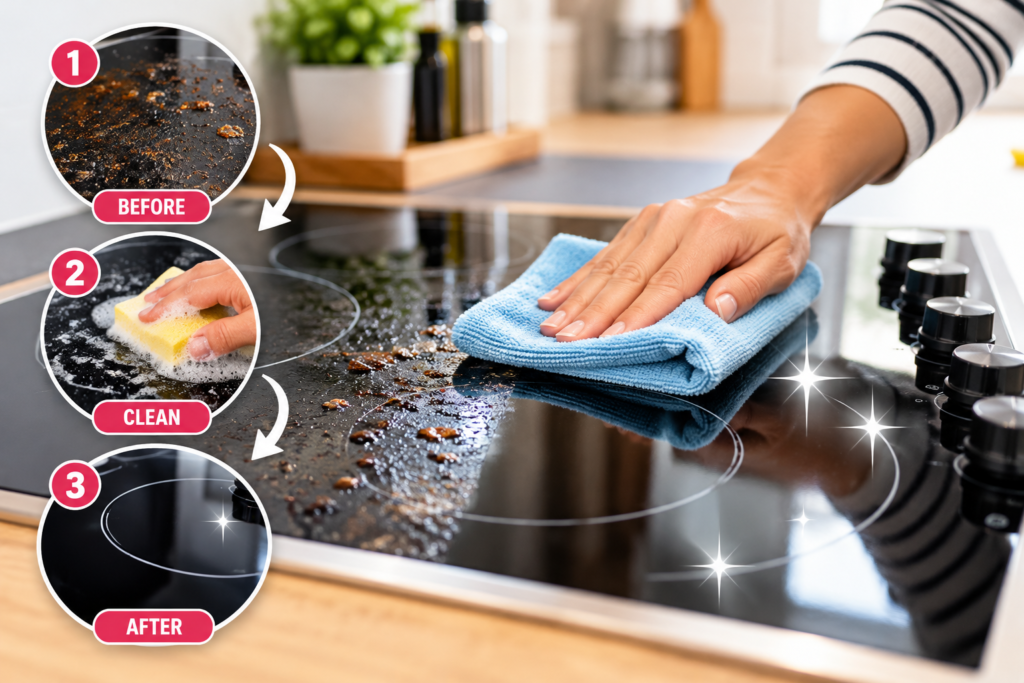
Cleaning your hob properly removes grease, food spills and burnt-on residue without damaging the surface. The safest method depends on whether you have a gas, ceramic, electric or induction hob, but a few simple steps work for most kitchens.
Regular cleaning helps keep your hob hygienic, looking its best and ready for the next meal. The key is to use suitable products, avoid abrasive tools and tackle spills before they become stubborn.
What Is the Best Way to Clean a Hob?
The best way to clean a hob is to let it cool completely, remove loose debris, wipe away grease with warm water and washing-up liquid, and dry the surface with a clean microfibre cloth.
Before you begin, check the manufacturer’s care instructions, particularly if you have a glass-ceramic or induction hob. Some surfaces scratch easily, and certain cleaning products can leave marks or damage protective finishes.
You will usually need:
Warm water and a little washing-up liquid
Two clean microfibre cloths
A soft sponge or non-scratch cleaning pad suitable for your hob
A soft brush for removable gas burner parts, if applicable
A hob cleaner approved for your particular surface, for stubborn residue
Avoid steel wool, scouring pads and harsh abrasive powders. Never mix cleaning chemicals, and do not spray liquid directly into burners, electrical controls or other openings.
How to Clean a Hob Step by Step
Follow these steps for a thorough everyday clean. Adapt them to your hob type and the manufacturer’s instructions.
Step 1: Switch Off the Hob and Let It Cool
Turn off the hob and allow it to cool completely before cleaning. Glass surfaces can retain heat even when they no longer look hot, so never assume they are safe to touch.
If you have a gas hob, make sure all burners are switched off. For electric and induction models, follow the manufacturer’s instructions for safe cleaning.
Never pour cold water onto a hot hob. Sudden temperature changes can damage certain surfaces, and water may spread hot grease or food residue
Step 2: Remove Loose Food and Debris
Once the surface is cool, remove crumbs, loose food and other debris using a soft cloth or your hand where safe.
Lift removable pan supports, burner caps and other detachable components from a gas hob if the manufacturer permits this. Put them aside for separate cleaning.
Removing loose particles first helps prevent them from being dragged across the surface during wiping, which could cause scratches.
Step 3: Wipe Away Grease with Warm, Soapy Water
Mix a small amount of washing-up liquid into warm water. Dampen a microfibre cloth or soft sponge, then wipe the hob gently.
Pay particular attention to areas around cooking zones, the edges of the hob and places where oil or sauce has splashed.
For dried food, hold the damp cloth against the residue for a short time to soften it. This is usually more effective than scrubbing aggressively.
Use only enough moisture to clean the surface. Avoid allowing water to collect around controls, burner openings or electrical components.
Step 4: Treat Stubborn Food Residue Carefully
If marks remain after the initial wipe, use a cleaner designed for your hob material.
For glass-ceramic and induction hobs, a compatible hob cleaner may help loosen greasy films and cooked-on residue. Follow the product instructions and use only a suitable non-scratch cloth or cleaning tool.
A scraper specifically approved for glass-ceramic hobs may help remove stubborn burnt-on deposits. Use it only as directed by the hob manufacturer, keeping the blade at the recommended angle.
Do not use knives, metal utensils or improvised scraping tools. These can scratch the surface or cause other damage.
If you have a stainless-steel hob, follow the grain when wiping where applicable to reduce visible streaks.
Step 5: Clean the Burners and Pan Supports on a Gas Hob
Gas hobs need extra attention because food and grease can collect around the burners.
Remove only the components that the manufacturer identifies as removable. Wash suitable burner caps and pan supports in warm, soapy water, using a soft brush to loosen residue.
Rinse them as appropriate and dry them thoroughly before putting them back. Ensure the burner components are correctly positioned according to the appliance instructions.
Do not immerse ignition components or other parts unless the manufacturer explicitly permits it. Never poke metal objects into gas jets, and do not obstruct burner openings.
If a burner remains blocked or does not operate correctly after cleaning, stop using it and consult a qualified professional.
Step 6: Wipe Away Cleaning Residue
Use a clean cloth dampened with fresh water to remove any remaining detergent or cleaning product.
Leftover product can create a cloudy film or streaks, particularly on shiny glass surfaces. Avoid flooding the hob or allowing water to enter openings.
For a glass or ceramic hob, check the cleaner’s instructions to determine whether any additional wiping is required.
Step 7: Dry and Polish the Surface
Finish by drying the hob with a clean, dry microfibre cloth.
Wipe gently to remove water marks and leave the surface looking neat. If you notice a greasy film, repeat the cleaning and rinsing process rather than applying more product indiscriminately.
For a final kitchen refresh, you can also clean the surrounding kitchen surfaces, including the worktop and splashback, so grease does not transfer back onto the hob.
Explore KeepShine’s free cleaning resources for practical ways to organise your household cleaning routine.
Pro Tip

For a hob that regularly develops stubborn marks, keep a clean microfibre cloth nearby and wipe the surface once it has cooled after cooking. Removing fresh splashes before they dry is usually much easier than tackling layers of baked-on grease later. Always check that the cooking zone is completely cool before wiping it.
How to Remove Stubborn Grease and Burnt-On Marks
Some spills need more than an ordinary wipe, particularly when sugary sauces, milk, oil or starchy foods have dried onto the surface.
The safest approach is to soften the residue first, then use a cleaning method suited to the material.
Loosen dried-on grease without harsh scrubbing
Apply warm, soapy water with a damp cloth and allow it to sit briefly on the affected area. Wipe gently and repeat if necessary.
For stubborn grease on a compatible surface, use a suitable hob cleaner according to its instructions. Avoid using oven cleaner unless the hob manufacturer specifically approves it for that surface; products intended for ovens may be too harsh for some hob finishes.
If the grease is on a stainless-steel surface, use a non-abrasive cleaner suitable for stainless steel and avoid circular scrubbing if it leaves visible marks.
Deal with burnt-on food on glass-ceramic hobs
Burnt-on residue can be difficult to remove because it adheres firmly to the smooth surface. Use a hob-specific cleaner and, where permitted, a scraper designed for glass-ceramic cooking surfaces.
Work gently and follow the manufacturer’s directions. If a mark does not lift easily, repeat the approved treatment rather than increasing the pressure.
Some marks may be permanent surface damage rather than dirt. Trying to remove them with abrasive tools can make the problem worse.
Keep the surrounding cooking area clean
Grease often travels beyond the hob onto the splashback, extractor hood and nearby worktops. Cleaning these areas regularly helps prevent grease from building up and returning to the cooking surface.
If grease has spread to other parts of the kitchen, our guide to cleaning a kitchen properly can help you work through the room systematically.
Mistakes to Avoid
– Cleaning while the hob is hot. This creates a burn risk and may cause damage if cold water contacts a hot surface. Always switch off the hob and let it cool completely before cleaning.
– Using abrasive pads or steel wool. These can scratch glass, ceramic and some metal finishes. Choose a soft cloth or a cleaning pad approved for the specific hob material.
– Applying too much water. Excess liquid can enter burner openings, electrical controls or other vulnerable areas. Use a damp cloth rather than pouring water over the hob.
– Scraping with a knife or unsuitable tool. Metal utensils can scratch the surface or cause damage. If scraping is permitted, use a purpose-designed hob scraper and follow the manufacturer’s instructions.
– Using the wrong cleaning chemical. Strong products may discolour or damage certain finishes. Check product labels and appliance guidance before applying a cleaner.
– Reassembling gas burners while they are wet or incorrectly positioned. Moisture and misaligned components may interfere with ignition or burner operation. Dry permitted removable parts thoroughly and refit them correctly before use.
If grease has built up across your hob and the surrounding kitchen, KeepShine can help with a professional kitchen clean.
More Questions About Cleaning Your Hob
Here are answers to a few common questions about hob cleaning, from daily maintenance to choosing suitable products.
How often should you clean a hob?
Ideally, wipe away spills after cooking once the hob has cooled completely, and give the surface a more thorough clean as needed. Households that cook frequently or prepare greasy foods may need to clean their hobs more often. Regular attention prevents residue from building up and becoming harder to remove.
Can I use washing-up liquid to clean a hob?
Yes. A small amount of washing-up liquid mixed with warm water is suitable for many everyday cleaning jobs. It helps remove grease and food splashes without requiring aggressive scrubbing. However, check your appliance instructions and use a specialist hob cleaner when necessary for stubborn deposits.
Can I use vinegar to clean a hob?
Vinegar can help with some light residues, but it is not suitable for every hob or finish. Acidic products may affect certain materials, coatings or surrounding components. Check the manufacturer’s instructions before using vinegar, and never mix it with bleach or other cleaning chemicals.
How do I clean an induction hob without scratching it?
Switch it off, let it cool and use a soft microfibre cloth with a compatible hob cleaner or warm, soapy water. Avoid abrasive powders, rough scourers and unsuitable scrapers. Remove loose debris before wiping so particles do not scratch the surface, and dry it with a clean cloth to prevent streaks.
Why does my hob look cloudy after cleaning?
Cloudiness may come from detergent residue, hard-water marks, grease or heat-related changes to the surface. Try wiping with a clean, damp microfibre cloth, then dry thoroughly. If the marks remain, consult the manufacturer’s cleaning guidance. Persistent marks may be damage rather than removable dirt.
Can I use oven cleaner on my hob?
Do not assume oven cleaner is safe for a hob. Some oven-cleaning products are highly alkaline or otherwise unsuitable for glass, aluminium, decorative finishes and other components. Use one only if the hob manufacturer explicitly confirms that the specific product is suitable for the surface.
Subscribe to KeepShine for more practical cleaning guides and straightforward advice to help keep your kitchen in good condition.
Final Thoughts: Keep Your Hob Cleaner for Longer
A clean hob does not need to involve lengthy scrubbing or a cupboard full of specialist products. The most effective approach is to deal with spills promptly, use a cleaner suited to your appliance and avoid tools that could scratch or damage the finish.
Build a quick hob wipe into your kitchen routine, taking care to wait until the surface is completely cool. Once a week, check the edges, controls and other areas where grease tends to collect, and give removable gas hob components attention when needed.
Most importantly, let the material guide your cleaning method. A little patience and the right tools will usually deliver better results than harsh chemicals or forceful scrubbing.