
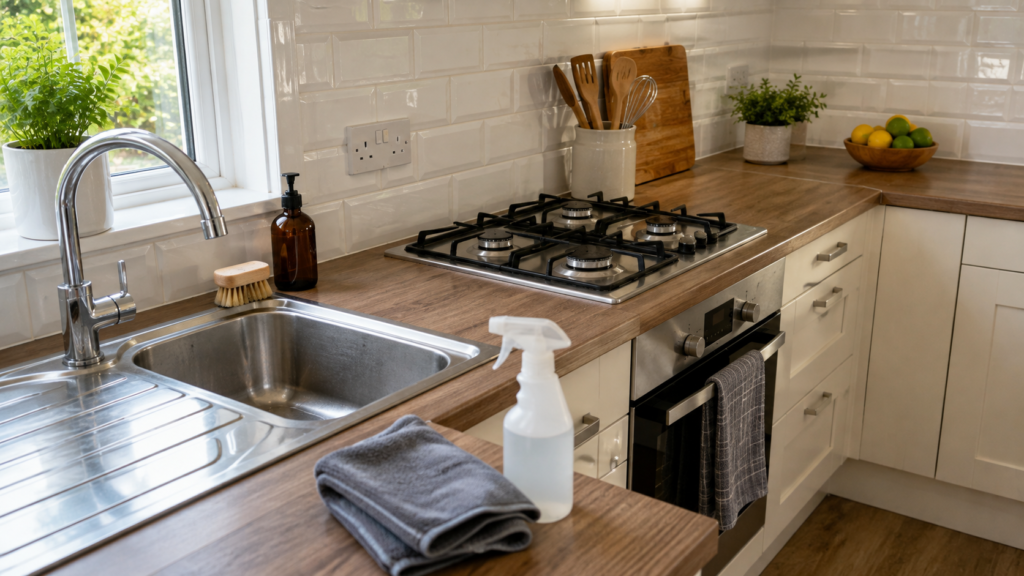
Keeping your kitchen clean is easier when you follow the right order. This guide explains how to clean a kitchen properly, from clearing surfaces to finishing the floors.
Kitchens collect more than visible crumbs and splashes. Grease can settle on cupboards, food residue can build up around appliances, and frequently touched areas such as handles and switches can easily be overlooked. A good routine tackles these areas without turning kitchen cleaning into an all-day job.
The key is to work methodically. By clearing first, cleaning from higher areas downwards and leaving the floor until last, you can avoid repeatedly cleaning the same surfaces.
What You Need Before Cleaning Your Kitchen
Before you start, gather everything you are likely to need. Having your supplies nearby saves time and helps you move through the kitchen in a sensible order.
Depending on your kitchen surfaces and appliances, useful supplies may include:
- Microfibre cloths
- Clean sponges or non-scratch scourers
- Washing-up liquid
- A suitable kitchen or multi-surface cleaner
- A suitable degreaser for greasy areas
- Glass cleaner, if required
- Rubber gloves
- Bin bags
- A vacuum cleaner, broom or dustpan and brush
- A mop and suitable floor cleaner
You do not need a cupboard full of different products to get good results. The best way to clean a kitchen is usually to use a small number of suitable products correctly.
Always read product labels and check the manufacturer’s care instructions before using a cleaner on an unfamiliar surface. Never mix cleaning chemicals, particularly bleach with other cleaning products.
How to Clean a Kitchen Step by Step
Cleaning in a planned order prevents crumbs, dust and dirty water from landing on areas you have already cleaned. Work from relatively clean areas towards dirtier ones and, wherever practical, from top to bottom.
1. Clear away clutter and food
Start by putting away anything that does not need to be on the worktops. Return food to cupboards or the fridge, put utensils away and remove paperwork, bottles and other clutter.
Empty the bin if necessary and remove anything that belongs elsewhere in the house.
Clearing the room first gives you uninterrupted access to the surfaces and makes it much easier to see where grease, crumbs and spills have accumulated.
If maintaining the room between bigger cleans is the difficult part, our guide to keeping your kitchen clean for longer can help you establish simpler everyday habits.
2. Deal with the washing-up
Load the dishwasher or wash dirty plates, cups, pans and utensils. Leaving a sink full of washing-up makes cleaning the sink and surrounding worktops unnecessarily difficult.
Once everything is out of the way, rinse away loose food residue from the sink so you have a clear area to work around later.
Dust and wipe higher areas first
Before tackling the worktops, deal with dirt above them.
Dust or wipe accessible areas such as the tops and fronts of cupboards, open shelving, extractor exteriors and other high surfaces. Pay particular attention to greasy dust, which can gradually form a sticky film in cooking areas.
Use a product suitable for the material and avoid soaking painted, wooden or laminated surfaces.
Working from top to bottom means anything that falls can be collected when you clean the surfaces and floor below.
4. Clean cupboard fronts, handles and touchpoints
Cupboard fronts are easy to overlook, especially when marks are not obvious.
Wipe the fronts and edges, paying extra attention to cupboards close to the hob and food-preparation areas. Clean handles and frequently touched points such as drawer pulls, fridge handles and appropriate light switches.
Apply products carefully around electrical switches rather than spraying liquid directly onto them.
5. Clean the hob and surrounding area
Remove loose crumbs and food debris before applying an appropriate cleaner to the hob.
The correct method depends on whether you have ceramic, induction, gas or another type of hob, so follow the manufacturer’s cleaning guidance. Avoid abrasive tools on surfaces that scratch easily.
For dried-on spills, allowing a suitable product the recommended contact time is generally more effective than immediately scrubbing harder.
6. Clean the worktops and splashbacks
Remove appliances and movable items where practical so that you can clean underneath and behind them.
Wipe crumbs away before cleaning the worktop thoroughly, including corners and the area where the worktop meets the wall or splashback.
Choose your cleaner according to the surface. Natural stone, wood, laminate and other materials can have different care requirements, so a product that works well on one worktop may be unsuitable for another.
Wipe the splashback too, particularly behind the hob where cooking grease tends to accumulate.
7. Clean the outside of kitchen appliances
Wipe appliance exteriors, handles and controls using methods appropriate for each appliance.
The kettle, toaster, microwave, fridge and other frequently used appliances can collect fingerprints, crumbs and splashes. Unplug small electrical appliances before cleaning where appropriate, and never allow water to enter electrical components.
Do not forget the areas beneath movable countertop appliances.
The oven usually requires more time than a routine surface clean. When it needs attention, use our step-by-step guide to cleaning an oven properly rather than trying to squeeze a full oven clean into every kitchen tidy-up.
8. Clean the sink and taps
Once the messier work is finished, clean the sink, taps and surrounding area.
Remove food residue and use a cleaner suitable for your sink material. Pay attention to the plughole area, tap base and edges where grime can accumulate.
Rinse away cleaning-product residue where required and dry taps with a clean cloth for a neater finish.
9. Finish with the kitchen floor
The floor should usually come last because crumbs and debris may have fallen onto it while you were cleaning higher surfaces.
Vacuum or sweep thoroughly, including edges, beneath accessible furniture and around bin areas.
Then mop using a method and cleaning product suitable for your flooring. Avoid excessive water, particularly on flooring that can be damaged by moisture.
Allow the floor to dry before walking over it where possible.
Make your cleaning routine easier to organise by exploring KeepShine’s free downloadable cleaning resources.
Pro Tip

Keep several clean microfibre cloths available and change cloths as they become dirty rather than using one throughout the entire kitchen. This helps prevent you from simply moving grease and food residue from one surface to another, particularly when moving between worktops, appliance exteriors and dirtier areas around the sink.
When Your Kitchen Needs More Than a Routine Clean
A regular kitchen clean deals with everyday dirt, but some areas gradually accumulate grime even when the room looks tidy.
This is where a deeper clean becomes useful.
During a deeper clean, you might move appropriate small appliances and clean behind them, tackle cupboard interiors, clean neglected edges and corners, and give larger appliances more detailed attention. Our thorough kitchen deep-cleaning guide covers these less frequent jobs in more detail.
The frequency will depend heavily on how your kitchen is used. A kitchen where meals are prepared several times every day may need attention more often than one used occasionally. Rather than waiting for every task to become urgent, separate cleaning into small regular jobs and less frequent deeper tasks.
If you are unsure what belongs in each routine, our practical kitchen cleaning schedule can help you decide what to clean daily, weekly and less frequently.
Grease deserves particular attention. Fresh cooking splashes are normally easier to deal with than residue that has been allowed to build up repeatedly. Wiping suitable surfaces after cooking can therefore save considerable effort later.
Likewise, deal with spills promptly when it is safe to do so. This reduces the chance of residue drying onto surfaces, staining materials or becoming harder to remove.
The goal is not to keep the kitchen looking untouched at all times. It is to prevent ordinary daily mess from developing into a much larger cleaning job.
Mistakes to Avoid
- Cleaning the floor too early. If you mop before cleaning worktops, cupboards and appliances, crumbs and debris may fall onto your freshly cleaned floor. Leave sweeping, vacuuming and mopping until near the end.
- Using the same product on every surface. Kitchen materials have different care requirements. A cleaner suitable for one worktop, floor or appliance may damage another. Check labels and manufacturer guidance when you are uncertain.
- Spraying electrical equipment directly. Liquid can enter controls or electrical components. Apply suitable cleaning products to a cloth where appropriate and follow appliance care instructions.
- Using dirty cloths throughout the kitchen. A heavily soiled cloth can spread grease and food residue rather than removing it. Change or rinse cloths as necessary and use fresh ones for cleaner areas.
- Trying to remove stubborn dirt with excessive scrubbing. Aggressive scourers can scratch delicate surfaces. Use the correct product and tool for the material and allow suitable cleaners their stated contact time.
- Mixing cleaning products. Combining household cleaning chemicals can be dangerous. Use products according to their labels and never experiment with chemical mixtures. For more avoidable problems, see our guide to common kitchen cleaning mistakes.
If keeping on top of your kitchen is becoming difficult, professional cleaning help from KeepShine can take care of the cleaning when you would rather spend your time elsewhere.
Common Questions About Cleaning Your Kitchen
Different kitchens need slightly different routines, but these answers cover some of the practical questions that often come up when keeping this busy room clean.
How often should I clean my kitchen?
Small jobs such as dealing with food spills, washing up and wiping food-preparation surfaces are best handled regularly rather than left to build up. Other jobs can be completed weekly or periodically depending on use.
There is no single schedule suitable for every household; cooking frequency, household size and how quickly dirt accumulates should guide your routine.
How long does it take to clean a kitchen properly?
It depends on the kitchen’s size and condition and on what you include. A relatively tidy kitchen receiving a routine clean can be considerably quicker than a neglected kitchen requiring grease removal, appliance cleaning and detailed work.
Keeping up with small jobs between cleans usually makes the next full clean much more manageable.
Should I clean or disinfect my kitchen?
Cleaning and disinfecting are different processes. Cleaning removes dirt, grease and food residue, while disinfecting is intended to reduce microorganisms on appropriate surfaces.
Not every kitchen surface needs constant disinfecting. Where disinfection is appropriate, clean visible dirt first and use a suitable product exactly as directed on its label, including any stated contact time.
What is the best way to deal with kitchen grease?
Tackle cooking splashes regularly before they develop into a thick, sticky layer. For established grease, use a cleaner suitable for the particular surface and follow its instructions.
Avoid assuming that a stronger product or rougher scourer will produce better results; either can damage finishes if unsuitable.
Do I need to deep clean every time?
No. Routine cleaning and deep cleaning serve different purposes.
Your regular clean should keep frequently used areas under control, while a deep clean tackles jobs that do not need doing every time, such as cupboard interiors and harder-to-reach areas. Separating the two makes ordinary kitchen cleaning much less daunting.
In what order should I clean other rooms?
The same general principle of decluttering, working methodically and leaving floors until late in the process works well elsewhere, although each room has different priorities.
For example, you can follow our step-by-step bathroom cleaning guide or our guide to cleaning a living room properly when moving on to the rest of your home.
Subscribe to KeepShine for more practical cleaning guides, useful household tips and resources to make everyday cleaning easier to manage.
Final Thoughts: Make Kitchen Cleaning Easier With a Consistent Routine
A properly cleaned kitchen does not require tackling every possible job every day. The biggest difference comes from dealing with everyday mess promptly and following a sensible order when it is time for a more complete clean.
Clear the room first, work from higher surfaces downwards, give food-preparation and frequently touched areas proper attention, and leave the floor until the end.
Once that basic routine becomes familiar, kitchen cleaning becomes much easier to manage. Small habits between cleans matter too: wipe spills before they dry, put items away after use and deal with grease before it develops into stubborn build-up. Over time, these simple habits can reduce the amount of work needed during your next full clean.