
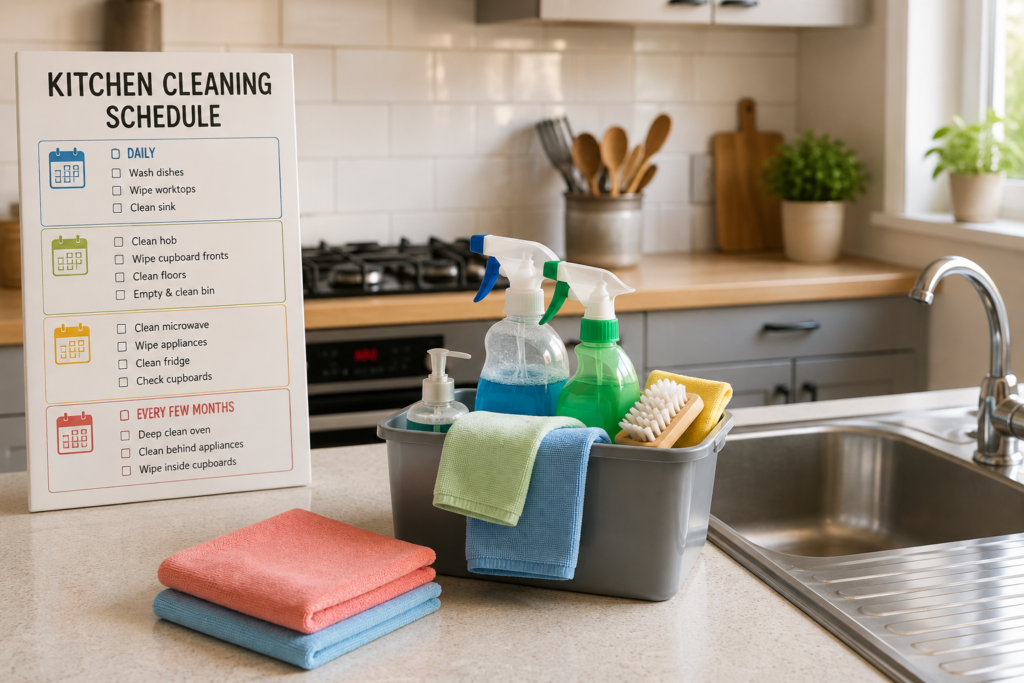
Keeping to a sensible kitchen cleaning schedule helps prevent grease, crumbs, food residue and general clutter from building up. How often to clean your kitchen depends on what you use, how frequently you cook and how quickly particular areas become dirty.
Some jobs need attention every day, especially surfaces that come into contact with food. Others can comfortably be handled weekly, monthly or only a few times each year.
The easiest approach is not to treat kitchen cleaning as one enormous task. Instead, divide it into small daily habits and less frequent cleaning jobs. This keeps the room manageable while making deeper cleaning much easier when the time comes.
A Simple Kitchen Cleaning Schedule at a Glance
For most homes, the best routine combines daily cleaning, weekly attention and periodic deeper cleaning rather than trying to clean everything at the same frequency.
As a practical starting point:
- After use: Deal with spills, food preparation mess and heavily soiled cooking areas.
- Daily: Wash dishes, wipe worktops, clean the sink and deal with crumbs or obvious floor dirt.
- Weekly: Clean the hob, cupboard fronts, splashbacks, bins and floors more thoroughly.
- Monthly: Pay attention to appliances, less accessible surfaces and areas where grease or dust gradually collects.
- Every few months: Carry out a more thorough kitchen clean, including areas normally missed during everyday cleaning.
This isn’t a rigid timetable. A busy family kitchen where several meals are prepared every day may need more frequent attention than a kitchen used mainly for breakfast and occasional cooking.
How Frequently to Clean Each Part of Your Kitchen
Rather than choosing one day to clean absolutely everything, give different areas attention according to how quickly they become dirty. If you want to combine this schedule with an organised cleaning method, our guide to cleaning a kitchen properly step by step explains how to tackle the room efficiently.
Clean spills and food mess immediately
Some kitchen cleaning should not wait for a scheduled cleaning day.
Wipe up spilled liquids, sauces, cooking oil and dropped food as soon as reasonably possible. Fresh spills are usually easier to remove, while leaving them can result in sticky residue, staining or dirt being spread around the kitchen.
Pay particular attention to raw food preparation. Surfaces, boards, utensils and equipment that have come into contact with raw meat, poultry, fish or eggs should be cleaned appropriately after use to reduce the risk of cross-contamination.
Always follow the care instructions for your particular worktop, appliance or surface rather than assuming that one cleaning product is suitable for everything.
Daily kitchen cleaning
A short daily clean prevents ordinary cooking and eating mess from accumulating.
Depending on how your kitchen is used, your daily routine might include:
- Washing dishes or loading and emptying the dishwasher as necessary.
- Wiping food preparation surfaces after use.
- Cleaning obvious splashes around the hob.
- Rinsing and cleaning the sink.
- Wiping the dining table or breakfast bar.
- Sweeping or vacuuming visible crumbs and food debris.
- Putting food, utensils and cooking equipment back where they belong.
- Emptying the bin when it is full, leaking or beginning to smell.
You do not necessarily need to scrub the entire floor or polish every cupboard each evening. Concentrate on hygiene, food residue and anything that will become harder to clean if left overnight.
Weekly kitchen cleaning
Once a week is a useful starting point for areas that accumulate dirt gradually but do not normally require a complete clean every day.
Give the hob a more thorough clean once it is cool and safe to handle. Wipe splashbacks, cupboard handles, appliance exteriors and frequently touched surfaces.
Clean the kitchen floor properly rather than dealing only with visible crumbs. The correct method depends on the flooring material, so avoid excessive water on surfaces that can be damaged by moisture.
The bin also deserves attention. Emptying it is not the same as cleaning it. Wipe or wash the inside when necessary and deal promptly with leaks or food residue.
This is also a useful opportunity to look around for jobs that are easily forgotten, such as greasy cupboard fronts or dirt around small appliances.
Monthly kitchen cleaning
Monthly cleaning can focus on areas that do not become visibly dirty as quickly.
Move lightweight countertop appliances where safe to do so and clean underneath them. Check cupboard shelves for crumbs, spills or leaking packages and wipe them when required.
Look at the fridge too. Remove expired or spoiled food and clean spills promptly rather than waiting for a full fridge clean.
Other monthly jobs might include wiping less accessible parts of splashbacks, cleaning around appliance edges and dealing with grease beginning to collect on surfaces away from your main cooking area.
The exact frequency can change considerably according to your household. If something becomes dirty sooner, clean it sooner.
Deep clean the kitchen every few months
Even a well-maintained kitchen occasionally needs attention beyond the normal weekly routine.
A deeper clean can include cupboard interiors, appliance surrounds, difficult corners, accumulated grease and areas behind or beneath movable items where it is safe and practical to reach them.
Our thorough kitchen deep-cleaning guide is useful when you are ready to go beyond everyday maintenance.
You do not have to deep clean every area on exactly the same day. Dividing larger jobs across several sessions can make the process considerably easier.
Clean the oven according to use and condition
There is no single ideal number of days between oven cleans because cooking habits vary enormously.
Check the oven regularly. If you notice burnt-on food, heavy grease, smoke caused by residue or persistent cooking smells, it is probably time for attention rather than waiting for an arbitrary date.
Cleaning small spills once the appliance is switched off and completely cool can help prevent them becoming stubborn baked-on deposits. For a larger clean, follow our step-by-step guide to cleaning an oven properly.
Always follow your oven manufacturer’s cleaning and safety instructions, particularly for self-cleaning functions, removable components and approved cleaning products.
Adjust the schedule to your household
A cleaning schedule should work with your kitchen rather than against it.
You may need to clean more frequently if you cook several times each day, have young children, regularly fry food, entertain frequently or have a large household.
On the other hand, somebody who rarely cooks at home may find that certain weekly tasks can occasionally wait longer.
Use the schedule as a starting point, then adjust individual jobs according to actual dirt, use and hygiene requirements.
Explore KeepShine’s free downloadable cleaning resources if you’d like practical help organising your household cleaning routine.
Pro Tip

Instead of saving every kitchen job for one long cleaning session, attach small tasks to things you already do. For example, wipe the hob after it has cooled following cooking, check the fridge before your weekly food shop and clean one less-used area while waiting for another kitchen task to finish. Small routines help prevent larger jobs accumulating.
How to Tell When Your Kitchen Needs Cleaning More Often
A schedule is useful, but the condition of your kitchen should ultimately determine when to clean it. Two households can follow completely different routines and still keep their kitchens well maintained.
Watch the high-use areas
Worktops, sinks, taps, handles and hobs usually reveal quickly whether your current routine is frequent enough.
If worktops regularly feel sticky, grease is becoming noticeable around cooking areas or crumbs remain on the floor between scheduled cleans, shorten the interval for those particular jobs rather than increasing the frequency of everything.
This is especially helpful in busy homes. Your floor might need cleaning several times a week while cupboard interiors need attention far less often.
Prevent grease from becoming a bigger job
Cooking grease can gradually settle on splashbacks, cupboard fronts and nearby surfaces. It may not be particularly noticeable at first, but repeated cooking can allow layers of grime to develop.
Regular light cleaning is generally easier than waiting until the kitchen requires extensive degreasing. If keeping the room manageable between larger cleans is your main challenge, see our advice on keeping your kitchen clean for longer.
Increase cleaning after particularly heavy use
Your normal timetable does not have to apply every week.
Cooking a large family meal, entertaining guests or spending a weekend batch cooking can create considerably more mess than usual. Deal with the additional cleaning afterwards rather than waiting until your usual cleaning day.
The same principle applies after periods when the kitchen has barely been used: there is little benefit in cleaning an already clean surface simply because a calendar says it is due.
Mistakes to Avoid

- Using one frequency for the entire kitchen. Different areas become dirty at very different rates. Food-contact surfaces may require cleaning several times in one day, while some cupboard interiors can remain clean for considerably longer.
- Waiting for visible dirt before dealing with food hygiene. A surface does not need to look dirty to require cleaning after food preparation. Clean appropriately after handling raw foods and avoid spreading contamination through cloths, utensils or hands.
- Leaving cooking spills until the weekly clean. Splashes and spills can become sticky, stained or baked onto surfaces. Deal with them promptly once the area or appliance is safe to clean.
- Using unsuitable products to clean faster. Stronger does not automatically mean better. Some cleaners can damage stone, wood, metals, appliance finishes or other kitchen materials. Check product labels and manufacturer care guidance when uncertain.
- Trying to compensate for an inconsistent routine with occasional marathon cleans. Allowing everyday mess to accumulate makes kitchen cleaning more demanding. If this tends to happen, our guide to common kitchen cleaning mistakes explains other habits worth avoiding.
If keeping up with your kitchen alongside the rest of your home becomes difficult, professional cleaning from KeepShine can provide an extra helping hand when you need it.
Common Questions About Kitchen Cleaning Frequency
The right schedule varies between households, so here are answers to a few other practical questions about deciding when to clean your kitchen.
Should I clean my kitchen every day?
Some parts, yes, but you normally do not need to deep clean the whole kitchen daily. Food preparation surfaces, dishes, spills and obvious cooking mess should receive prompt attention. Larger jobs can usually be divided into weekly, monthly and periodic tasks according to how quickly each area becomes dirty.
How often should kitchen floors be cleaned?
Remove obvious crumbs and food debris whenever necessary, particularly around preparation and eating areas. A more thorough floor clean can form part of your weekly routine, but busy households may need it more frequently. Always use a cleaning method appropriate for your flooring material and follow its care instructions.
Is weekly cleaning enough for a kitchen?
Weekly cleaning alone is not ideal if it means ignoring food spills, dirty dishes and preparation surfaces between sessions. A better system combines small daily jobs with a more thorough weekly clean. Less frequently used areas can then be handled monthly or periodically.
Does an office kitchen need the same cleaning schedule?
Not necessarily. Shared workplace kitchens can have many people using the same handles, worktops, sinks and appliances throughout the day. Responsibility and usage also differ from a household kitchen. Our guide to how often an office kitchen should be cleaned looks specifically at scheduling cleaning in shared workplace kitchens.
What if I never have enough time to clean the whole kitchen?
Do not wait until you have enough time to do everything. Prioritise food hygiene, spills, dishes and high-use surfaces, then divide less urgent jobs into smaller sessions. When you do have time for a more complete clean, following a logical order can prevent you from repeatedly cleaning the same areas.
How often should I clean my kitchen sink?
The sink is used frequently and can collect food residue and grime, so give it regular attention rather than leaving it until a weekly deep clean. Remove debris and clean it as necessary after food preparation or washing up. Remember to use products appropriate for the sink material.
Subscribe to KeepShine for more practical cleaning guides, useful resources and straightforward advice for making everyday household cleaning easier.
Final Thoughts: Make Your Kitchen Schedule Work for You
A practical kitchen cleaning schedule should reduce your workload, not make you feel that you are constantly cleaning.
Start with the areas that affect everyday hygiene and comfort: deal with food mess promptly, keep preparation surfaces and the sink clean, and prevent dishes and crumbs from accumulating. Add weekly cleaning for floors, cooking areas and frequently touched surfaces, then spread larger jobs across the month or year.
Most importantly, respond to how your kitchen is actually used. If an area gets dirty before its scheduled cleaning day, clean it sooner. If it remains clean for longer, there is no need to create unnecessary work.
A consistent collection of small habits is usually much easier to manage than repeatedly allowing the entire kitchen to become one large cleaning job.