
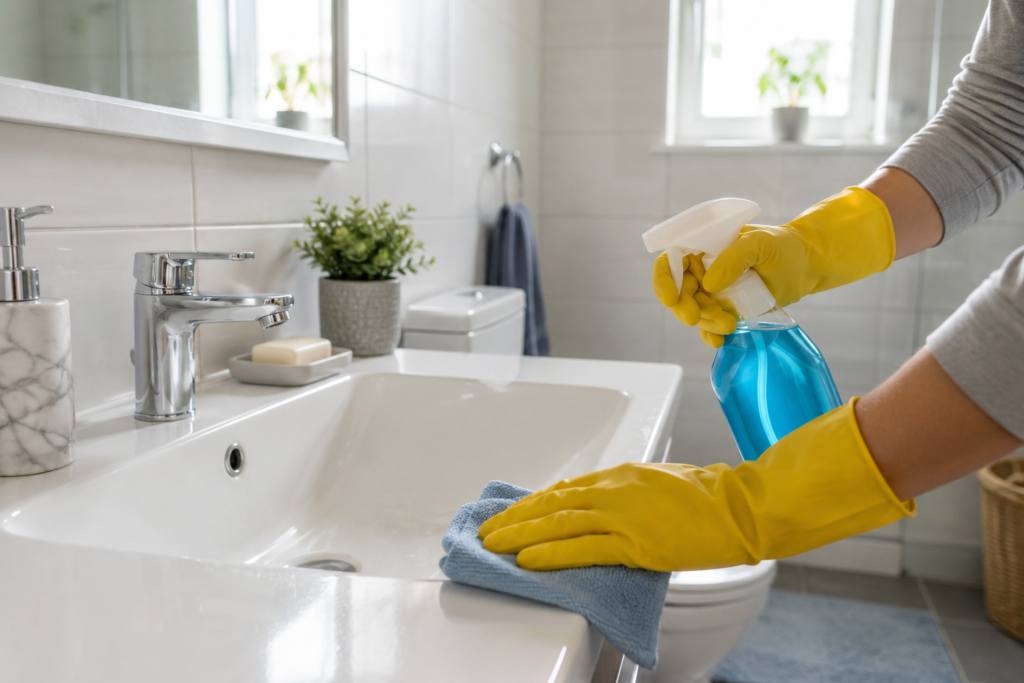
A bathroom needs regular cleaning because moisture, soap residue, hair and everyday use can quickly leave surfaces looking dirty. A practical bathroom cleaning schedule combines small daily jobs with a more thorough weekly clean and occasional deep cleaning.
You do not need to scrub the entire bathroom every day. The most effective approach is to clean high-use areas frequently, deal with spills and visible dirt promptly, and schedule deeper jobs less often.
This guide explains how often to clean bathroom surfaces, what should be done daily, weekly and monthly, and how to adjust the routine depending on how heavily your bathroom is used.
How Often Should You Clean Your Bathroom?
For most households, giving the bathroom a proper clean once a week is a sensible starting point. However, some areas need attention more frequently, while others can usually wait several weeks.
A practical schedule looks like this:
- Daily or as needed: wipe obvious splashes, rinse the shower or bath, remove standing water and keep surfaces reasonably dry.
- Several times a week: check the toilet, sink and frequently touched areas and clean them when necessary.
- Weekly: thoroughly clean the toilet, basin, bath or shower, mirrors, taps and floor.
- Monthly: tackle less noticeable areas such as vents, grout, shower tracks, behind movable items and other places that are easily missed.
- Periodically: carry out a more detailed deep clean based on the condition and use of the room.
The right frequency depends on the number of people using the bathroom, ventilation, whether children use it, and how quickly soap residue, limescale and general dirt build up.
A Practical Bathroom Cleaning Schedule
Rather than waiting until the entire room looks dirty, divide bathroom cleaning into different frequencies. This keeps routine cleaning manageable and prevents several jobs from becoming difficult at the same time.
Daily: Deal With Moisture and Small Messes
Daily bathroom care does not need to become a full cleaning session. A few minutes can make the weekly clean considerably easier.
After bathing or showering, remove excessive water from surfaces where practical. If you have a shower screen, a quick wipe or squeegee can reduce water marks and residue.
Wipe up toothpaste, cosmetics, soap or water around the basin rather than allowing them to dry onto the surface. Hang damp towels so they can dry properly and avoid leaving wet clothing or bath mats bundled on the floor.
Good ventilation is also important. Use your extractor fan where appropriate or ventilate the room safely to help moisture escape.
These small habits are particularly useful if you want to keep your bathroom cleaner for longer between full cleaning sessions.
Every Few Days: Check the Toilet and Basin
The toilet and basin are among the most frequently used fixtures in a bathroom, so waiting an entire week is not always appropriate.
Check the toilet bowl, seat, lid, flush control and surrounding area regularly. If they are visibly dirty, clean them rather than waiting for your scheduled cleaning day.
The basin may also need a quick clean every few days, particularly in a busy household. Toothpaste, soap residue, hair and water marks can accumulate surprisingly quickly.
If the toilet needs more attention, follow a thorough method for cleaning a toilet properly, including the frequently touched exterior surfaces rather than concentrating only on the bowl.
Weekly: Give the Bathroom a Proper Clean`
For many homes, weekly cleaning forms the core of a good bathroom routine.
Start by removing toiletries, towels and other movable items from the surfaces you need to clean. Dust or remove loose hair first so you are not simply moving it around with a wet cloth.
Then work through the main areas:
- Clean the toilet, including the bowl and exterior.
- Clean the basin and taps.
- Clean the bath and/or shower.
- Wipe suitable surrounding surfaces.
- Clean mirrors.
- Wipe frequently touched points where appropriate.
- Vacuum or sweep loose debris from the floor.
- Mop or clean the floor using a suitable product.
Always use products that are appropriate for the particular material or finish. Natural stone, specialist coatings, metals and some bathroom fittings can require specific care, so check the manufacturer’s instructions if you are uncertain.
For a complete cleaning method rather than just a schedule, see our guide to cleaning a bathroom properly step by step.
Monthly: Clean the Areas That Are Easy to Miss
Once a month, spend a little extra time on areas that do not necessarily require weekly attention.
Depending on your bathroom, these might include:
- shower-door tracks;
- corners and edges;
- grout that needs additional attention;
- around and behind movable storage;
- accessible extractor-fan covers, following manufacturer guidance;
- skirting boards;
- less frequently used shelves;
- underneath bottles and containers;
- areas around the base of fixtures.
This is also a useful opportunity to check for developing limescale, mildew or persistent soap residue before it becomes more difficult to remove.
Periodically: Deep Clean the Bathroom
Even with consistent weekly cleaning, bathrooms benefit from occasional deeper attention.
A deep clean goes beyond the surfaces you normally tackle. It may involve more detailed work on grout, shower fittings, awkward corners, storage areas and accumulated residue.
There is no single deep-cleaning frequency that suits every household. A heavily used family bathroom may need it more frequently than a lightly used second bathroom.
Use the condition of the room as your guide. If routine cleaning no longer produces the results you expect, our thorough bathroom deep-cleaning guide can help you work through the room systematically.
Explore KeepShine’s free downloadable cleaning resources for practical ways to organise household cleaning and make regular routines easier to manage.
Pro Tip

Keep a small amount of appropriate bathroom cleaning equipment somewhere safely accessible, but away from children and pets. Being able to deal with toothpaste, water marks or small spills immediately can prevent them from drying onto surfaces and means your scheduled weekly clean starts with considerably less accumulated mess.
Adjust Your Schedule to How the Bathroom Is Used
A cleaning schedule should be a framework rather than a rigid rule. Two bathrooms in different homes can require very different levels of attention.
A bathroom shared by several people will normally accumulate hair, water, soap residue and general dirt faster than a guest bathroom used only occasionally. If several people shower every morning, for example, the shower area may require more frequent attention than a bath used once or twice a week.
Ventilation matters too. Bathrooms naturally produce considerable moisture. Where moisture remains on surfaces for long periods, keeping the room dry and clean becomes more important.
Children can also change the schedule. Toothpaste around the basin, water on the floor and frequent touching of surfaces may mean certain areas need quick cleaning between weekly sessions.
Rather than automatically increasing the frequency of every task, concentrate on the areas becoming dirty fastest. You might still clean the floor weekly while wiping the basin every couple of days.
The same principle works elsewhere in the home. A realistic routine based on actual use is usually easier to maintain than cleaning everything at the same frequency. For example, our guide explaining how often a bedroom should be cleaned uses the same practical approach of separating frequent jobs from occasional ones.
Pay attention to what your bathroom looks like immediately before your normal cleaning day. If it is consistently becoming unpleasant several days earlier, shorten the interval for the affected areas rather than waiting.
Mistakes to Avoid
- Waiting until the bathroom looks very dirty. A bathroom can accumulate residue gradually. Regular light cleaning is generally easier than repeatedly allowing several weeks of dirt and limescale to build up.
- Using one cleaning cloth everywhere. Moving the same cloth from the toilet to the basin, taps and other surfaces can spread contamination. Use separate cloths where appropriate, particularly for toilet cleaning, and wash reusable cloths properly afterwards.
- Mixing cleaning chemicals. Never combine cleaning products unless the manufacturer specifically states that it is safe. In particular, mixing certain household cleaners can create dangerous fumes. Follow product labels and use adequate ventilation.
- Using unsuitable products on bathroom surfaces. Strong or abrasive cleaners can damage certain finishes, metals, natural stone and specialist surfaces. Check the manufacturer’s care guidance before using an unfamiliar product.
- Cleaning but ignoring moisture. Regular cleaning works best alongside sensible moisture control. Leaving surfaces constantly wet can contribute to unwanted build-up and make the room harder to maintain.
For more examples of habits that can make cleaning less effective, see common bathroom cleaning mistakes to avoid.
If keeping up with regular bathroom cleaning is difficult, KeepShine can provide professional cleaning support as part of your household cleaning routine.
More Questions About Your Bathroom Cleaning Routine
Cleaning frequency varies from one household to another, so here are answers to a few practical questions that may help you decide when to clean bathroom surfaces and fixtures.
Should I clean my bathroom every day?
You usually do not need to clean the entire bathroom every day. Small daily tasks such as wiping obvious splashes, dealing with toothpaste and allowing wet areas to dry can be useful, while a more complete clean can normally be scheduled weekly. Increase the frequency for particular areas if your bathroom receives heavy use.
How frequently should you clean a toilet?
Check a frequently used toilet regularly and give it a thorough clean at least as part of your normal weekly bathroom routine. In a busy household, the seat, flush control and other frequently touched areas may need cleaning more often. Clean visible soiling promptly rather than waiting for a fixed cleaning day.
How often should you clean a shower?
A shower generally benefits from small amounts of care after use and a more thorough clean during your weekly bathroom cleaning. Removing excess water after showering can help reduce visible water marks and residue. The exact frequency will depend on usage, water conditions and how quickly deposits develop.
Does a bathroom need deep cleaning every week?
Usually, no. Weekly cleaning should cover the main fixtures and surfaces, while deep cleaning addresses accumulated dirt and less frequently cleaned areas. If you maintain the bathroom consistently, deeper work can normally be scheduled periodically according to the room’s condition rather than automatically every week.
How do I know if I am not cleaning frequently enough?
Look at the condition of the bathroom before your next scheduled clean. Persistent odours, visible residue, dirty fixtures, noticeable limescale or surfaces becoming unpleasant well before cleaning day can indicate that certain jobs need doing more frequently. Adjust individual tasks rather than necessarily deep cleaning the entire room more often.
Should every room have the same cleaning schedule?
No. Cleaning frequency should reflect how a space is used and how quickly it becomes dirty. Even individual items within one room can have different schedules. For example, bedroom surfaces and bedroom blinds may need cleaning at different intervals, just as a bathroom toilet needs more frequent attention than some less-used surfaces.
Subscribe to KeepShine for more practical cleaning guides, useful household tips and resources to help make regular cleaning easier to organise.
Final Thoughts: Make Bathroom Cleaning a Manageable Routine
The most useful bathroom cleaning schedule is one you can maintain consistently. For many households, that means small daily actions, checking high-use areas every few days, completing a proper clean once a week and dealing with less obvious areas monthly or periodically.
Do not worry about cleaning every surface at exactly the same interval. Pay attention to how your bathroom is actually used and increase the frequency of the jobs that need it.
Regular attention also makes thorough cleaning easier. Instead of waiting for the whole bathroom to become a major job, deal with small problems as they appear and let your weekly routine take care of the rest.