
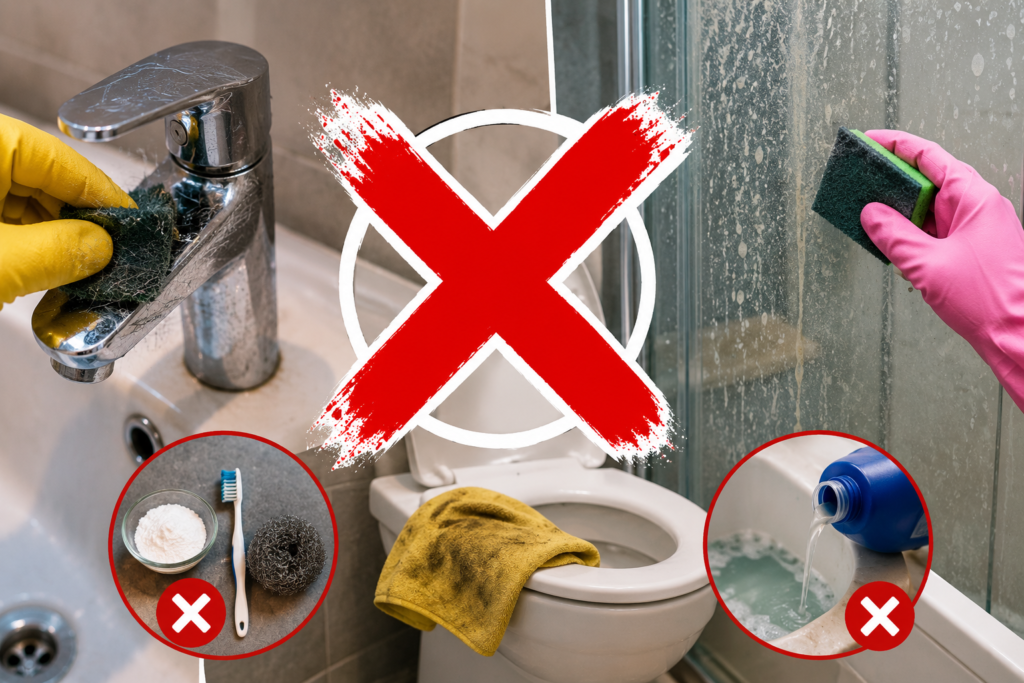
Using the wrong products or methods can turn simple bathroom cleaning mistakes into damaged surfaces, stubborn marks and unnecessary safety risks. Knowing what not to use in a bathroom is just as important as knowing how to clean it.
Bathrooms contain several different materials in a relatively small space: ceramic, porcelain, glass, chrome, sealant, grout, plastics, painted surfaces and sometimes natural stone. A product that works well on one may damage another.
The good news is that most bathroom cleaning errors are easy to avoid. A few sensible habits — choosing suitable products, allowing cleaners time to work and avoiding dangerous chemical combinations — can help you get better results without damaging your bathroom.
The Most Important Rule: Match the Cleaner to the Surface
Before using any bathroom cleaning product, check what you are cleaning and whether the product is suitable for that material. Do not assume that a strong cleaner is automatically a better cleaner.
Acidic products can damage some natural stone and sensitive finishes. Abrasive powders or rough scourers may scratch baths, shower trays, taps and glass. Strong chemicals can also affect sealants, coatings and decorative finishes.
When you are unsure, check the product label and the manufacturer’s care instructions for the surface or fitting. Test unfamiliar products on a small, inconspicuous area first.
For everyday cleaning, you often need less aggression than you might think. A suitable bathroom cleaner, microfibre cloths, warm water and enough contact time can handle much of the routine work.
If you want a complete cleaning sequence rather than focusing specifically on mistakes, follow our step-by-step guide to cleaning a bathroom properly.
Common Bathroom Cleaning Mistakes and What to Do Instead
Avoiding damage is only part of the picture. The way you organise the job can also determine whether you genuinely clean the bathroom or simply move dirt and germs from one place to another.
1. Using the Same Cloth Everywhere
One cloth for the toilet, sink, taps, shower and other surfaces may seem convenient, but it can transfer contamination around the room.
Keep the cloth used around the toilet separate from those used elsewhere. You can use different colours or simply put used cloths aside as you work so they are not accidentally reused on cleaner areas.
Wash reusable cloths appropriately after cleaning and allow them to dry thoroughly before storing them.
2. Cleaning in the Wrong Order
Starting with the floor is a classic example of working against yourself. Dust, hair, droplets and cleaning residue can fall onto it while you clean everything above.
Instead, work broadly from higher and cleaner areas towards lower and dirtier areas. Remove loose items first, dust where necessary, clean mirrors and higher surfaces, then work through the sink, bath or shower and toilet before finishing with the floor.
For a more detailed routine, see how to deep clean a bathroom thoroughly.
3. Spraying Cleaner and Wiping It Off Immediately
Many people spray a product and wipe almost instantly. That may remove loose surface dirt, but some products need a certain contact time to work as intended.
Read the label and follow the manufacturer’s directions. This is particularly important when using disinfectants, limescale removers or specialist bathroom products.
Leaving a product for longer than instructed is not necessarily better either. Some cleaners can damage sensitive surfaces if allowed to sit for excessive periods.
4. Assuming More Product Means Better Cleaning
Using too much cleaner can create its own problems. Excess product may be harder to rinse away and can leave streaks, sticky residue or dull-looking surfaces.
Use the amount recommended on the label. If an area remains dirty, it is usually better to repeat the appropriate cleaning process than to pour on an excessive amount of product.
Good technique, suitable tools and adequate contact time are often more important than quantity.
5. Using Abrasive Tools on Delicate Surfaces
A rough scourer may remove a stubborn mark quickly, but it can also leave permanent scratches.
Be particularly cautious with acrylic baths, plastic shower trays, polished fittings, coated surfaces and glass. Start with the least abrasive method likely to work.
A soft microfibre cloth or non-scratch sponge is usually a sensible starting point, but always follow the manufacturer’s recommendations for the particular surface.
6. Mixing Cleaning Chemicals
Never mix household cleaning chemicals unless the manufacturer explicitly states that they can be combined.
Bleach is particularly important to treat carefully. Mixing bleach with acidic cleaners or ammonia-containing products can release dangerous gases.
Use one appropriate product at a time, follow the label, keep the bathroom ventilated and store products safely away from children and pets.
If you are changing from one cleaning product to another, thoroughly rinse the surface where appropriate rather than experimenting with combinations.
7. Ignoring Ventilation
Cleaning in a closed bathroom can make fumes and moisture more uncomfortable and may slow drying.
Where possible, open a window or use suitable ventilation while cleaning, particularly when using chemical products. Follow all ventilation precautions stated on the product label.
Ventilation also matters after cleaning. Allowing wet surfaces to dry can help reduce the damp conditions in which mould and mildew tend to thrive.
8. Forgetting the Small Areas That Collect Dirt
A bathroom can look clean while still having grime around tap bases, toilet hinges, shower-door tracks, plugholes, seals and other edges.
You do not need to scrub every tiny area during every quick clean, but periodically inspect these less obvious places.
A small soft cleaning brush can help reach awkward areas. Choose one suitable for the surface and avoid aggressive scrubbing around sealant or delicate finishes.
9. Treating the Toilet Like Every Other Surface
The toilet deserves its own tools and cleaning routine.
Use separate cloths or disposable materials where appropriate for the exterior, and avoid taking a toilet-cleaning cloth to the sink or other bathroom surfaces afterwards.
Work systematically around the exterior, paying attention to the flush control, seat, hinges and surrounding areas.
For the bowl itself, follow our step-by-step guide to cleaning a toilet properly for a more detailed method.
10. Leaving Everything Until the Bathroom Looks Dirty
Waiting for obvious grime to appear makes cleaning harder than it needs to be.
Soap residue, limescale, hair, toothpaste splashes and other everyday dirt are usually easier to deal with before they have accumulated for weeks.
A combination of small regular jobs and occasional deeper cleaning is more manageable than repeatedly tackling a heavily soiled bathroom.
If you are unsure how frequently different areas need attention, our practical bathroom cleaning schedule can help you establish a realistic routine.
Explore KeepShine’s free downloadable cleaning resources for practical ways to make household cleaning and organisation easier.
Pro Tip
Before applying a cleaner to an unfamiliar bathroom surface, check the product label and surface-care guidance first, then test it on a small hidden area where appropriate. A minute spent checking compatibility can prevent permanent discolouration, dulling or scratching — especially on natural stone, coated fittings, acrylic and other sensitive finishes.
What Not to Use on Bathroom Surfaces
One of the most expensive bathroom cleaning mistakes can be assuming that every surface is resistant to the same products and tools.
Natural Stone Needs Particular Care
Marble and some other natural stones can react badly to acidic products. That means common DIY cleaning suggestions involving vinegar or acidic limescale removers may be unsuitable.
If your bathroom contains natural stone, use products specifically considered suitable for that material and follow the stone or product manufacturer’s care instructions.
Do not assume that a homemade cleaner is safer simply because its ingredients are familiar household products.
Be Careful With Taps and Decorative Finishes
Chrome, brushed metal, black taps and other decorative finishes may have different care requirements. Aggressive chemicals, abrasives or repeated hard scrubbing can affect some finishes.
Use the manufacturer’s recommended cleaning method whenever possible and remove water marks regularly so they do not become harder to tackle.
Acrylic, Plastic and Coated Surfaces Can Scratch
Acrylic baths and shower trays can look robust, but abrasive cleaners and harsh scourers may leave visible scratches.
Start gently. Use a compatible cleaner and soft cleaning tool, and increase the intensity only if the manufacturer’s instructions indicate that it is safe.
Do Not Treat Every Mark as Ordinary Dirt
Discolouration may be limescale, mould, damaged sealant, staining, rust or deterioration of the surface itself. Scrubbing harder will not necessarily solve the underlying problem.
If normal cleaning does not improve an area, identify what you are dealing with before trying stronger products.
Once your bathroom is properly clean, simple habits can reduce future build-up. Our guide to keeping your bathroom clean for longer explains practical ways to maintain it between full cleans.
Mistakes to Avoid
- Mixing different cleaning chemicals. Combining products can cause dangerous chemical reactions. Never mix cleaners unless the manufacturer specifically says it is safe, and take particular care with bleach.
- Using vinegar or acidic cleaners on every surface. Acidic products can damage certain materials, including some natural stones. Always check compatibility before using them.
- Scrubbing with abrasive tools. Rough scourers and abrasive powders may permanently scratch baths, shower trays, glass, taps and coated surfaces. Start with a gentler method.
- Using one cloth throughout the bathroom. Moving the same cloth from the toilet to taps, sinks and other surfaces can spread contamination. Keep toilet-cleaning materials separate.
- Ignoring product instructions. Incorrect dilution, excessive contact time or using a cleaner on an unsuitable material can produce poor results or cause damage. Follow the label rather than assuming stronger or longer is better.
- Cleaning without adequate ventilation. A closed bathroom can trap fumes and moisture. Ventilate appropriately and always follow any safety precautions stated on the cleaning product.
If you would rather leave a thorough bathroom clean to someone else, KeepShine can provide professional cleaning help as part of your home cleaning service.
More Questions About Safe Bathroom Cleaning
Bathroom surfaces and cleaning products vary, so it is sensible to check before trying an unfamiliar method. Here are answers to a few common questions.
Can I use bleach to clean everything in my bathroom?
No. Bleach is not an all-purpose solution for every bathroom material or every type of dirt. Some surfaces and finishes may not be suitable for it, and it must never be mixed with incompatible cleaning chemicals. If you use a bleach-based product, follow its label carefully and make sure the area is adequately ventilated.
Is vinegar safe for bathroom cleaning?
Vinegar can be suitable for some cleaning tasks, but it is not universally safe. Its acidity can damage materials such as certain natural stones and may be unsuitable for some finishes or components. Check the manufacturer’s care guidance before using vinegar rather than treating it as a universal bathroom cleaner.
Should I disinfect the entire bathroom every time I clean?
Not necessarily. Routine cleaning removes dirt and residues, while disinfection has a different purpose. Concentrate on appropriate hygiene for frequently touched or higher-risk areas when needed rather than automatically applying disinfectant to every surface. When disinfecting, use a suitable product exactly as directed on its label.
Why does my bathroom still look dirty after cleaning?
Residue may be part of the problem. Too much cleaning product, incomplete rinsing or dirty cloths can leave streaks and dull surfaces. Limescale or ingrained grime may also need a surface-appropriate treatment rather than more general cleaner. If the whole room needs more attention, a thorough bathroom deep clean may be more effective than repeatedly spot-cleaning individual areas.
How can I avoid spreading germs while cleaning?
Use separate cleaning materials for the toilet and other bathroom surfaces, wash reusable cloths appropriately after use and avoid dipping dirty cloths back into clean water or cleaning solution. It also helps to work systematically rather than moving randomly between the toilet, sink, shower and other areas.
Can bathroom cleaning products damage other rooms too?
Yes. The same principle applies throughout your home: choose products according to the surface rather than simply according to the room. Kitchens, for example, contain worktops, appliances and finishes with different care requirements. Our step-by-step kitchen cleaning guide explains how to approach another multi-surface room safely and systematically.
Subscribe to KeepShine for more practical cleaning guides, useful resources and straightforward tips for looking after your home.
Final Thoughts: A Safer Approach Gives Better Results
Good bathroom cleaning does not require the strongest chemical, the roughest scourer or hours of scrubbing. It requires the right method for the surface you are cleaning.
Check product labels, follow manufacturers’ care instructions, keep toilet-cleaning materials separate, ventilate the room and give suitable products the recommended time to work. Most importantly, never experiment by mixing cleaning chemicals.
A regular routine also prevents many difficult cleaning jobs from developing in the first place. Deal with small amounts of soap residue, water marks, hair and everyday dirt as they appear, and your bathroom should be much easier to maintain without resorting to unnecessarily harsh cleaning methods.