
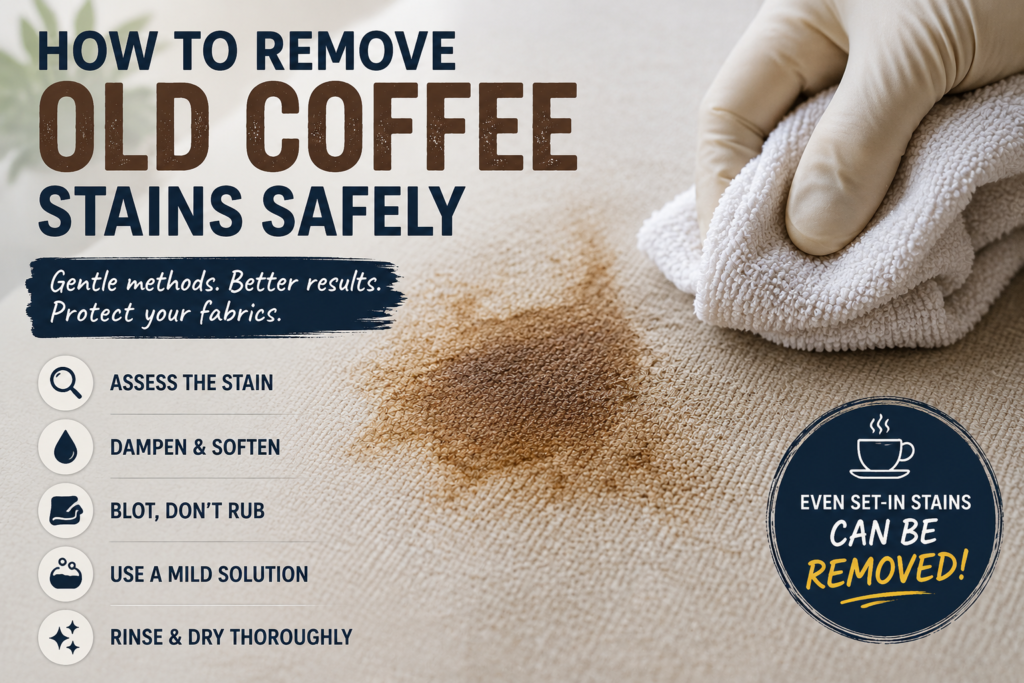
Old coffee stains can be harder to remove than fresh spills, but the right treatment can often lift or noticeably reduce even dried, set-in marks. The key is to soften the residue gradually without damaging the material underneath.
Coffee contains pigments and other compounds that can remain within carpet fibres, upholstery and fabrics after the liquid itself has dried. If milk, cream or sugar was in the drink, there may also be additional residue to remove.
The safest approach is not to attack the stain with the strongest cleaner available. Start gently, identify the material you are treating, test your cleaning solution and work progressively. This guide explains how to remove old coffee stains while keeping the surrounding surface in good condition.
What to Do Before Treating an Old Coffee Stain
Before applying anything, check what material has been stained. A washable cotton shirt can tolerate treatments that may be unsuitable for a wool carpet, delicate upholstery or a mattress.
If the item has a care label, read it first. For carpets and upholstered furniture, check the manufacturer’s cleaning guidance where available. Some fabrics require professional or specialist cleaning.
For most set-in coffee stain removal, you will need only a few basic items:
- Clean white cloths or plain white kitchen roll
- Cool or lukewarm water
- A small bowl
- Mild washing-up liquid or another cleaner suitable for the material
- A spoon or blunt edge for removing dried surface residue
- Dry towels for absorbing moisture
Always test any cleaning solution on a small, inconspicuous area first. This is particularly important with coloured fabrics, carpets and sofas.
How to Remove an Old Coffee Stain Step by Step
An old stain needs a little more patience than a fresh spill. Instead of saturating it immediately, gradually reintroduce moisture so the dried coffee residue can begin transferring out of the fibres.
1. Remove Any Dried Surface Residue
Check the stain for anything sitting on the surface before adding water. This is particularly important if the coffee contained milk, cream, syrups or sugar.
Gently loosen dry residue using a spoon or another blunt edge. Avoid aggressive scraping, as this can damage fabric fibres or push debris deeper into carpet pile.
If you are dealing specifically with carpet, our guide to removing coffee stains from carpet explains how to adapt the treatment to carpet fibres.
2. Test the Material Before You Begin
Choose an inconspicuous spot and apply a tiny amount of the cleaning solution you intend to use.
Blot it with a clean white cloth and check for colour transfer, fading, texture changes or other damage. Allow the test area to dry if necessary because some changes are easier to see once the material is no longer wet.
If the colour transfers onto your cloth or the material changes noticeably, stop and use a method recommended for that particular fabric or surface.
3. Dampen the Dried Stain
Use a clean white cloth lightly dampened with cool or lukewarm water. Press it against the stained area to begin softening the dried coffee.
Do not pour water directly over the stain. Excessive moisture can spread the mark and may create problems underneath carpets, upholstered furniture and mattresses.
Allow the moisture a short time to soften the residue before blotting.
4. Blot Rather Than Scrub
Press a clean section of cloth onto the stain, lift it away and repeat.
You may begin to see brown residue transferring onto the cloth. Move to a clean part of the cloth whenever this happens so that you are not putting coffee back onto the material.
Work from the outside edge towards the centre. This helps control the stained area rather than spreading it outwards.
Avoid vigorous rubbing. Scrubbing can spread staining, distort fibres and make some fabrics look worn even after the coffee itself has disappeared.
For coffee on upholstered furniture, follow the more material-specific advice in our guide to removing coffee stains from a fabric sofa.
5. Introduce a Mild Cleaning Solution
If water alone does not remove the old stain, mix a small amount of mild washing-up liquid with water, provided this is suitable for the material.
You do not need a highly concentrated mixture. Too much detergent can leave a sticky residue that is difficult to rinse from absorbent surfaces.
Apply the solution to your cloth rather than pouring it directly onto the stain. Gently blot the affected area and give the solution a little time to work on the remaining residue.
Continue using clean areas of the cloth as the stain transfers.
6. Remove the Cleaning Residue
Once the stain has lifted as much as possible, use another clean cloth lightly dampened with plain water to blot the treated area.
This step is easy to overlook, but it matters. Detergent left in carpet or upholstery can leave the fibres feeling stiff or attract dirt later.
Again, avoid soaking the material. You are trying to remove the cleaning residue, not rinse the entire item with water.
7. Blot and Allow the Area to Dry
Press a clean, dry towel or cloth firmly against the area to absorb as much remaining moisture as possible.
Then allow it to air-dry thoroughly. Keep furniture and other items off damp carpet until it is completely dry.
For mattresses, moisture control is particularly important. Our guide to removing coffee stains from a mattress covers how to treat the mark without unnecessarily soaking the mattress.
Do not judge the final result while the material is still wet. Damp fibres often look darker, so wait until the area is completely dry before deciding whether another treatment is necessary.
Explore KeepShine’s free downloadable cleaning resources for more practical help with keeping everyday cleaning jobs organised and manageable.
Pro Tip

When treating an old stain, take a photograph before you start and compare it with the area once completely dry. Gradual improvement can be difficult to judge while you are repeatedly blotting, and this helps you decide whether another gentle treatment is worthwhile instead of unnecessarily applying stronger products.
Why Some Dried Coffee Stains Need More Than One Treatment
A stain that has been present for days or weeks may not disappear during the first treatment. Coffee residue can remain deeper within absorbent fibres, and previous cleaning attempts may also have affected how easily it can be removed.
If the stain is still visible after drying, repeat the gentle treatment rather than immediately increasing the strength of your cleaning product. Re-moisten the mark lightly, blot it and see whether additional residue transfers onto a clean white cloth.
The material itself also matters. Washable clothing can often be treated and then laundered according to its care label. If coffee has dried onto clothing or another washable textile, see our guide to removing coffee stains from clothes and washable fabrics.
Carpet, sofas and mattresses require more controlled moisture because you cannot simply rinse them thoroughly afterwards.
You should also consider what was in the coffee. Black coffee leaves a different type of residue from a drink containing milk, cream, sugar or flavoured syrup. A stain may therefore need more than colour removal; any remaining organic or sticky residue also needs to be dealt with appropriately.
If repeated gentle treatments make no meaningful difference, particularly on expensive, delicate, antique or specialist fabrics, professional treatment may be safer than experimenting with increasingly strong household chemicals.
Mistakes to Avoid

- Scrubbing the stain aggressively. Vigorous rubbing can spread the coffee and damage or distort fibres. Blot repeatedly with clean sections of cloth instead.
- Soaking the stained area. More water does not automatically mean better stain removal. Excess moisture can spread staining and may penetrate deeply into upholstery, carpet backing or mattresses, making drying much more difficult.
- Using very hot water without checking the material. Heat is not a universal solution for dried stains and may be unsuitable for certain fibres or finishes. Follow the item’s care instructions and use a temperature appropriate for the material.
- Mixing different cleaning chemicals. Combining household cleaning products can cause dangerous reactions. Never improvise chemical mixtures, and follow product labels carefully.
- Skipping the patch test. A product may remove the coffee but also fade the fabric or affect its texture. Test first, particularly on coloured carpet and upholstery.
- Repeatedly adding detergent without removing it. Cleaning-product residue can remain in absorbent materials and attract new dirt. After treatment, carefully blot away detergent with a cloth lightly dampened with clean water.
If a stubborn coffee stain is part of a larger cleaning job you’d rather not tackle yourself, KeepShine can provide professional cleaning help.
Common Questions About Old Coffee Stain Removal
Old stains can behave differently depending on the drink, material and previous cleaning attempts, so here are answers to a few other useful questions.
Can a coffee stain still be removed after it has dried?
Often, yes. A dried stain may take longer to treat because the coffee residue has settled into the fibres, but carefully re-moistening and blotting it can still produce good results. Success depends on the material, how long the stain has been present and whether it has previously been treated.
Should I use vinegar on an old coffee stain?
Vinegar appears in many household stain-removal methods, but it is not automatically suitable for every carpet, fabric or upholstery material. Check the manufacturer’s care guidance and patch-test any proposed treatment first. A material-specific cleaning method is safer than assuming one household solution will work everywhere.
What if the old coffee stain is on a sofa?
First check the sofa’s care instructions and cleaning code where available. Upholstery can be particularly sensitive to excessive water, and the filling beneath the fabric may take much longer to dry than the surface. Avoid saturating it and use our fabric sofa coffee-stain guide for the more specific process.
Are tea and coffee stains treated in exactly the same way?
They can have similarities, but you should not assume every stain or surface requires identical treatment. The drink’s ingredients and the affected material matter. For a tea spill on flooring, follow the dedicated advice for removing tea stains from carpet.
Why can I still see the stain when the area is wet?
Wet fabric and carpet usually look darker than when dry, which can make it difficult to assess the result accurately. Blot away excess moisture, allow the treated area to dry fully and then inspect it in good light before deciding whether another treatment is necessary.
When should I stop treating the stain myself?
Stop if you notice colour transfer, fading, fibre damage or another unwanted change. You should also be cautious with valuable, delicate or specialist materials. Repeated experimentation with stronger products can turn a removable stain into permanent material damage, so professional advice may be the safer next step.
Subscribe to KeepShine for more practical cleaning guides, stain-removal advice and useful resources for looking after your home.
Final Thoughts: Patience Is Often the Safest Approach to an Old Stain
Old coffee marks can look permanent, but dried does not necessarily mean impossible to remove. Start by identifying the material, soften the stain gradually and blot rather than scrub.
Most importantly, give each treatment time to work and let the area dry before deciding what to do next. Repeating a gentle, suitable method is often preferable to reaching immediately for a stronger product.
Once the stain is dealt with, keeping the surrounding space routinely clean can also make spills easier to spot and treat quickly. For everyday upkeep, our step-by-step living room cleaning guide can help you build a practical routine.