
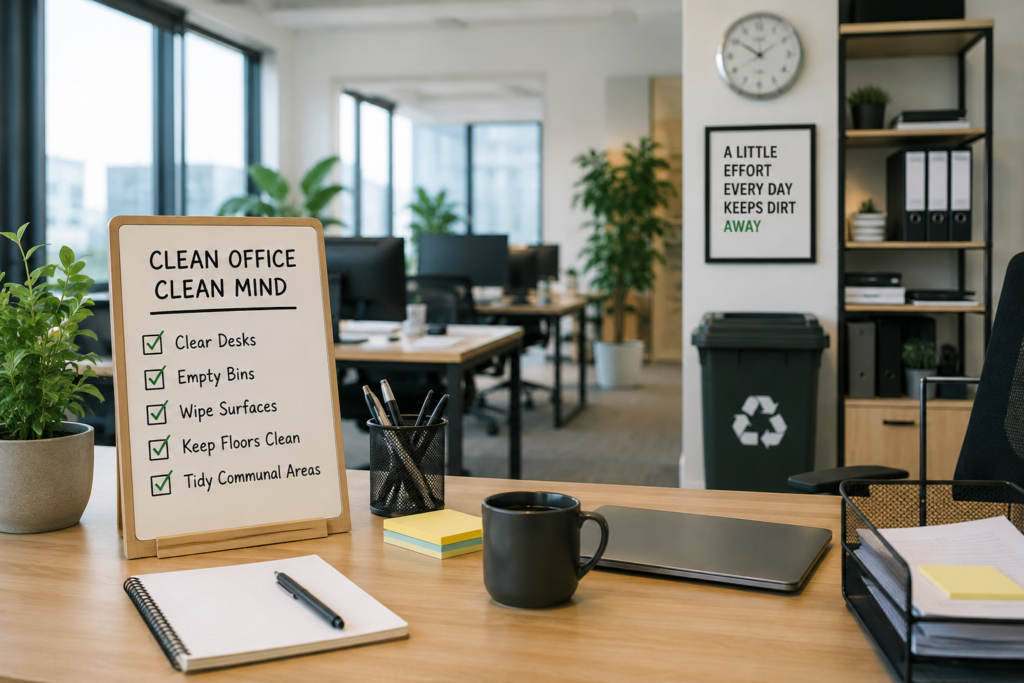
A clean office can quickly become untidy again, but a few simple habits can help you keep your office clean for longer between proper cleaning sessions.
The key is prevention. Rather than waiting for dust, clutter, crumbs and marks to build up, small daily actions can stop many common office cleaning problems before they become noticeable.
This guide explains practical office maintenance tips that help reduce dirt, keep desks and shared areas under control, and make regular cleaning quicker and easier.
The Best Way to Keep an Office Cleaner Between Cleans
The easiest way to keep an office cleaner for longer is to deal with small problems as they happen. Clear rubbish before bins overflow, wipe up spills promptly, keep food contained to appropriate areas and avoid allowing paperwork or unnecessary items to accumulate on desks.
Pay particular attention to entrances, desks, kitchens, toilets and frequently touched surfaces. These areas generally need more attention than spaces that receive little daily use.
Regular maintenance does not replace proper cleaning. Instead, it slows down the build-up of dirt between cleaning sessions. If you are starting with an office that already needs attention, it may be better to clean the office properly first and then introduce preventative habits.
Practical Ways to Keep Your Office Clean for Longer
Keeping an office presentable is much easier when everyone follows a few straightforward habits. The aim is not to clean constantly, but to prevent avoidable mess from accumulating.
1. Stop Dirt at the Entrance
A surprising amount of office dirt arrives on people’s shoes. Mud, grit, dust and moisture can quickly spread from the entrance into corridors, reception areas and workspaces.
Use suitable entrance mats and keep them in good condition. Mats work best when they are large enough for people to take several steps across them rather than simply stepping over them.
Vacuum or clean entrance areas regularly because a heavily soiled mat can eventually become another source of dirt.
During wet weather, inspect entrances more frequently. Deal with wet or muddy flooring promptly, particularly where it could create a slipping hazard.
2. Keep Desks as Clear as Practical
Clutter makes an office look untidier and also makes effective cleaning more difficult. Papers, mugs, packaging and unnecessary equipment create additional surfaces where dust can collect.
Encourage employees to remove rubbish, return documents to appropriate storage and take used cups or dishes away at the end of the day.
Personal belongings do not need to disappear completely. The goal is simply to leave enough clear space for surfaces to be cleaned properly.
For more detailed desk maintenance, see our guide to cleaning an office desk properly.
3. Deal With Spills Straight Away
Coffee, tea and other spills are much easier to manage when they are fresh. Leaving them can result in staining, sticky surfaces and dirt being transferred elsewhere.
Blot liquid spills promptly and clean the affected surface using a method suitable for the material. Avoid rubbing spills aggressively into carpets or upholstered furniture.
For electrical equipment, do not spray cleaning products directly onto devices. Follow the manufacturer’s cleaning guidance where appropriate and disconnect equipment safely before cleaning if instructed to do so.
4. Control Food and Crumbs
Eating at desks can create crumbs, packaging, grease marks and lingering food smells. Where possible, encourage staff to use designated eating areas.
If people do eat at their desks, food waste should be removed promptly rather than left overnight.
Kitchen and break areas deserve particular attention because small amounts of food debris can quickly make an otherwise clean workplace feel neglected.
Wipe tables and counters after use, wash or load used dishes, and clean obvious spills immediately.
5. Empty Bins Before They Become a Problem
Do not wait for bins to overflow.
Food waste, used cups and other rubbish can create smells and make the surrounding area look untidy even when the rest of the office is clean.
The frequency of emptying depends on how heavily each bin is used. A lightly used paper bin may need less attention than a kitchen or communal waste bin.
Where possible, separate waste correctly according to your workplace recycling arrangements.
6. Pay Attention to High-Touch Surfaces
Door handles, light switches, shared phones, cupboard handles and other frequently touched areas can quickly become marked.
Include these surfaces in routine cleaning rather than waiting until visible grime develops.
Use products and methods suitable for each material. Electronic equipment requires particular care, so avoid excessive moisture and check manufacturer guidance when you are uncertain about the correct cleaning method.
7. Prevent Dust From Building Up
Dust is easier to control when surfaces remain reasonably clear.
Regularly remove dust from accessible shelves, desks, windowsills and other horizontal surfaces. When doing a more thorough clean, work from higher areas downwards so displaced dust can be collected later from lower surfaces and floors.
Do not overlook corners and areas around equipment. If dust has already accumulated throughout the workplace, our office deep-cleaning guide explains how to tackle the office more thoroughly.
8. Maintain Floors Rather Than Waiting for Visible Dirt
Floors can make a major difference to how clean an office feels.
Vacuum carpets often enough to prevent visible debris from accumulating, particularly around entrances and busy walkways. Hard floors should be swept, vacuumed or cleaned using an appropriate method for the flooring material.
Deal with localised marks promptly. This can prevent a small spill or muddy footprint from being walked through the rest of the workplace.
9. Give Shared Areas Clear Responsibilities
Communal areas can become messy when everyone assumes somebody else will deal with them.
Simple expectations can help. Used mugs go to the kitchen, rubbish goes into the correct bin, spills are dealt with promptly and meeting rooms are left ready for the next users.
These small habits reduce the amount of unnecessary tidying required during the next proper clean.
10. Finish Each Working Day With a Quick Reset
A short end-of-day reset can prevent today’s small mess from becoming tomorrow’s cleaning job.
Before leaving, remove rubbish, return shared items, take cups to the kitchen, straighten chairs and leave desks reasonably clear.
This is not meant to become a full cleaning session. A few minutes spent resetting the workspace simply makes regular cleaning more effective and helps the office start the next day in better condition.
Explore KeepShine’s free downloadable cleaning resources for practical ways to make regular cleaning and organisation easier.
Pro Tip
Do not give every part of the office exactly the same cleaning frequency. Concentrate routine attention on entrances, kitchens, toilets, shared equipment and busy walkways, then clean lower-use areas as needed. Matching cleaning frequency to actual use can keep the whole workplace looking better without creating unnecessary work.
Create a Cleaning Routine That Matches How the Office Is Used
There is no single maintenance schedule that suits every workplace. A small office occupied by a few people will have different requirements from a busy workplace with employees, visitors, shared facilities and frequent deliveries.
Instead of cleaning everything simply because a particular number of days has passed, identify the areas where dirt builds up fastest.
Separate Daily Tasks From Periodic Cleaning
Small maintenance jobs are usually best handled frequently. These may include removing food waste, dealing with spills, keeping kitchen surfaces under control and clearing obvious debris.
Other jobs can be scheduled less frequently depending on use. These might include detailed dusting, cleaning less accessible areas, moving lightweight furniture where appropriate or dealing with build-up around edges and corners.
Our practical office cleaning schedule can help you decide which jobs may need daily, weekly or less frequent attention.
Watch for Patterns
Notice where dirt repeatedly appears.
If the reception floor is dirty every afternoon, the entrance may need better preventative maintenance. If kitchen counters are continually cluttered, clearer expectations around shared spaces may help. If desks gather dust quickly, reducing unnecessary items on surfaces can make routine cleaning easier.
Preventing dirt is often more efficient than repeatedly dealing with the same problem.
Periodic deeper cleaning is still important because routine maintenance cannot reach every corner or deal with every type of build-up. The aim is to make those deeper cleans more manageable, not eliminate them completely.
Mistakes to Avoid
- Waiting until the office looks dirty. Visible dirt usually means build-up has already occurred. Small, regular maintenance tasks are generally easier than trying to restore several neglected areas at once.
- Using one cleaning product everywhere. Desks, screens, flooring, furniture and other office surfaces can require different care. Check product labels and manufacturer guidance rather than assuming a general cleaner is suitable for every material.
- Spraying products directly onto electronics. Excess liquid can damage keyboards, monitors and other equipment. Follow the equipment manufacturer’s cleaning instructions and use minimal moisture where appropriate.
- Cleaning around clutter instead of removing it. Wiping only the exposed parts of a crowded desk leaves dust and debris behind. Keeping surfaces reasonably clear makes proper cleaning much easier.
- Ignoring small spills and stains. A fresh spill may be relatively simple to manage, while leaving it can allow staining or sticky residue to develop. Respond promptly using a method suitable for the affected material.
- Relying on occasional deep cleans alone. Deep cleaning has an important place, but everyday habits determine how quickly the office becomes dirty again. Avoiding routine maintenance is one of the common office cleaning mistakes worth correcting.
f keeping your workplace consistently clean is becoming difficult to manage in-house, KeepShine can provide professional cleaning support suited to your office.
More Questions About Keeping an Office Clean
The following answers cover a few practical questions that often arise when trying to maintain a cleaner workplace between regular cleaning sessions.
How often should an office be cleaned?
It depends on the number of people using the office, the type of workplace and how heavily individual areas are used. Kitchens, toilets, entrances and high-traffic spaces often require more frequent attention than low-use rooms. Rather than relying on one frequency for the entire workplace, create a schedule based on actual use and hygiene needs.
How can employees help keep the office cleaner?
Keep expectations simple. Employees can remove their own rubbish, return cups and dishes, deal with minor spills promptly, keep desks reasonably organised and leave shared spaces ready for the next person. Complicated cleaning rules are less useful than a small number of habits that people can realistically follow every day.
Should office desks be cleaned every day?
Not every desk necessarily requires a full daily clean. Usage matters. Shared or frequently used workstations may need more attention than individual desks used occasionally. Removing food, spills and rubbish promptly is sensible, while detailed cleaning can be incorporated into the workplace’s regular cleaning routine.
Why does my office get dusty so quickly?
Dust can enter through doors and windows and can also come from clothing, paper, furnishings and normal everyday activity. Clutter can make the problem more noticeable because it creates additional places for dust to settle. Keeping surfaces clearer and maintaining floors regularly can help control it.
How can I stop an office from becoming cluttered?
Give commonly used items a designated place and remove unnecessary paperwork, packaging and abandoned cups regularly. Storage systems only help when they are easy to use. An end-of-day desk reset can prevent small amounts of clutter from gradually taking over workspaces.
What should I do if the office is already very dirty?
Maintenance works best once the workplace has reached a reasonable starting standard. If substantial dust, grime or clutter has accumulated, complete a thorough clean first and then introduce preventative routines. Following a structured step-by-step office cleaning process can make the initial job easier to organise.
Subscribe to KeepShine for more practical cleaning guides, maintenance tips and useful resources to help make everyday cleaning easier.
Final Thoughts: Small Habits Make Office Cleaning Easier
Keeping an office clean for longer is less about constantly cleaning and more about preventing avoidable mess from building up.
Control dirt at entrances, deal with spills quickly, keep desks manageable, remove waste regularly and pay extra attention to the parts of the workplace that receive the most use. A simple end-of-day reset can also make a noticeable difference over time.
Most importantly, adjust your routine to the workplace rather than following an unnecessarily rigid system. When everyday maintenance and scheduled cleaning work together, the office is easier to manage and stays presentable for longer.