
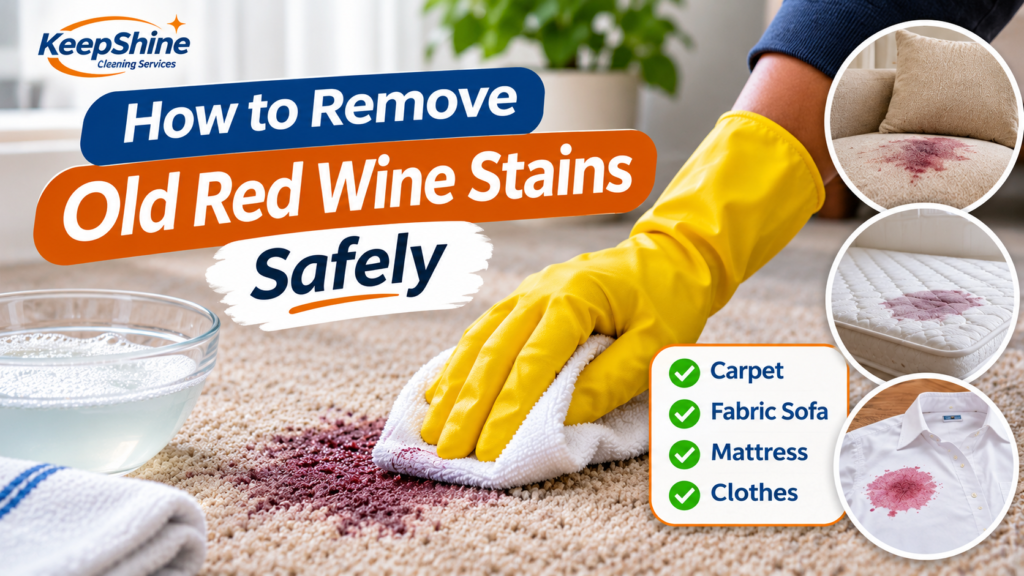
Old red wine stains can be frustrating, especially when they have dried into carpet, upholstery, mattresses or clothing. Unlike a fresh spill, a set-in red wine stain may have had hours, days or even weeks to bond with the fibres, making ordinary cleaning less effective.
The good news is that an older stain is not necessarily permanent. With the right cleaning approach, some patience and suitable products, you may be able to lighten or remove much of the discolouration without damaging the material.
Red wine contains natural colour compounds called tannins and anthocyanins. These contribute to its deep red and purple colour. As the wine dries, these pigments can become more difficult to lift from absorbent materials.
The best treatment depends on where the stain is, how long it has been there and what the material is made from. This guide explains how to tackle dried red wine stains safely, which products to consider and when professional cleaning may be the better option.
What to Do Before Treating an Old Red Wine Stain
Before applying any cleaning solution, identify the material and check its care instructions. A method that works on washable cotton may be unsuitable for a wool carpet, delicate upholstery or a mattress.
For most washable, colourfast materials, a sensible starting point is cool water and a small amount of mild washing-up liquid or laundry detergent.
You may need:
Clean white microfibre cloths or white towels.
A small bowl of cool water.
Mild washing-up liquid or suitable laundry detergent.
A soft-bristled brush, if appropriate for the material.
A clean sponge.
A vacuum cleaner for dry debris.
A suitable upholstery or carpet stain remover, where necessary.
Always test cleaning products on a small, hidden area first. Allow the test area to dry before checking for colour changes, fading or damage.
Important: Never mix cleaning chemicals. In particular, never combine bleach with vinegar, ammonia or other cleaning products. Avoid hot water and excessive heat during stain removal because they can make some stains harder to remove.
How to Remove Old Red Wine Stains from Different Surfaces
The most effective approach depends on the affected surface. Follow the appropriate method below rather than using the same cleaning solution on everything.
1. How to Remove Old Red Wine Stains from Carpet
Carpet fibres can absorb red wine deeply, particularly when the spill has been left untreated. Older stains may also have spread beneath the visible surface.
Follow these steps:
1. Remove loose dirt and debris. If the area has accumulated dust or dried particles, gently vacuum it before introducing moisture.
2. Prepare a mild cleaning solution. Mix a few drops of washing-up liquid into a bowl of cool water. Avoid making the solution too concentrated, as detergent residue can attract dirt.
3. Test the carpet. Apply a small amount to an inconspicuous area and check for colour transfer or damage once dry.
4. Dampen a clean white cloth. Dip it into the solution and squeeze out the excess water.
5. Blot the stain gently. Work from the outside towards the centre to avoid spreading the discolouration. Do not scrub aggressively, as this can damage carpet fibres and push the stain further into the pile.
6. Rinse carefully. Use another cloth lightly dampened with clean water to remove detergent residue.
7. Blot and dry. Press a dry towel against the area to absorb moisture. Allow the carpet to dry naturally with good ventilation.
If the stain remains, consider a carpet stain remover specifically labelled as suitable for your carpet type. Follow its instructions carefully.
For more detailed surface-specific advice, see our guide to removing red wine stains from carpet.
How to Remove Old Red Wine Stains from a Fabric Sofa
Fabric sofas require extra care because their upholstery may contain delicate fibres, dyes and internal padding.
Before cleaning, check the manufacturer’s upholstery care label. Some sofas can be cleaned with water-based products, while others require solvent-based cleaning or professional treatment.
For upholstery that permits water-based cleaning:
Vacuum the affected area using a suitable upholstery attachment.
Mix a small amount of mild detergent with cool water.
Test the solution on a hidden section of the sofa.
Lightly dampen a white cloth with the solution.
Blot the stain gently without soaking the fabric.
Use a separate cloth with clean water to remove detergent residue.
Press a dry towel against the area to absorb moisture.
Avoid saturating the sofa. Excess water can penetrate the padding, making drying difficult and potentially causing unpleasant odours.
If the sofa has a delicate fabric, persistent discolouration or a stain that extends into the cushioning, professional upholstery cleaning may be more appropriate.
You can also read our guide on removing red wine stains from a fabric sofa.
3. How to Remove Old Red Wine Stains from a Mattress
A mattress presents a different challenge because liquids can travel beyond the surface into the internal filling.
The most important consideration is controlling moisture.
Remove bedding and wash it separately according to its care label.
Vacuum the mattress surface to remove loose dust.
Prepare a mild detergent solution using cool water.
Lightly dampen a clean cloth and gently blot the affected area.
Avoid pouring water or cleaning solution directly onto the mattress.
Remove any detergent residue using a separate, lightly dampened cloth.
Press a dry towel against the area to absorb as much moisture as possible.
Allow the mattress to dry completely before replacing the bedding.
Use a fan or good room ventilation to help the drying process.
Do not use excessive heat or apply strong chemicals to the mattress without checking the manufacturer’s instructions.
For more information, follow our guide to removing red wine stains from a mattress.
4. How to Remove Old Red Wine Stains from Clothes and Washable Fabric
Washable clothing is often easier to treat because it can usually be rinsed and washed more thoroughly than fixed upholstery.
Try the following method:
Check the garment’s care label to confirm the recommended washing temperature and suitable cleaning products.
Rinse the stained area from the reverse side with cool water, where the fabric construction allows.
Apply a small amount of suitable liquid laundry detergent to the affected area.
Gently work the detergent into the fabric using your fingers, without rubbing aggressively.
Leave it for the period recommended by the detergent manufacturer.
Rinse thoroughly with cool water.
Wash the garment according to its care label.
Check the stain before drying.
If the stain remains, consider soaking the garment in an oxygen-based stain remover, provided the product and fabric care instructions allow it.
Never put the garment into a tumble dryer while the stain is still visible. Heat can make remaining discolouration more difficult to remove.
Our guide to removing red wine stains from clothes and washable fabrics provides further advice.
Explore KeepShine’s free cleaning resources for practical ways to organise household cleaning and keep your home looking its best.
Pro Tip

When treating an old stain, work in small sections rather than applying cleaning solution to the entire affected area at once. This gives you better control over the amount of moisture used and makes it easier to see whether the treatment is actually lifting the colour. Always allow the material to dry before deciding whether another treatment is necessary.
Why Some Old Red Wine Stains Refuse to Disappear
Even when you follow the correct cleaning method, some older stains remain visible. Understanding why this happens can help you choose a better treatment instead of repeatedly applying products that may damage the material.
The stain has penetrated deeper into the fibres
A red wine spill does not always remain on the surface. On carpet, upholstery and mattresses, liquid can travel into deeper layers.
Cleaning the visible surface may therefore improve the appearance without completely removing the original stain.
Repeatedly soaking the material is not the answer. It may introduce more moisture without reaching the underlying discolouration effectively.
Previous cleaning attempts have affected the stain
Sometimes an old stain has already been treated with hot water, unsuitable detergents or household remedies.
These treatments may have altered the stain or affected the surrounding fabric. For example, strong chemicals can cause colour fading that looks similar to remaining staining.
Before trying another product, consider what has already been applied.
The material itself may be delicate
Wool, silk, velvet and certain upholstery fabrics require more careful treatment than ordinary washable cotton.
A cleaning solution that is safe for one material may cause permanent damage to another.
If the care label recommends professional cleaning, follow that advice rather than experimenting with household products.
Consider oxygen-based stain removers carefully
Oxygen-based stain removers can help with certain stubborn stains on suitable washable fabrics. However, they are not universally safe.
Some products may affect dyes, finishes or delicate fibres. Always check the product label and the material manufacturer’s instructions.
Do not assume that a product suitable for white cotton is also appropriate for coloured upholstery, wool carpets or mattresses.
For other carpet staining problems, our guide to removing tea stains from carpet explains another common type of stubborn discolouration.
Common Mistakes to Avoid When Treating Old Red Wine Stains
Removing an old stain requires patience. Avoid these common mistakes to protect your fabrics and achieve better results.
– Using hot water immediately: Heat may make some stains more difficult to remove. Start with cool water unless the manufacturer’s instructions recommend otherwise.
– Scrubbing aggressively: Vigorous rubbing can damage carpet fibres, spread the stain and push colour deeper into the material. Blot gently instead.
– Applying too much cleaning solution: Excess moisture can penetrate carpet backing, sofa padding and mattresses. Use a lightly dampened cloth and control the amount of liquid.
– Mixing household cleaning chemicals: Combining products such as bleach, vinegar and ammonia can create dangerous reactions. Use one suitable product at a time and follow its instructions.
– Ignoring fabric care labels: Not every material can tolerate water-based cleaning. Check the care instructions before choosing a treatment.
– Using heat before checking the result: Tumble drying or applying direct heat to stained clothing can make remaining discolouration harder to remove. Allow the fabric to dry naturally and inspect it first.
If an old red wine stain has affected a large carpeted area or delicate upholstery, KeepShine can help with professional cleaning where a more specialised approach is needed.
More Questions About Treating Old Red Wine Stains
Here are some additional questions that can help you decide how to approach stubborn red wine discolouration.
Can old red wine stains be removed completely?
Sometimes, yes. The results depend on the age of the stain, the type of material and whether previous cleaning attempts have affected it. Some stains can be removed successfully, while others may only become lighter. Deeply absorbed or heat-treated stains can be particularly difficult to eliminate completely.
Does vinegar remove dried red wine stains?
Vinegar is a common household cleaning ingredient, but it is not a guaranteed treatment for dried red wine. Its effectiveness depends on the material and the stain. It may also affect certain dyes and finishes. A suitable fabric or carpet cleaning product is generally a more controlled option.
Is bicarbonate of soda effective on old red wine stains?
Bicarbonate of soda can absorb some moisture and odours, but it is not a reliable solution for removing established red wine pigments. Applying it to a dry, old stain may not produce meaningful results. Choose a cleaning treatment designed for the affected material instead.
Can hydrogen peroxide remove an old red wine stain?
Hydrogen peroxide can help break down certain coloured stains, but it may also bleach or discolour fabrics. It should not be used indiscriminately on carpets, coloured upholstery or clothing. Only consider a suitable product where the manufacturer permits it, and always test an inconspicuous area first.
How many times should I treat an old red wine stain?
There is no universal number of treatments. One or two careful attempts may improve some stains, while others require specialist attention. Avoid repeatedly applying cleaning products without assessing the results. Allow the material to dry between treatments so you can judge whether the discolouration has actually improved.
Should I call a professional cleaner for an old red wine stain?
Professional help is worth considering when the stain is extensive, deeply absorbed or located on delicate materials. A professional cleaner can assess the fibres, previous treatments and suitable cleaning methods before proceeding. This can be particularly useful for expensive carpets, mattresses and upholstered furniture.
Subscribe to KeepShine for more practical cleaning guides, stain removal advice and useful ways to keep your home clean and comfortable.
Final Thoughts: Give Stubborn Stains the Right Treatment
Old red wine stains can be challenging, but they are not always impossible to remove. The key is to understand the material, choose an appropriate cleaning method and avoid treatments that could make the problem worse.
Start gently with cool water and a suitable cleaning solution, test products before use and never rush the drying process.
Remember that different materials require different approaches. What works on washable clothing may not be suitable for a carpet, sofa or mattress.
If careful home treatment does not produce the results you want, consider professional cleaning rather than continuing to experiment with stronger chemicals.
A patient, surface-specific approach gives you the best chance of improving the appearance of the affected material while protecting the things in your home.