
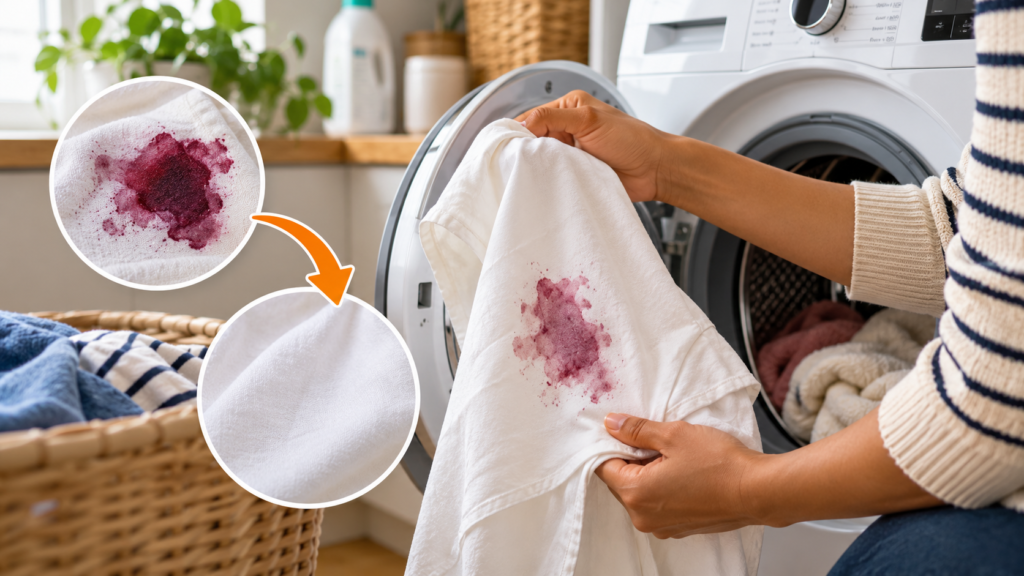
Red wine can leave a stubborn mark on clothing because it contains natural colour compounds called anthocyanins, which give the wine its deep red and purple appearance. These pigments can cling to fabric fibres, making the stain more noticeable as the liquid dries.
The longer red wine remains on clothing, the more difficult it can become to remove. Heat can make matters worse by setting the stain, particularly if the garment is placed in a tumble dryer before the affected area has been properly cleaned.
The good news is that most fresh red wine stains can be treated successfully at home, provided you use the right method for the fabric.
Different materials also require different approaches. Cotton and polyester are generally easier to treat than delicate fabrics such as silk and wool. Always check the garment’s care label before choosing a cleaning product or washing method.
What to Do Immediately After Spilling Red Wine
If you have just spilled red wine on your clothes, acting quickly can make a significant difference.
Before starting a full cleaning treatment, follow these simple precautions:
Blot the excess wine: Use a clean white cloth or kitchen paper to absorb as much liquid as possible. Press gently rather than rubbing.
Work from the outside towards the centre: This helps prevent the stain from spreading into a larger area.
Use cold water: Where the fabric allows, rinse the stained area with cold running water, preferably from the reverse side of the material.
Avoid applying heat: Do not use hot water, an iron or a tumble dryer while the stain remains.
Check the care label: Make sure the fabric can safely tolerate the cleaning method you intend to use.
If you cannot wash the garment immediately, blot the excess wine and keep the stained area away from heat. Avoid allowing the stain to dry unnecessarily.
How to Remove Red Wine Stains From Clothes Step by Step
For most washable cotton, polyester and other everyday fabrics, a combination of cold water and liquid laundry detergent is a sensible starting point.
You do not need several different cleaning products. Start with the gentlest effective method and only move to a stronger treatment if necessary.
Step 1: Remove Excess Red Wine
Lay the garment on a clean, absorbent surface. If possible, place a clean white towel underneath the stained section to prevent the wine from transferring to another part of the clothing.
Use a separate clean white cloth or kitchen paper to blot the remaining wine.
Work gently and replace the cloth or paper as it absorbs the liquid. Continue until you have removed as much excess wine as possible.
Avoid scrubbing, as this can push the pigment further into the fibres and spread the stain.
Step 2: Rinse the Stained Area With Cold Water
Turn the garment inside out if possible and hold the reverse side of the stain under a gentle stream of cold running water.
Allow the water to pass through the fabric, helping to push the wine out rather than further into the material.
Continue rinsing for a few minutes, checking whether the red or purple colouring is beginning to fade.
Do not use hot water. Heat can make certain stains more difficult to remove and may affect delicate or coloured fabrics.
If the garment is too large to rinse under a tap, use a clean cloth dampened with cold water to gently blot the affected area.
Step 3: Apply Liquid Laundry Detergent
Once you have removed as much wine as possible, apply a small amount of liquid laundry detergent directly to the affected area.
Choose a detergent suitable for the garment’s fabric and colour.
Gently work the detergent into the stain using your fingertips. Avoid aggressive rubbing or using a stiff brush, particularly on delicate materials.
Allow the detergent to work for approximately 5–10 minutes, following the product’s instructions.
If the garment has a care label that advises against direct detergent application, follow the manufacturer’s guidance instead.
Step 4: Rinse and Check the Stain
Rinse the treated area thoroughly with cold water to remove the detergent and loosened wine residue.
Examine the fabric in good lighting.
If the stain has disappeared or become barely visible, you can move on to washing the garment.
However, if a noticeable red or purple mark remains, do not rush to dry it. Repeat the detergent treatment or consider a suitable stain remover.
Step 5: Wash the Garment According to Its Care Label
Place the garment in the washing machine if it is suitable for machine washing.
Use an appropriate laundry detergent and select the temperature recommended on the care label. A cool or warm wash may be suitable, depending on the fabric.
Avoid assuming that a higher temperature will produce a better result.
If the garment is delicate or requires hand washing, follow its care instructions instead of putting it in the washing machine.
Step 6: Inspect Before Drying
When the wash cycle finishes, examine the previously stained area carefully.
If any wine colouring remains, treat it again before drying.
Air-drying is a sensible option while you are checking whether the stain has been completely removed.
Do not tumble-dry the garment or iron over the affected area until you are confident the stain has gone. Heat can make remaining discolouration much harder to remove.
For more practical ways to organise your household cleaning, explore KeepShine’s collection of free downloadable cleaning resources.
Pro Tip

When treating a stained garment, place a clean white towel underneath the affected area before applying water or detergent. This absorbs the loosened wine and helps prevent it from transferring to another section of the clothing. Replace the towel if it becomes heavily stained, rather than allowing the fabric to sit against the transferred wine.
How to Treat Different Types of Washable Fabric
Not every garment responds to stain removal products in the same way. The material, colour and finish can all affect which treatment is appropriate.
Cotton Clothing
Cotton is generally suitable for ordinary laundry treatment, making red wine stains relatively straightforward to tackle.
Blot the wine, rinse with cold water and apply liquid laundry detergent before washing according to the care label.
White cotton may tolerate additional stain treatments, but check the product instructions before using them.
Polyester and Synthetic Fabrics
Polyester and many other synthetic fabrics can usually be treated with liquid laundry detergent and a suitable wash cycle.
Avoid excessive heat, particularly when the garment contains a mixture of synthetic and natural fibres.
For stubborn marks, use a fabric-safe stain remover that specifically states it is suitable for the material.
Linen Clothing
Linen can absorb liquid quickly, so removing excess wine promptly is important.
Use cold water and a suitable detergent, handling the fabric gently to avoid unnecessary friction.
Some linen garments have delicate finishes or special washing requirements, so check the care label before applying a stain treatment.
Wool and Silk
Wool and silk require considerably more care than ordinary cotton clothing.
Avoid aggressive rubbing, strong stain removers and unsuitable bleaching products.
If the garment is labelled dry-clean only, do not attempt to wash it at home. Blot the excess wine gently and take it to a professional dry cleaner, explaining what caused the stain and when it happened.
For washable wool or silk, only use products specifically approved for that material and follow the manufacturer’s care instructions.
How to Remove Old or Dried Red Wine Stains
Fresh stains are usually easier to treat, but an older red wine mark does not necessarily mean the garment is ruined.
When wine dries, its colouring can remain attached to the fabric fibres. This makes the stain more difficult to remove, so you may need to allow additional time for treatment.
Start by checking the care label and identifying the fabric.
Rehydrate the Dried Stain
Dampen the stained area with cold water. Allow a little time for the moisture to soften the dried residue.
Avoid soaking delicate materials unless their care instructions permit it.
Gently blot the area using a clean white cloth. Do not scrape or scrub the dried stain, as this could damage the fibres.
Apply a Suitable Stain Treatment
Apply liquid laundry detergent or a fabric-safe stain remover according to its instructions.
For washable white or colourfast garments, an oxygen-based stain remover may help tackle remaining discolouration.
However, check that the product is suitable for the garment. Some treatments can affect dyes, finishes and delicate fibres.
If you are unsure whether a product is safe, test it on a hidden section first.
Repeat Before Washing
Rinse the treated area and check whether the stain has faded.
Older stains may require more than one treatment. It is better to repeat a suitable gentle process than to use increasingly aggressive products.
Once the mark has sufficiently faded, wash the garment according to its care label.
If the stain remains, consider professional stain treatment rather than exposing the fabric to stronger chemicals or excessive heat.
For other stubborn household stains, you may also find our guide to removing old red wine stains safely useful when dealing with dried wine marks on different materials.
Mistakes to Avoid
Removing a wine stain incorrectly can make the problem worse. Avoid these common mistakes:
Rubbing the stain aggressively: Scrubbing can spread the wine and push the colouring deeper into the fibres. Blot gently and work from the outside towards the centre.
Using hot water immediately: Heat may make remaining discolouration harder to remove. Start with cold water unless the garment’s care instructions specify otherwise.
Using salt as your main cleaning treatment: Salt is sometimes recommended as a home remedy, but it is not a reliable substitute for proper stain treatment. Focus on removing excess wine and using a suitable detergent.
Mixing different cleaning products: Combining stain removers, bleach and other household chemicals can create dangerous reactions or damage clothing. Use one suitable product at a time and follow its instructions.
Putting the garment in the tumble dryer too soon: Heat can set remaining wine discolouration. Inspect the fabric before using a heated drying cycle.
Ignoring the care label: A treatment suitable for cotton may damage silk, wool or specially finished fabrics. Always choose a method appropriate for the material.
If wine spills have affected several household fabrics or you need help with more challenging cleaning jobs, KeepShine can help you explore professional cleaning options.
More Questions About Removing Red Wine From Clothing
Here are some additional answers to common questions about treating wine stains and looking after washable fabrics.
Can red wine stains come out completely?
Yes, many red wine stains can be removed completely, particularly when treated while fresh. However, the result depends on the fabric, how long the wine has been present and whether heat has previously been applied. Older stains may need repeated treatment, while delicate or previously damaged fabrics may require professional attention.
Does white wine remove red wine stains?
White wine is sometimes suggested as a home remedy for red wine spills, but it is not a dependable stain-removal method. Adding another type of wine introduces more liquid and potentially additional residue. Cold water followed by a suitable laundry detergent is a more practical starting point.
Can I use baking soda to remove red wine from clothes?
Baking soda is commonly used in household cleaning, but it is not always the most effective treatment for red wine on clothing. Some fabrics and dyes may also react differently to homemade cleaning mixtures. A suitable liquid laundry detergent or fabric-safe stain remover is generally a better first choice.
Can I use bleach on red wine stains?
Bleach should only be used when the garment and product instructions specifically allow it. Chlorine bleach can damage coloured clothing and certain fabrics. An oxygen-based stain remover may be an alternative for suitable washable garments, but it should still be checked for colour and fabric compatibility.
What should I do if red wine spills on a carpet or sofa?
The treatment is different because carpets and upholstered furniture cannot normally be washed in a machine. Blot the excess wine without rubbing and use a cleaning product suitable for the specific material. You can find further guidance in our guides to removing red wine stains from carpets and cleaning red wine spills from fabric sofas.
Can red wine stains be removed from a mattress?
Yes, some fresh stains can be treated, but mattresses require careful cleaning because excessive moisture can penetrate the filling. Blot the spill immediately and use a suitable upholstery or mattress-safe cleaning product sparingly. Our guide to removing red wine stains from a mattress explains the process in more detail.
Subscribe to KeepShine for more practical stain-removal advice, household cleaning guides and useful tips to keep your home looking its best.
Final Thoughts: Keep Your Clothes Looking Their Best
Red wine stains can be frustrating, especially when they affect favourite clothes or garments you intended to wear for a special occasion. However, quick action and the correct cleaning approach can make a significant difference.
Remember to blot rather than rub, start with cold water, choose a suitable detergent and always check the fabric’s care instructions before using a stain remover.
If the first treatment does not completely remove the mark, do not resort immediately to stronger chemicals or excessive heat. A second gentle treatment may be more effective and safer for the material.
The most important habit is to inspect clothing before drying it. By dealing with stains early and treating fabrics carefully, you can help your clothes stay clean and in good condition for longer.