
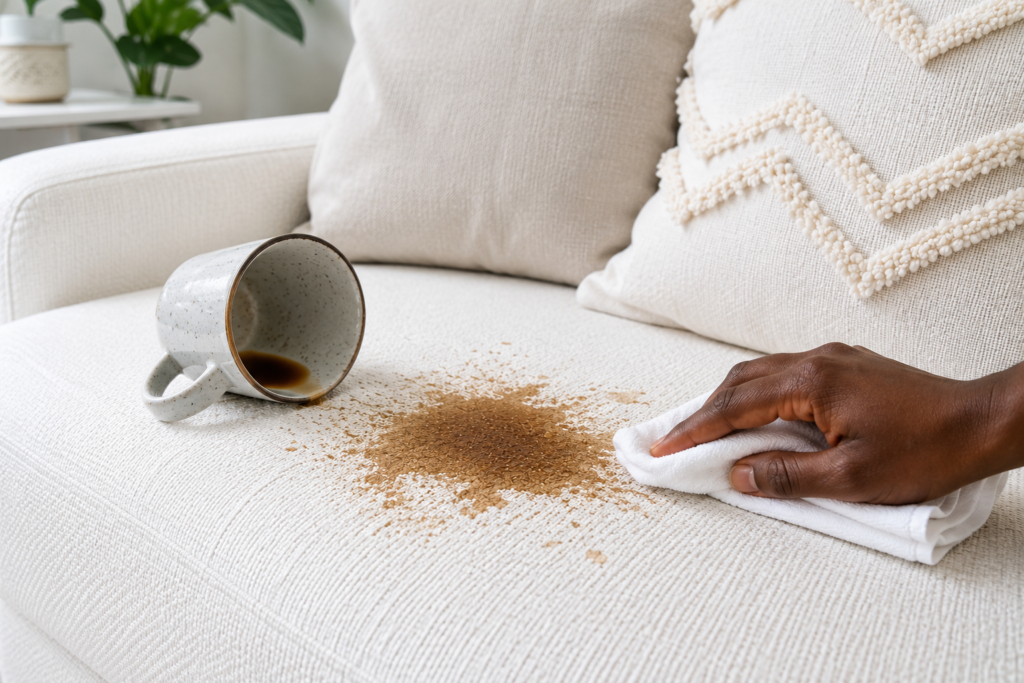
Coffee spills on sofas are common, but acting quickly can make a big difference. If you need to know how to remove coffee stains from sofa fabric, the safest approach is usually to blot the liquid, check the sofa’s care instructions and clean gently without soaking the upholstery.
Fresh coffee is generally easier to deal with than a stain that has dried into the fibres. However, rushing in with too much water, vigorous scrubbing or an unsuitable cleaning product can make matters worse.
This guide explains how to tackle a coffee stain on a fabric sofa step by step, what to do with older marks, which mistakes to avoid and when it may be better to leave the stain to a professional.
What to Do First When Coffee Spills on a Sofa
Start by removing as much coffee as possible before trying to clean the stain. Use a clean white or colourfast absorbent cloth or plain kitchen paper and gently blot the affected area. Work from the outside of the spill towards the centre so you do not spread it further.
Avoid rubbing. Rubbing can push the coffee deeper into the upholstery fibres and enlarge the stained area.
Before applying water or any cleaning solution, check the sofa manufacturer’s care label or cleaning instructions. Fabric sofas vary considerably, and a method that is suitable for one upholstery material may damage another.
If the spill contains milk, cream or sugar, prompt cleaning is particularly useful because you are dealing with more than coffee alone.
For general sofa care beyond stain treatment, see our guide to cleaning a fabric sofa properly.
How to Remove Coffee Stains From Sofa Fabric Step by Step
The exact treatment should always be guided by the sofa’s care instructions. If the manufacturer specifies professional or solvent-only cleaning, do not experiment with water-based homemade solutions.
For upholstery that can safely be cleaned with water, the following approach can help with many everyday coffee spills.
1. Blot Up as Much Coffee as Possible
If the coffee is still wet, place a clean absorbent cloth over the spill and press gently.
Lift the cloth rather than rubbing it backwards and forwards. Move to a clean section of the cloth as it absorbs the coffee and repeat until you are picking up very little moisture.
Starting at the outside edge and moving inward helps prevent the stain from becoming larger.
2. Check the Sofa's Cleaning Instructions
Before attempting sofa coffee stain removal, find the upholstery care label or manufacturer’s instructions.
Some upholstery tolerates water-based cleaning, while other fabrics require specialist products or professional treatment. Delicate, vintage or unusual upholstery may also need additional care.
If you cannot establish how the fabric should be cleaned, it is safer to stop rather than risk creating water marks, colour loss or permanent fabric damage.
3. Test Your Cleaning Method
Even when water-based cleaning is permitted, test your intended method on a small, inconspicuous part of the sofa first.
Apply a tiny amount and allow the area to dry fully. Check for colour transfer, fading, texture changes or water marks before treating the visible stain.
This small test can prevent a minor coffee spill from becoming a much larger upholstery problem.
4. Use a Small Amount of Cleaning Solution
For water-safe upholstery, start with the mildest suitable method. A small amount of mild washing-up liquid diluted well in lukewarm water may be sufficient for an everyday coffee spill.
You do not need to soak the sofa. Lightly dampen a clean cloth with the solution rather than pouring liquid directly onto the upholstery.
Gently blot the stained area, working from its outer edge towards the middle.
If you are dealing with coffee on another washable material, the cleaning approach can be quite different. Our guide to removing coffee stains from clothes and washable fabrics explains the appropriate process for those items.
5. Remove Cleaning Residue
Once the stain has lifted, dampen another clean cloth very lightly with plain water, provided the upholstery is suitable for water-based cleaning.
Blot the treated area to remove remaining cleaning solution.
Again, use as little moisture as possible. Upholstered furniture can take a long time to dry if too much water penetrates the cushioning underneath.
6. Blot Away Excess Moisture
Press a clean, dry towel or absorbent cloth against the area to pick up moisture.
Do not rub the fabric dry. Gentle pressure is sufficient.
If the stain is still visible, avoid repeatedly adding stronger products while the sofa is wet. Allowing the area to dry can give you a much clearer idea of what remains.
7. Allow the Sofa to Dry Naturally
Leave the treated area uncovered and allow air to circulate around it.
Avoid sitting on the damp section or covering it with cushions or throws until it is completely dry.
Good ventilation can help, but avoid applying intense direct heat unless the sofa manufacturer specifically permits it. High heat may affect some upholstery fibres, finishes or colours.
Once dry, examine the area in normal daylight. If a faint mark remains, you can decide whether another careful treatment is appropriate.
Explore KeepShine’s free downloadable cleaning resources for more practical help with keeping your home clean and organised.
Pro Tip

When treating upholstery, use several clean white cloths rather than repeatedly working with the same one. As a cloth picks up coffee, moving to a fresh section reduces the chance of transferring the stain straight back onto the sofa and also lets you see whether the coffee is still being lifted.
What to Do With Dried or Stubborn Coffee Stains
A dried coffee stain needs a little more patience because the liquid has already penetrated and dried within the upholstery fibres.
First, establish whether the sofa is suitable for water-based cleaning. If it is, lightly dampening and blotting the affected fibres may help loosen the dried residue before further treatment.
Avoid saturating the area in an attempt to dissolve the stain quickly. Upholstery contains layers beneath the visible fabric, and excessive moisture can travel into the padding.
Older stains can also be more complicated if the coffee contained milk, cream, flavoured syrup or sugar. What looks like a simple brown coffee mark may contain several different residues.
If an old stain has survived previous cleaning attempts, repeatedly applying different household products is rarely a good strategy. Our dedicated guide explains how to remove old coffee stains safely without automatically resorting to aggressive treatment.
It is also worth looking at the condition of the sofa as a whole. A single freshly cleaned patch can sometimes appear different from heavily used surrounding upholstery. If the entire sofa needs attention, cleaning it appropriately may produce a more even result.
Regular maintenance can make this easier. See how often a fabric sofa should be cleaned for a practical approach to routine upholstery care.
Mistakes to Avoid

- Scrubbing the coffee stain: Vigorous rubbing can spread the coffee and work it further into the upholstery. Blot with controlled, gentle pressure instead.
- Pouring cleaner directly onto the sofa: More liquid does not necessarily mean better stain removal. Excess moisture can soak through the covering into the padding and may leave water marks or make drying considerably slower.
- Ignoring the manufacturer’s care instructions: Upholstery fabrics are not interchangeable. A cleaning method that works well on one sofa could cause fading, texture changes or other damage to another.
- Using several cleaning products together: Mixing household cleaning substances can damage fabric and may create unsafe chemical reactions. Use one appropriate method and never mix products unless their manufacturers specifically state that this is safe.
- Using heat to dry the stain quickly: A hairdryer or other concentrated heat source may affect certain upholstery materials. Let the sofa dry naturally with good ventilation unless its care instructions say otherwise.
- Treating every sofa like washable fabric: Sofa upholstery, clothing, carpets and mattresses have different constructions. For example, removing coffee stains from carpet may require a different technique from treating a sofa.
If a stubborn sofa stain is proving difficult to remove safely, professional cleaning may be a more suitable option than repeatedly treating the fabric yourself.
Common Questions About Coffee Stains on Sofas
Coffee stains can behave differently depending on the upholstery and what was in the drink, so here are answers to a few other useful questions.
Can a dried coffee stain still be removed from a sofa?
Possibly. A dried stain is usually more difficult than a fresh spill, but that does not automatically make it permanent. The result depends on factors including the upholstery material, the coffee ingredients, how long the stain has been present and whether previous products have already been applied.
What if the coffee contained milk?
Blot the spill promptly and follow the sofa’s approved cleaning method. Coffee containing milk or cream leaves additional residue, so removing the visible brown mark may not necessarily remove everything from the fibres. If an odour or mark remains after suitable cleaning and complete drying, professional upholstery cleaning may be worth considering.
Can I use vinegar on a fabric sofa?
Do not assume vinegar is safe simply because it is commonly recommended as a household cleaner. Upholstery materials and finishes vary. Check the manufacturer’s instructions and test any permitted treatment in an inconspicuous area before applying it to a visible part of the sofa.
Why can I still see a ring after the sofa dries?
A visible outline can sometimes result from the original spill spreading or from uneven wetting during cleaning. Adding more and more water to the ring can make matters worse. Check the sofa’s care guidance before attempting further treatment, particularly if the affected area is large.
Should I clean the whole sofa after removing the stain?
Not necessarily. However, if the surrounding upholstery is already heavily soiled, a freshly treated section may look different once dry. If the sofa needs a more thorough clean, follow the correct procedure for its material and avoid common fabric sofa cleaning mistakes.
Is the same method suitable for a leather sofa?
No. Leather should not automatically be treated using methods intended for fabric upholstery. Leather type, finish and manufacturer recommendations all matter. If your sofa is leather, use the appropriate guidance for cleaning a leather sofa properly instead.
Subscribe to KeepShine for more practical stain-removal advice, cleaning guides and useful resources for looking after your home.
Final Thoughts: Deal With Coffee Spills Quickly and Gently
The best time to deal with a coffee spill is while it is still fresh. Blotting promptly, checking the sofa’s care instructions and using only a small amount of an appropriate cleaning solution can give you the best chance of lifting the mark without unnecessarily wetting the upholstery.
The main principle is simple: treat the fabric gently rather than attacking the stain. Avoid scrubbing, excessive moisture and untested products.
Once the area is completely dry, assess the result before doing anything else. If the stain remains and you are unsure what treatment the upholstery can safely tolerate, professional advice is preferable to risking permanent damage with repeated cleaning attempts.