
Fabric sofa cleaning mistakes can leave upholstery stained, faded, water-marked or even permanently damaged. Knowing what not to use on a fabric sofa is just as important as knowing how to clean it.
Different upholstery fabrics respond differently to water, detergents, heat and scrubbing. A method that works perfectly on one sofa may damage another, particularly when the fabric has specific manufacturer care requirements.
The safest approach is to identify the upholstery type, follow the sofa manufacturer’s care instructions and use gentle cleaning methods. This guide explains the most common fabric sofa cleaning errors, why they cause problems and how to clean your sofa without unnecessary damage.
Check Your Sofa Before You Start Cleaning
Before applying any cleaner, look for the manufacturer’s care label or cleaning instructions. Upholstery may be suitable for water-based cleaning, solvent-based products, professional cleaning only or another specific method.
If you are unsure how to begin, our step-by-step guide to cleaning a fabric sofa properly explains a safe general approach.
Always test a cleaning product on a small, hidden area first. Allow the test area to dry completely before deciding whether the product is suitable, as colour changes and water marks may become more obvious after drying.
A few simple precautions make a big difference:
- Check the manufacturer’s care instructions.
- Vacuum loose dust and crumbs before wet cleaning.
- Test products in an inconspicuous area.
- Use as little moisture as necessary.
- Blot spills rather than rubbing them.
- Allow upholstery to dry thoroughly.
These precautions help prevent many of the most common fabric sofa cleaning mistakes before they happen.
Fabric Sofa Cleaning Mistakes That Can Cause Damage
Most upholstery damage during cleaning comes from using the wrong product, too much moisture or excessive physical force. Avoiding the following errors can help protect both the fabric and the filling underneath.
1. Cleaning Without Checking the Care Instructions
One of the biggest mistakes is assuming all fabric sofas can be cleaned in the same way.
Upholstery varies enormously. Some fabrics tolerate gentle water-based cleaning, while others may be vulnerable to water marks, shrinkage, colour bleeding or changes in texture.
Before cleaning, find the sofa’s care label or manufacturer’s instructions where possible. Follow any specific restrictions on cleaning products or methods.
If the label is missing and you cannot identify the material confidently, avoid experimenting with strong cleaners. A professional upholstery cleaner may be the safer option.
2. Using Too Much Water
More water does not necessarily mean a cleaner sofa.
Soaking upholstery can push moisture through the surface fabric and into the padding underneath. This makes drying considerably slower and can leave visible water marks.
Excess moisture may also spread a stain beyond its original edges rather than removing it.
Instead, use a lightly dampened cloth where appropriate and apply cleaning solution gradually. Blot away excess moisture as you work.
For occasional intensive cleaning, follow a controlled method rather than saturating the upholstery. Our fabric sofa deep-cleaning guide explains how to tackle a more thorough clean.
3. Scrubbing Stains Aggressively
When coffee, food or another spill lands on a sofa, the instinctive response is often to scrub it immediately.
That can make matters worse.
Hard rubbing may spread the contamination, push it further into the fibres or disturb the surface texture of the upholstery. Some fabrics can develop a visibly worn or fuzzy patch after repeated scrubbing.
Blot instead. Start around the outside of the affected area and work carefully towards the centre where appropriate.
Use a clean white or colourfast cloth so you can see what is being lifted without risking dye transfer from the cloth itself.
4. Using a Cleaner Without Testing It First
Even a product marketed for upholstery should not automatically be applied across an entire sofa.
Fabric composition, dyes, previous treatments and manufacturer requirements vary. A product may cause fading, discolouration or changes in texture on a particular sofa.
Test a small amount somewhere inconspicuous, such as the back or underside. Use the same dilution and method you intend to use on the visible upholstery.
Then allow the test patch to dry fully.
Do not judge the result while the fabric is still damp because temporary darkening can disguise the final appearance.
5. Reaching for Strong Household Chemicals
A stubborn mark can make stronger cleaning products seem tempting, but household chemicals are not automatically suitable for upholstery.
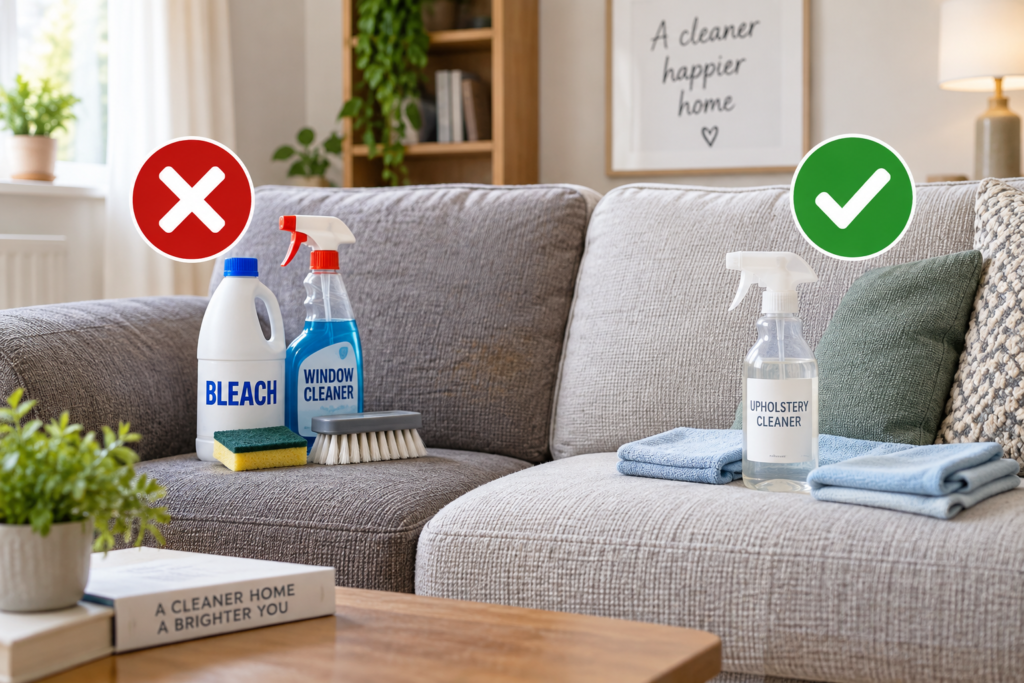
Bleach is a particularly poor choice unless the sofa manufacturer specifically states that it is safe for that fabric. It can remove colour and permanently alter fibres.
Likewise, avoid randomly mixing cleaning chemicals. Combining products can create hazardous reactions, and stronger is not necessarily more effective.
Use a product suitable for the particular upholstery and follow its instructions.
6. Treating Every Stain the Same Way
A cup of coffee and a piece of chocolate may both leave brown marks, but that does not mean they should automatically receive identical treatment.
Different substances behave differently within fabric fibres.
For example, you can follow our specific guides for removing coffee stains from a fabric sofa or removing chocolate stains from fabric upholstery rather than repeatedly applying a general-purpose cleaner.
The same principle applies to unusual or strongly coloured spills. Identify what caused the stain before choosing your treatment.
7. Applying Heat to a Stain
Trying to speed things up with very hot water or direct heat can be risky.
Heat may affect certain fibres, dyes or finishes, and it can make some types of staining harder to deal with. Do not use a hairdryer, heater or other concentrated heat source unless the manufacturer’s instructions specifically permit it.
For drying, ventilation is usually a safer approach. Open windows where practical and allow air to circulate around the furniture.
8. Cleaning Only the Exact Centre of a Large Mark
Spot cleaning requires a careful touch.
Repeatedly soaking and cleaning one tiny patch can sometimes leave a visible boundary after drying, particularly if too much cleaning solution is used.
Use minimal moisture and feather the treatment carefully where appropriate rather than saturating one spot.
If a large section of the sofa is generally dirty rather than locally stained, cleaning the wider appropriate section evenly may produce a better result than attacking multiple isolated patches.
9. Forgetting to Vacuum First
Wet cleaning dusty upholstery can create unnecessary work.
Loose crumbs, pet hair, grit and surface dust should generally be removed before applying moisture. Otherwise, dirt can become damp and harder to lift.
Vacuum the seat, back, arms, cushion surfaces and accessible crevices using a suitable upholstery attachment. Be gentle around delicate fabric, piping and loose threads.
Regular vacuuming is also one of the simplest ways to keep a fabric sofa cleaner for longer.
10. Sitting on the Sofa Before It Is Fully Dry
A sofa may feel almost dry on the surface while retaining moisture deeper in the fabric or cushioning.
Using it too soon can compress damp fibres and slow drying. Clothing may also transfer colour to damp upholstery or pick up residue from it.
Allow plenty of ventilation and wait until the cleaned areas are completely dry before replacing throws, arranging cushions or using the sofa normally.
Explore KeepShine’s free downloadable cleaning resources for practical help making everyday household cleaning easier to organise.
Pro Tip

After treating a stain, resist the temptation to keep adding cleaner simply because the mark has not disappeared immediately. Blot away what you have applied and allow the area to dry enough to assess the result. Repeatedly soaking the same spot can create a larger cleaning problem than the original stain.
Why Stain Type Matters When Cleaning Fabric Sofas
Stain removal becomes easier when you know what you are dealing with.
Fresh liquid spills should usually be dealt with promptly by absorbing as much excess liquid as possible without rubbing. Older or dried contamination may require a more patient approach.
Blood is a good example of why stain-specific treatment matters. Rather than treating it like an ordinary food spill, use an appropriate method such as the one in our guide to removing blood stains from a fabric sofa.
Highly pigmented foods can present different challenges. Curry and turmeric, for example, may leave a strong yellow or orange mark, so follow our guidance on removing curry and turmeric stains from fabric sofas instead of repeatedly scrubbing the area.
Whatever caused the mark, work carefully. Remove solid residue without grinding it into the fibres, blot liquids and avoid flooding the upholstery.
Older stains may not always disappear completely, particularly if previous cleaning attempts have altered the fabric or the substance has penetrated deeply. Repeated aggressive treatment can cause more visible damage than a faint remaining mark.
If you cannot identify the fabric, stain or appropriate cleaning method confidently, professional advice may be preferable to experimenting with increasingly strong products.
Mistakes to Avoid
- Assuming water is always safe: Some upholstery may react badly to water-based cleaning. Check the care instructions before wetting the fabric.
- Mixing cleaning products: Combining household chemicals can produce dangerous reactions or damage upholstery. Use one suitable product according to its instructions rather than creating homemade chemical mixtures.
- Scrubbing because a stain is stubborn: Increasing pressure does not necessarily increase cleaning power. Aggressive rubbing can spread the stain or alter the fabric’s appearance. Blot and repeat an appropriate treatment carefully instead.
- Using too much cleaning solution: Saturating the sofa can leave residue, create water marks and significantly increase drying time. Apply small amounts and remove excess moisture as you work.
- Skipping the patch test: A cleaner that seems mild can still affect a particular fabric or dye. Test first and wait until the area has dried before treating a visible section.
- Ignoring routine cleaning until the sofa looks dirty: Dirt gradually accumulates in upholstery and crevices. Following a sensible fabric sofa cleaning schedule can make routine maintenance much easier.
If your sofa needs a more thorough clean and you would rather leave the job to someone else, KeepShine can help with professional home cleaning.
More Questions About Cleaning Fabric Sofas Safely
These answers cover a few additional questions you may have when trying to clean your sofa without causing damage.
Can I use washing-up liquid on a fabric sofa?
Not automatically. Whether a product is suitable depends on the upholstery and manufacturer’s care requirements. Even mild detergent can leave residue or affect some materials. Check the care instructions first and, where an appropriate product is permitted, test it on an inconspicuous area before treating visible upholstery.
Can I use baking soda on my fabric sofa?
Do not assume that a popular household cleaning method is suitable for every upholstery fabric. Check the manufacturer’s instructions before applying powders or homemade treatments. If the manufacturer recommends particular cleaning products or methods, follow those rather than experimenting with general cleaning advice.
How often should I vacuum a fabric sofa?
There is no single schedule that suits every household. Sofas used daily, particularly in homes with children or pets, are likely to collect crumbs, hair and dust more quickly. Regular light vacuuming can prevent loose debris becoming embedded and reduce the need for more intensive cleaning later.
Should I clean removable cushion covers in the washing machine?
Only if the care label specifically indicates that they are machine washable. Being removable does not necessarily mean a cover can safely go into a washing machine. Washing unsuitable covers may cause shrinking, fading or distortion, making them difficult to fit back onto the cushions.
What should I do if a stain will not come out?
Stop before repeated cleaning begins to affect the upholstery itself. Allow the area to dry and reassess it. If you know what caused the stain, use an appropriate stain-specific method. For persistent marks or delicate upholstery, professional cleaning may be safer than repeatedly trying stronger products.
Is a fabric sofa cleaned differently from a leather sofa?
Yes. Fabric and leather have different care requirements and should not automatically share the same products or techniques. If you also have leather furniture, follow separate guidance on cleaning a leather sofa properly rather than applying your fabric-sofa routine to it.
Subscribe to KeepShine for more practical cleaning guides, household tips and useful resources to help you care for your home.
Final Thoughts: A Gentler Approach Protects Your Sofa
The safest way to clean a fabric sofa is rarely the most aggressive one. Check the care instructions, remove loose dirt first, use suitable products sparingly and give the upholstery enough time to dry.
Most importantly, respond to stains according to what caused them rather than reaching immediately for stronger chemicals or harder scrubbing.
A little regular maintenance also reduces the amount of intensive cleaning your sofa needs. Combine sofa care with cleaning your living room properly, and dust, crumbs and everyday dirt are much less likely to build up around your furniture.