
Leather sofas need regular care to stay clean, comfortable and in good condition. Knowing how often to clean a leather sofa helps prevent dirt build-up, maintain its appearance and reduce the risk of damage from unsuitable cleaning products.
The good news is that leather furniture does not usually need intensive cleaning every week. A simple routine of light dusting, occasional wiping and periodic conditioning, where appropriate, can make everyday maintenance much easier.
The ideal leather sofa cleaning schedule depends on how often you use your sofa, whether you have pets or children, and the type of leather you own. Here is how to build a practical routine that suits your home.
How Often Should You Clean a Leather Sofa?
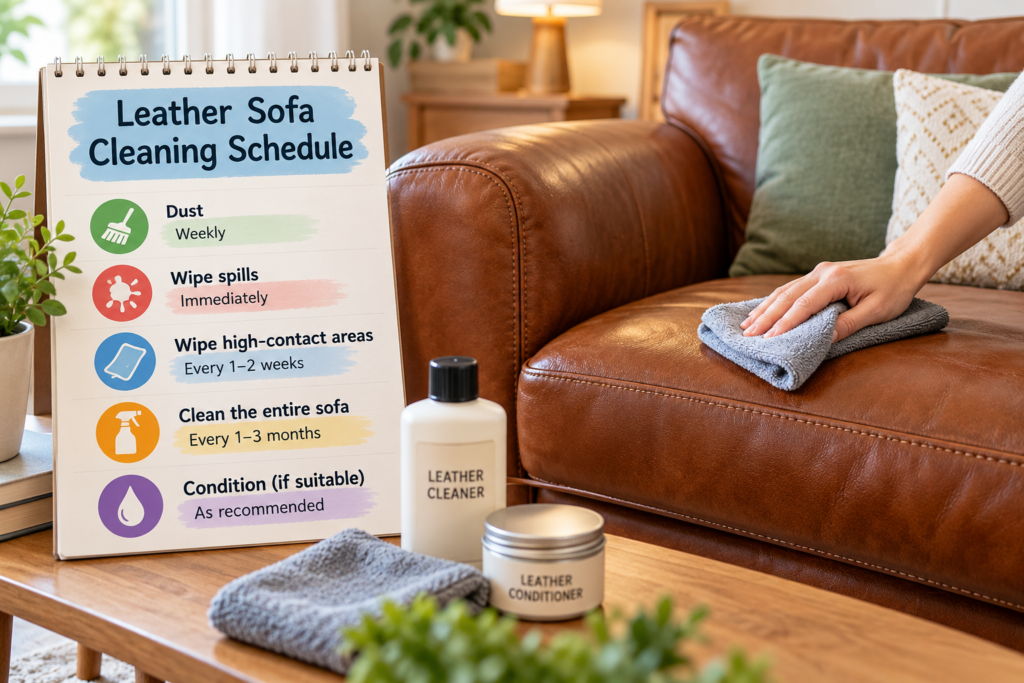
For most households, a useful starting point is to dust your leather sofa weekly, wipe it gently when needed and carry out a more thorough clean every one to three months. Conditioning may be needed less frequently, depending on the leather and its manufacturer’s care instructions.
Use this schedule as a general guide rather than a strict rule.
|
Cleaning task |
Recommended frequency |
|---|---|
|
Remove dust and loose debris |
Weekly |
|
Wipe away small spills |
Immediately |
|
Wipe frequently touched areas |
Every one to two weeks, or as needed |
|
Clean the entire sofa gently |
Every one to three months |
|
Inspect for dryness and signs of wear |
Monthly |
|
Apply leather conditioner, if suitable |
According to the manufacturer’s instructions and the leather’s condition |
A sofa in a busy family living room may need more frequent attention than one in a rarely used guest room. Equally, a sofa that looks clean may still benefit from removing dust from its seams and creases.
The most important principle is to clean according to the sofa’s use and condition, not simply because a particular date has arrived.
A Practical Leather Sofa Cleaning Schedule
Creating a routine makes furniture care easier and helps prevent small problems from becoming more difficult to manage.
1. Dust Your Sofa Every Week
Dust, crumbs, pet hair and other loose debris can collect on the seat cushions, armrests, backrest and seams.
Use a soft, dry microfibre cloth to remove surface dust. Pay attention to the spaces between cushions and along the stitching, where debris can accumulate unnoticed.
If your sofa manufacturer permits vacuuming, use a suitable upholstery attachment on a low setting. Avoid dragging hard plastic fittings across the leather, as they may scratch the surface.
Weekly dusting is particularly helpful in homes where the sofa is used every day. It also reduces the need for frequent wet cleaning.
2. Deal With Spills Immediately
Accidents can happen when someone is drinking tea, eating snacks or relaxing on the sofa. The best time to deal with a fresh spill is as soon as it happens.
Blot the affected area gently with a clean, absorbent cloth. Do not rub, scrub or press the liquid deeper into the leather.
For water-based spills, follow the manufacturer’s instructions for the particular leather finish. Some finished leather surfaces tolerate a lightly damp cloth, while delicate, unfinished or absorbent leather may require specialist care.
If a spill leaves a stain, avoid experimenting with household cleaners. You can find additional guidance in our guide to leather sofa cleaning mistakes to avoid.
3. Wipe Frequently Touched Areas Every One to Two Weeks
The arms, headrests and front edges of seat cushions often collect body oils, sweat and everyday grime more quickly than other parts of a sofa.
Inspect these areas every week or two. If they look dirty, clean them gently using a product approved for your leather type.
Avoid assuming that every leather sofa can be cleaned with water and ordinary soap. Some finishes are more sensitive than others, and unsuitable products can leave residue, dull the surface or affect the finish.
For routine care, a light clean is usually preferable to repeatedly applying strong products.
4. Clean the Entire Sofa Every One to Three Months
A more thorough clean helps remove accumulated surface grime from the cushions, backrest, armrests and other accessible areas.
Start by removing loose debris, then use a leather cleaner specifically recommended for your sofa. Follow the product directions, including any instructions about testing an inconspicuous area first.
Work in manageable sections rather than soaking the entire sofa. Use a soft cloth and avoid excessive moisture, especially around seams and cushion joins.
Once finished, remove any remaining product as directed and allow the sofa to dry naturally. Keep it away from direct heat and strong sunlight while it dries.
If the sofa is still clean after a month, there is no need to perform an intensive clean simply to meet the schedule. Adjust the frequency to suit the actual level of use and soiling.
5. Check Whether Conditioning Is Needed
Leather conditioning is not the same as cleaning. A cleaner removes surface dirt, while a suitable conditioner may help maintain the feel and flexibility of certain types of leather.
Not every leather sofa needs conditioning, and some modern protective finishes are not designed for traditional leather conditioners. Using the wrong product may leave a sticky surface, change the appearance or interfere with the finish.
Check the manufacturer’s recommendations before applying anything. If conditioning is appropriate, follow the stated frequency and application instructions rather than automatically treating the sofa every month.
6. Inspect the Sofa Monthly
Once a month, look over the sofa in good lighting.
Check for:
-
Darkened armrests or headrests.
-
Dust and crumbs trapped in seams.
-
Sticky or greasy patches.
-
Areas that feel unusually dry or rough.
-
Changes in colour, peeling or cracking.
These signs help you decide whether the sofa needs routine cleaning, specialist treatment or professional assessment. Peeling and cracking are not necessarily caused by dirt; they may indicate wear, damage to the finish or deterioration of the upholstery material.
Explore KeepShine’s free downloadable cleaning resources for practical ways to organise household cleaning and keep everyday tasks manageable.
Pro Tip

Before cleaning your entire sofa, check the care label or manufacturer’s guidance and test the approved product on a small, hidden area. Once the test area has dried, inspect it for changes in colour, shine or texture. This simple precaution is especially useful on older sofas, coloured leather and furniture with protective coatings, where an unsuitable product may leave a noticeable mark.
What Changes How Often You Should Clean a Leather Sofa?
A standard cleaning schedule is a helpful starting point, but your household circumstances should determine how often you actually clean the sofa.
Homes With Children
Children may eat snacks, spill drinks or transfer dirt from their hands onto the upholstery. If your sofa is used heavily throughout the day, inspect it several times a week and deal with spills promptly.
You may also need to clean the armrests and seat cushions more often than the rest of the sofa. However, frequent inspection does not mean you should repeatedly apply cleaning products. Over-cleaning can be just as unhelpful as neglecting the furniture.
Homes With Pets
Pet hair, muddy paws and natural oils can accumulate on leather furniture. Remove loose hair regularly using a suitable soft cloth or approved vacuum attachment.
If your pet frequently sits on the sofa, weekly dusting may not be enough on its own. Check the surface more often and address visible dirt before it becomes difficult to remove.
Take extra care with claws, as scratches and punctures are different from ordinary surface dirt and may not be reversible through cleaning.
Sofas Used Every Day
A sofa that serves as the main family seating area generally needs more maintenance than furniture used occasionally.
If everyone sits in the same places, focus on the armrests, headrests and seat edges. These high-contact areas may need attention every week or two, while the entire sofa can often follow a less frequent schedule.
Sofas in Guest Rooms or Occasionally Used Spaces
Furniture that receives little use may need only periodic dusting and occasional cleaning when visibly dirty.
There is no benefit in repeatedly wetting or treating clean leather just to follow a timetable. Keep the sofa free from dust, protect it from direct sunlight and inspect it periodically for changes in condition.
Mistakes to Avoid
– Using the wrong cleaning product. Household sprays, abrasive cleaners and products containing unsuitable solvents may damage the leather’s finish. Choose a product approved for your specific leather type.
– Cleaning too aggressively. Hard scrubbing can affect the surface and make wear more noticeable. Use a soft cloth and gentle movements instead.
– Soaking the leather. Excess moisture may cause problems, particularly around seams and on absorbent leather. Use only the amount of moisture permitted by the care instructions.
– Conditioning too frequently. More conditioner does not automatically mean healthier leather. Unnecessary applications can leave residue or affect certain finishes. Condition only when recommended.
– Ignoring small spills. Leaving a spill until the next scheduled clean can allow staining or residue to develop. Blot it promptly and follow the correct care method.
– Treating peeling or cracking as dirt. These problems may result from wear, finish deterioration or other damage. Stronger cleaning will not repair them and may make matters worse.
If your sofa has stubborn marks or you are unsure how to treat its leather safely, KeepShine can help with your wider home cleaning needs while specialist upholstery care may be appropriate for the sofa itself.
More Questions About Leather Sofa Cleaning
Here are answers to a few additional questions that can help you care for your leather furniture confidently.
Can I clean my leather sofa every week?
Yes, provided you mean light dusting or gentle maintenance rather than repeatedly applying cleaning products. Weekly dusting is suitable for most households, while wet cleaning should be based on visible dirt, the leather type and the manufacturer’s instructions. Cleaning too frequently with unsuitable products can damage the finish.
Should I clean a leather sofa before conditioning it?
If the manufacturer recommends conditioning, clean the surface first using the appropriate method. Dirt trapped beneath a conditioner may leave an unpleasant residue or affect the result. Allow the leather to dry as directed before applying the conditioner, and do not condition leather that is not intended to receive that treatment.
Is it safe to use baby wipes on leather furniture?
Not necessarily. Baby wipes may contain ingredients that leave residue or are unsuitable for a particular leather finish. Even if a wipe appears harmless initially, repeated use may affect the surface. A leather-specific product approved by the manufacturer is a safer choice than assuming a general-purpose wipe is suitable.
How do I know when my leather sofa needs cleaning?
Look for visible dust, darkened contact areas, sticky patches, crumbs in seams and marks left by everyday use. You may also notice that the surface feels less clean where people rest their arms or heads. If the sofa looks clean, a gentle dusting may be all it needs until the next inspection.
Does sunlight affect how often I should clean a leather sofa?
Sunlight mainly affects where and how you should protect the sofa, rather than determining a fixed cleaning frequency. Prolonged direct sunlight can contribute to fading and deterioration, depending on the material and finish. Keep the sofa away from strong direct sunlight where possible, and follow the manufacturer’s guidance on caring for it.
Can a leather sofa be deep-cleaned at home?
Some finished leather sofas can be cleaned at home with suitable products and careful technique. However, delicate leather, extensive staining, colour transfer, peeling or unknown finishes may require specialist assessment. Before attempting a deep clean, consult the care instructions and consider professional help if the material’s suitability for your intended method is uncertain.
Subscribe to KeepShine for more practical cleaning guides, furniture-care advice and simple ways to keep your home in good condition.
Final Thoughts: A Simple Routine Keeps Leather Looking Its Best
The best leather sofa cleaning schedule is one that matches how your household uses the furniture. For most homes, weekly dusting, prompt attention to spills and a gentle clean every one to three months provide a sensible starting point.
Pay particular attention to the areas that receive the most contact, and do not assume that every leather sofa needs the same products or treatment. Manufacturer guidance should always take priority over a general schedule.
Most importantly, avoid waiting until dirt becomes difficult to remove, but do not over-clean a surface that is already in good condition. Regular inspection and appropriate care will help you make better decisions about when to clean, when to leave the sofa alone and when to seek specialist advice.