
Pillows collect sweat, body oils, dead skin cells and dust over time, even when they look clean. Knowing how to keep pillows clean can help maintain a fresher bed, reduce unwanted odours and make your bedding more comfortable between washes.
The good news is that pillows do not need constant deep cleaning to stay in good condition. A few simple habits, combined with regular washing of pillowcases and proper bedroom maintenance, can make a noticeable difference.
Whether you use feather, down, polyester or memory foam pillows, there are practical ways to prevent dirt building up and extend the time between thorough cleans.
The Best Ways to Keep Pillows Cleaner for Longer
The most effective approach is to protect your pillows from everyday dirt rather than waiting until they become visibly stained.
Start with these habits:
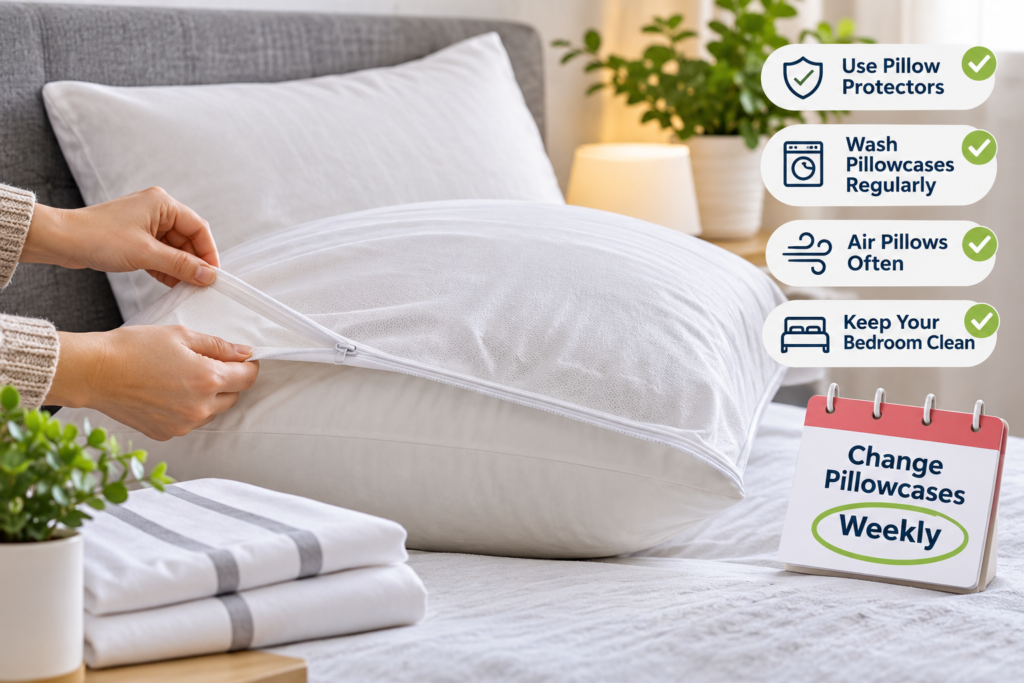
Use pillow protectors: Place a washable, breathable pillow protector underneath each pillowcase to catch sweat, oils and everyday dirt.
Wash pillowcases regularly: Change pillowcases at least once a week, or more often if you sweat heavily.
Keep your hair clean: Hair products, natural oils and styling products can transfer onto pillowcases and eventually reach the pillow.
Avoid going to bed with wet hair: Excess moisture can make bedding feel damp and contribute to unpleasant smells.
Air pillows regularly: Remove pillows from the bed occasionally and allow them to air in a well-ventilated room.
Keep the bedroom clean: Regular dusting, vacuuming and changing bedding help prevent dust and debris from accumulating around your pillows.
These habits are straightforward, but consistency matters. A pillow with a good protective cover and regularly changed pillowcase will generally stay cleaner than one left exposed to everyday use.
7 Practical Ways to Prevent Dirt Building Up on Your Pillows
Keeping pillows clean for longer is mainly about creating a barrier between the pillow and the things that make it dirty. The following steps will help protect them.
1. Invest in Good-Quality Pillow Protectors
A pillow protector is one of the most useful ways to prevent dirt from reaching your pillow.
Unlike an ordinary pillowcase, which mainly provides a comfortable sleeping surface, a pillow protector adds another layer of protection. It helps catch sweat, body oils, skin cells and small particles before they penetrate the pillow filling.
When choosing pillow protectors:
Look for breathable, washable materials.
Choose a size that fits your pillows properly.
Consider waterproof protection if spills or excessive moisture are a concern.
Select a protector that can withstand regular washing.
Avoid assuming that every protector is waterproof or suitable for every type of pillow. Check the product description before purchasing.
Wash protectors regularly according to their care labels. A clean pillowcase over a dirty protector will not provide the same level of protection.
2. Wash Your Pillowcases Frequently
Your pillowcase is the first surface that comes into contact with your face and hair every night.
It collects natural skin oils, sweat, hair products and everyday dirt. If it is not changed regularly, these substances can gradually transfer through the fabric.
For most households, changing pillowcases at least once a week is a sensible starting point.
You may need to change them more frequently if:
You sweat heavily during the night.
You have oily skin or hair.
You use hair oils, creams or styling products.
You have been unwell.
Your pillowcase becomes visibly dirty.
Wash pillowcases using the temperature and detergent recommended on their care labels.
If you want to maintain the rest of your bedding, follow our guide to cleaning your duvet properly so your entire sleeping area receives attention.
3. Avoid Sleeping with Wet Hair
Going to bed with wet hair can leave your pillowcase damp, particularly around the area where your head rests.
Although an occasional damp pillowcase is not necessarily a problem, repeatedly allowing moisture to remain in your bedding is not ideal.
Before going to bed:
Allow your hair to dry naturally where possible.
Use a clean towel to remove excess water.
Avoid covering damp hair with thick fabrics that trap moisture.
Change the pillowcase if it becomes noticeably wet.
If you regularly wash your hair in the evening, try to leave enough time for it to dry before sleeping.
4. Keep Hair Products Away from Your Pillow
Hair oils, leave-in conditioners, gels, moisturisers and styling creams can transfer onto pillowcases.
Over time, product residue may contribute to greasy-looking marks, unpleasant smells and stubborn stains.
You do not need to stop using hair products. Instead, allow them to absorb or dry before going to bed.
If you apply heavy oils or leave-in treatments at night, consider using a washable hair wrap or bonnet to reduce direct contact with your bedding.
Remember to wash these items regularly too.
5. Air Your Pillows Regularly
Pillows benefit from occasional airing, particularly if they are used every night.
Remove the pillowcases and protectors and allow the pillows to air in a dry, well-ventilated room.
This helps release trapped moisture and keeps the sleeping area feeling fresher.
For best results:
Remove the pillowcase and protector.
Check the pillow for damp patches or stains.
Place it somewhere with good air circulation.
Allow both sides to air.
Make sure it is completely dry before putting the protector and pillowcase back on.
Avoid leaving pillows in direct sunlight for prolonged periods unless the manufacturer confirms that this is suitable. Some fillings and fabrics can be damaged by excessive heat or sunlight.
6. Keep Dust and Dirt Under Control in the Bedroom
Your pillows do not exist in isolation. Dust and dirt from the surrounding bedroom can settle on bedding and other soft furnishings.
A cleaner bedroom helps reduce the amount of dust accumulating around your sleeping area.
Include these tasks in your routine:
Dust bedside tables and nearby furniture.
Vacuum bedroom carpets and rugs.
Clean underneath the bed where dust collects.
Wash curtains and other washable fabrics when needed.
Keep windowsills and other surfaces free from accumulated dust.
If you need a more organised routine, our guide to cleaning a bedroom properly explains how to maintain a fresher sleeping environment.
7. Store Spare Pillows Properly
Spare pillows can become dusty or develop unpleasant smells when left unused in cupboards, on shelves or in unsuitable storage bags.
If you keep extra pillows for visitors, protect them between uses.
Choose a clean, dry storage area and use breathable storage bags or suitable containers. Avoid compressing pillows for long periods unless the manufacturer permits it.
Before using stored pillows, check that they are dry, clean and free from musty smells.
Explore KeepShine’s free cleaning resources for practical ways to organise your household cleaning and maintain a fresher home.
Pro Tip

When changing your bedding, take an extra moment to check the pillow protector rather than simply replacing the pillowcase. A protector can look clean from the outside while holding accumulated oils and moisture. Keeping this protective layer properly washed is one of the simplest ways to extend the freshness of the pillow underneath.
How to Maintain Fresh Pillows Between Deep Cleans
Even with protective covers, pillows still need occasional attention. The aim is to prevent small amounts of moisture, dirt and residue from developing into more difficult cleaning problems.
Check Your Pillows for Early Signs of Dirt
Make a habit of inspecting your pillows when changing the bedding.
Look for:
Yellowish patches caused by sweat and body oils.
Greasy marks around the head area.
Unpleasant or musty smells.
Dampness or changes in the pillow’s texture.
Signs of mould or unusual discolouration.
Address problems early rather than allowing them to build up.
If you notice yellow staining, avoid immediately applying strong cleaning products. Different pillow fillings require different cleaning methods.
Our guide to cleaning pillows properly explains how to approach the cleaning process safely.
Follow a Sensible Pillow Cleaning Schedule
There is no single cleaning schedule that suits every pillow. The material, level of use and manufacturer’s instructions all matter.
A practical maintenance routine might look like this:
Task | Suggested frequency |
|---|---|
Change pillowcases | At least weekly |
Wash pillow protectors | Every 2–4 weeks, or as needed |
Air pillows | Regularly, when practical |
Inspect for stains and odours | When changing bedding |
Deep-clean pillows | According to care instructions and condition |
These are general household guidelines rather than fixed rules. Some pillows need less frequent washing, while others may require more attention.
For more detailed advice, see our guide to how often pillows should be cleaned.
What If Your Pillow Develops a Yellow Stain?
Yellowing is relatively common, particularly around the area where your head rests.
Sweat, natural oils, moisture and residue from hair products can gradually discolour pillow fabric.
A pillow protector helps reduce direct contact with these substances, but it cannot guarantee that staining will never occur.
If you notice yellow patches:
Check whether the pillow can be washed.
Follow the manufacturer’s instructions.
Use an appropriate cleaning method for its filling.
Make sure the pillow dries completely before reuse.
For more stubborn dirt, a suitable deep-cleaning method may be necessary. Avoid treating every pillow in the same way, especially when dealing with memory foam or other specialist fillings.
Mistakes That Can Make Pillows Dirty More Quickly
Even people who regularly wash their bedding can make mistakes that allow pillows to become dirty or deteriorate faster.
1. Using pillowcases without protectors: A pillowcase provides basic protection, but it does not prevent all sweat and oils from reaching the filling. Adding a suitable washable protector creates an additional barrier.
2. Leaving damp pillows on the bed: Putting bedding back together while pillows are still damp can trap moisture. Always allow pillows to dry completely before covering them.
3. Ignoring pillowcase washing: Leaving the same pillowcase on for several weeks allows oils, sweat and dirt to accumulate. Change pillowcases regularly rather than waiting until they look dirty.
4. Using unsuitable cleaning products: Strong detergents, bleach or cleaning chemicals can damage certain pillow materials. Always check the care label before treating stains or washing the pillow.
5. Washing every pillow in the same way: Memory foam, feather, down and polyester pillows have different care requirements. Using the wrong washing method can damage the filling or affect the pillow’s shape.
6. Storing pillows in damp places: Cupboards and storage areas with poor ventilation can expose pillows to unwanted moisture. Keep spare pillows in a clean, dry environment.
If maintaining a clean and comfortable bedroom feels like another demanding household task, KeepShine can help with professional cleaning services to keep your home fresh and well maintained.
More Questions About Keeping Pillows Clean
Here are some additional questions that can help you maintain cleaner pillows and understand when extra care may be needed.
How often should I change my pillowcase?
For most people, changing pillowcases at least once a week is a good routine. However, if you sweat heavily, have oily hair or use several hair products, changing them every few days may be more appropriate. Regular changes help prevent oils and everyday dirt from accumulating on the fabric.
Do pillow protectors really make a difference?
Yes. Pillow protectors provide an additional barrier between the pillow filling and everyday contaminants such as sweat, body oils and skin cells. They are particularly useful because they can be removed and washed separately. However, they do not replace ordinary pillowcases or occasional pillow cleaning.
Can I put my pillow in the tumble dryer?
It depends on the pillow material and its care instructions. Some polyester and feather pillows may be suitable for tumble drying, while many memory foam pillows are not. Always check the manufacturer’s label before using a tumble dryer. Excessive heat can damage certain fillings and fabrics.
Why do pillows turn yellow even when I wash my bedding?
Yellowing usually develops through repeated exposure to sweat, natural body oils and hair products. These substances can gradually pass through pillowcases and accumulate in the pillow filling. Regularly washing pillowcases and protectors helps reduce this build-up, but it cannot always prevent discolouration completely.
How do I know when a pillow needs replacing?
Consider replacing a pillow if it has lost its shape, remains uncomfortable, develops persistent unpleasant smells or shows signs of damage that cannot be cleaned safely. A pillow that no longer provides suitable support may also need replacing. Follow the manufacturer’s guidance and assess its condition rather than relying only on its age.
Is it safe to put pillows outside to air?
Yes, provided the weather is dry and the location is clean and suitable. Fresh air can help release trapped moisture, but avoid leaving pillows outside in damp conditions or where they may become exposed to dirt. Prolonged direct sunlight may also affect some materials, so check the manufacturer’s recommendations.
Subscribe to KeepShine for more practical cleaning guides and simple household habits that help keep your bedroom and bedding fresher for longer.
Final Thoughts: Small Habits Make a Big Difference to Pillow Freshness
Keeping pillows clean does not have to involve frequent washing or complicated cleaning routines. The most effective approach is to prevent unnecessary dirt and moisture from reaching them in the first place.
Use washable pillow protectors, change pillowcases regularly, allow pillows to air and maintain a clean bedroom environment.
Remember that different pillow materials have different care requirements. Always check the manufacturer’s instructions before washing or applying cleaning products.
With a little consistency, you can reduce everyday dirt, maintain fresher bedding and help your pillows remain comfortable for longer.