
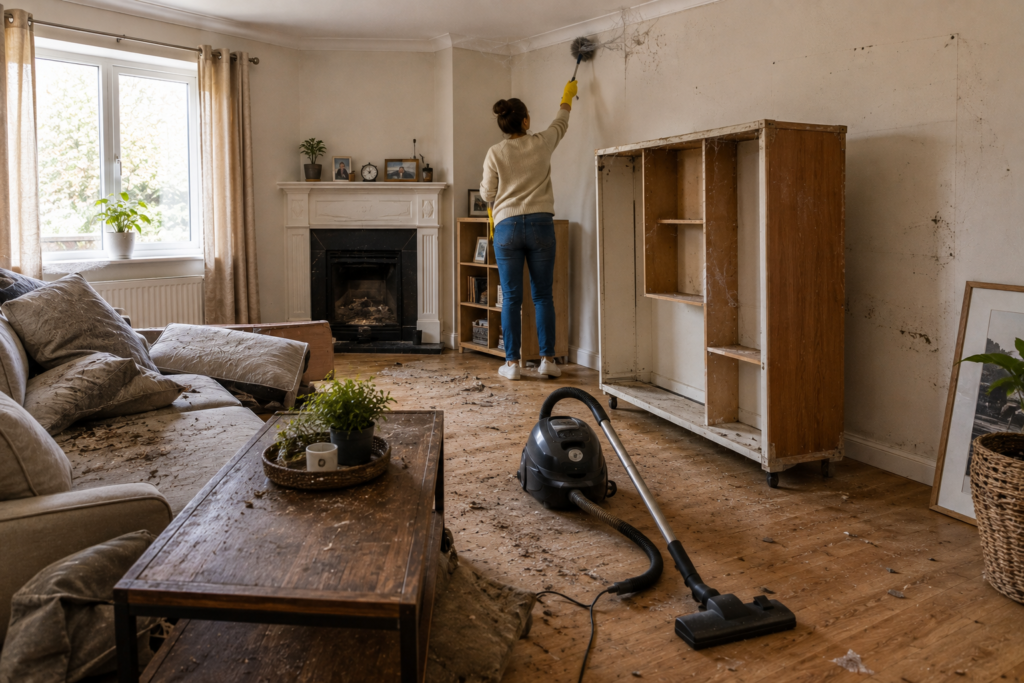
Deep cleaning your living room means going beyond everyday tidying to remove hidden dust, built-up dirt and grime from the whole room. A thorough clean can make the space feel fresher, more comfortable and much easier to maintain afterwards.
Unlike a normal weekly clean, a deep clean covers the areas that are often overlooked: behind furniture, underneath the sofa, skirting boards, light fittings, upholstery and other less-visible surfaces.
The easiest way to tackle it is systematically rather than trying to clean everything at once. This guide takes you through the process in a practical order so you can deep clean your living room thoroughly without creating unnecessary extra work.
Before You Start Deep Cleaning Your Living Room
Give yourself enough time to work methodically. Depending on the size of the room, how much furniture you have and when it was last thoroughly cleaned, a living room deep clean could take several hours.
Gather the basic supplies you are likely to need before starting:
- Vacuum cleaner with suitable attachments
- Microfibre cloths
- Duster or extendable duster
- Mop and bucket if you have a hard floor
- Appropriate floor cleaner
- Suitable upholstery cleaner if required
- General-purpose cleaner suitable for the surfaces being cleaned
- Glass cleaner
- Soft brush
- Bin bags or a container for unwanted items
Always check care labels and manufacturers’ instructions before using cleaning products on upholstery, furniture, flooring or electronic equipment. If you are unsure whether a product is suitable, test it first on a small, inconspicuous area.
How to Deep Clean a Living Room Step by Step
A good deep cleaning routine works from top to bottom and generally leaves the floor until near the end. This prevents dust from higher surfaces falling onto areas you have already cleaned.
For routine cleaning between deeper cleans, our guide to cleaning a living room properly step by step covers the regular tasks that help keep the room under control.
1. Declutter Before You Begin Cleaning
Start by removing anything that does not belong in the living room. Put away toys, books, paperwork, cups, clothes and other items that have accumulated.
Rather than simply moving clutter from one surface to another, return items to their proper places. This gives you clear access to furniture, shelves and floors and makes the actual cleaning considerably easier.
Remove rubbish and collect anything you want to donate or dispose of separately.
2. Remove and Wash Suitable Soft Furnishings
Take down or remove washable throws, cushion covers and other removable textiles where appropriate.
Check each item’s care label before washing it. Curtains should only be removed and cleaned according to their specific care instructions, as some fabrics require professional cleaning or particular washing methods.
While these items are out of the way, you will have better access to the furniture and surrounding surfaces.
3. Dust the Room from Top to Bottom
Begin with the highest areas you can safely reach.
Dust accessible ceiling corners, light fittings, lampshades, curtain poles, the tops of tall furniture and high shelves before working downwards. An extendable duster can make high areas easier to reach without climbing unnecessarily.
Continue with shelves, picture frames, ornaments, window sills, radiators and other surfaces.
Move decorative objects rather than dusting around them. Wipe the surface underneath before cleaning or dusting the item itself and replacing it.
4. Clean Doors, Frames, Switches and Skirting Boards
These areas are easily overlooked during ordinary cleaning.
Wipe doors and door frames where appropriate, paying particular attention to frequently touched areas around handles. Clean light switches carefully with a slightly damp cloth rather than saturating them with liquid.
Work around the room cleaning skirting boards and other edges where dust collects. Vacuuming loose dust first can prevent you from turning it into wet grime when wiping.
5. Clean Windows and Interior Glass
Dust or vacuum around window frames and tracks before wiping them.
Clean the inside of the windows using a suitable glass-cleaning method, then wipe mirrors, glass-topped furniture and other appropriate glass surfaces.
Avoid spraying cleaning liquid directly towards electrical equipment or nearby delicate materials.
6. Deep Clean the Sofa and Upholstered Furniture
Remove loose sofa cushions where possible and vacuum underneath them using an appropriate attachment. Pay attention to seams, crevices and the areas where crumbs, hair and dust tend to collect.
Vacuum the cushions and upholstered surfaces if the manufacturer’s instructions permit it.
If your sofa needs more than vacuuming, identify the upholstery material and check its care label before applying water, detergent or upholstery cleaner. Different fabrics require different treatment, so avoid assuming that one cleaning method is safe for every sofa.
For more detailed guidance, see how to clean a fabric sofa properly.
7. Clean Furniture and Previously Hidden Areas
Wipe coffee tables, side tables, shelving units, TV stands and other furniture using methods suitable for their materials.
Where it is safe and practical, move lighter furniture so you can vacuum behind and underneath it. Do not attempt to move heavy furniture alone if doing so could cause injury or damage.
Vacuum the exposed areas thoroughly, including along wall edges and underneath furniture that is normally inaccessible.
8. Clean Electronics Carefully
Turn equipment off where appropriate before cleaning and follow the manufacturer’s care instructions.
Use a dry or slightly damp microfibre cloth for suitable exterior surfaces rather than spraying cleaner directly onto televisions, speakers, games consoles or other electronics.
Pay attention to the surrounding TV unit, cables and accessible areas behind equipment, where substantial amounts of dust can accumulate.
9. Vacuum the Entire Floor Thoroughly
Once the higher surfaces and furniture are clean, vacuum the floor.
Use suitable attachments around skirting boards, corners and furniture edges. If possible, vacuum underneath movable furniture as well as the open areas of the room.
For rugs, check their care instructions before using any treatment beyond ordinary vacuuming.
10. Finish Hard Floors Appropriately
If you have a hard floor, vacuum or sweep it thoroughly before mopping.
Use a cleaning product and method suitable for the particular flooring material. Wood, laminate, vinyl, stone and tile can have different care requirements, and excessive water can damage some floors.
Work towards the doorway so you do not need to walk repeatedly across the freshly cleaned surface.
Browse KeepShine’s free downloadable cleaning resources for practical help organising your cleaning and making household tasks easier.
Pro Tip

Once you have finished, note the places where you found the heaviest hidden dust — perhaps behind the sofa, underneath furniture or around the skirting boards. Adding just one or two of these areas to your normal cleaning routine can significantly reduce the amount of work waiting for you at the next deep clean.
How to Keep the Living Room Cleaner After a Deep Clean
The biggest advantage of a thorough clean is that you are starting again from a much better baseline. You do not need to repeat the entire process every week to maintain it.
Deal with small problems before they become bigger jobs. Put items away regularly, remove crumbs from the sofa, wipe spills promptly and vacuum areas that receive frequent foot traffic.
A simple routine is usually more manageable than allowing everything to build up until another major cleaning session is necessary. Our guide on keeping your living room clean for longer covers practical ways to reduce that build-up.
It also helps to separate routine cleaning from occasional deep-cleaning jobs. Tasks such as general dusting and vacuuming may need attention regularly, while cleaning behind large furniture or thoroughly tackling less-accessible areas can usually be scheduled less frequently.
Exactly how often you need to clean depends on how your home is used. A busy family living room, a home with pets or a room used every day may need attention sooner than a lightly used space. For a more structured approach, see our practical living room cleaning schedule.
When something is spilled on upholstery or carpet, however, do not automatically wait for the next planned deep clean. Prompt attention can often make the problem easier to deal with, provided you use a method suitable for the material.
Mistakes to Avoid
- Cleaning the floor too early. Dusting shelves, moving furniture and cleaning upholstery can send more debris onto the floor. Leave the final thorough vacuuming and mopping until the higher areas have been completed.
- Using one cleaner on every surface. Wood, glass, stone, upholstery and electronics do not necessarily tolerate the same products. Check labels and care instructions instead of assuming a general cleaner is suitable everywhere.
- Applying too much water to upholstery or flooring. Saturating fabric can make drying difficult, while excess moisture may damage certain flooring materials. Use only an appropriate method for the surface you are treating.
- Dusting around objects instead of underneath them. A room can look clean while dust remains beneath ornaments, lamps and other objects. Move manageable items and clean the actual surface before replacing them.
- Trying to move heavy furniture alone. Reaching hidden dust is useful, but not at the expense of injury or damaged furniture. Only move items that you can handle safely.
- Rushing between tasks without an order. This often means cleaning the same area twice. Working systematically from high areas down towards the floor is much more efficient. You can also avoid other common living room cleaning mistakes by following a consistent routine.
If you would rather leave a thorough living room or whole-home clean to someone else, KeepShine can help with professional home cleaning.
More Questions About Deep Cleaning Your Living Room
Deep cleaning often raises questions about timing, furniture and what actually needs to be included, so here are answers to a few useful ones.
How often should you deep clean a living room?
There is no single frequency suitable for every household. How quickly dirt builds up depends on factors such as how frequently the room is used, whether you have children or pets, the amount of foot traffic and how consistently you perform routine cleaning. Instead of relying solely on a fixed date, use the condition of the room as a guide.
What is the difference between regular cleaning and deep cleaning?
Regular cleaning concentrates on frequently needed tasks such as tidying, dusting accessible surfaces and vacuuming. Deep cleaning goes further by addressing areas that are normally missed, including underneath and behind furniture, upholstery crevices, skirting boards, high surfaces and other places where dirt gradually accumulates.
Should I deep clean the sofa every time?
Not necessarily. Vacuuming underneath cushions and removing loose debris can form part of your living room deep clean, but wet cleaning or treating upholstery should only be done when necessary and when suitable for the fabric. Always follow the sofa manufacturer’s care information rather than routinely applying cleaning products.
Can I deep clean the living room in one day?
Usually, yes, although the time required depends on the room’s size, condition and contents. If the job feels too large, divide it into manageable stages. You might declutter and wash suitable soft furnishings first, then tackle dusting, furniture and floors separately.
Should I clean the living room before or after other rooms?
If you are deep cleaning your whole home, plan the order around how you use the rooms rather than following an arbitrary rule. What matters most is avoiding unnecessary recontamination — for example, carrying dusty items through a room you have just finished cleaning.
Is deep cleaning different in a heavily used shared space?
The principles are similar, but frequently used communal spaces often need more attention around touchpoints, furniture and floors. This applies outside the home too; our guide to deep cleaning a meeting room thoroughly explains how a similar systematic approach works in a workplace environment.
Subscribe to KeepShine for more practical cleaning guides, useful resources and straightforward advice for keeping your home easier to manage.
Final Thoughts: Make Your Next Living Room Deep Clean Easier
A successful deep clean is less about scrubbing everything as hard as possible and more about cleaning methodically.
Start by clearing the room, work from higher areas downwards, give neglected spaces proper attention and finish with the floor. Most importantly, use cleaning methods that are appropriate for each material rather than treating every surface in the same way.
Once the room is thoroughly clean, regular maintenance can prevent dust and clutter from building back up quickly. A manageable routine between deep cleans will make the next one considerably easier — and help your living room remain a comfortable space to enjoy every day.