
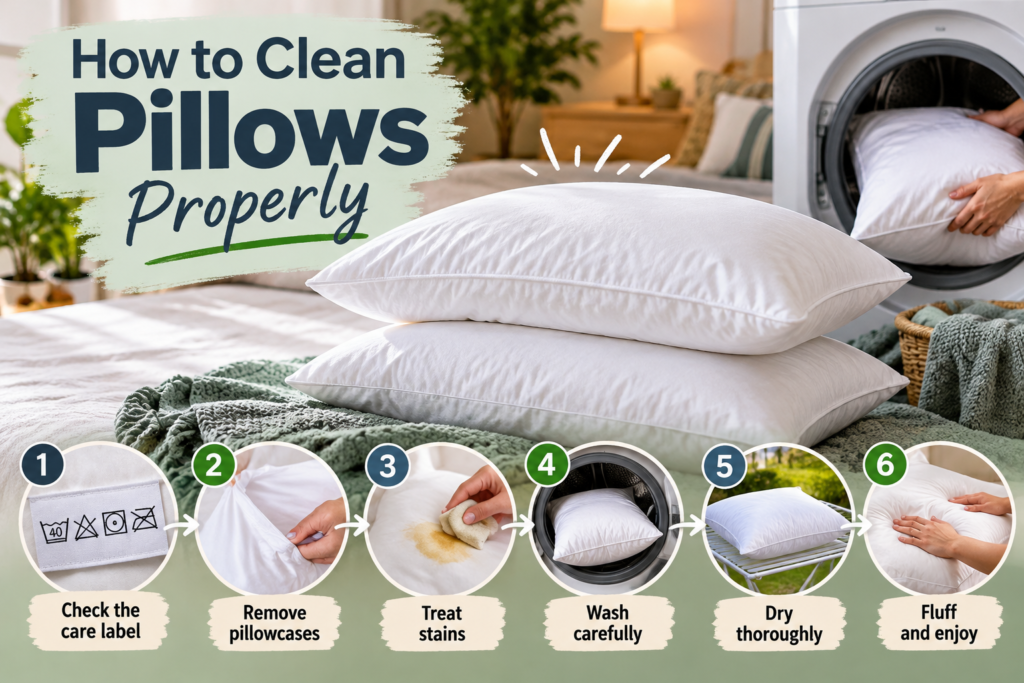
Pillows collect sweat, body oils, dust and everyday dirt over time. Learning how to clean pillows properly helps keep your bedding fresher, more comfortable and in better condition for longer.
However, not every pillow can be washed in the same way. Some are suitable for machine washing, while others need gentle hand cleaning or specialist care. Using the wrong method can damage the filling, affect the shape or leave moisture trapped inside.
This guide explains how to clean pillows safely, choose the right washing method, deal with yellow stains and dry them thoroughly so they are ready for a comfortable night’s sleep.
What Is the Best Way to Clean Pillows?
The best way to clean pillows depends on their filling and the manufacturer’s care instructions. Always check the label before washing, as memory foam, latex, feather, down and synthetic pillows have different cleaning requirements.
For many machine-washable synthetic pillows, a gentle wash with a small amount of mild detergent is suitable. Feather and down pillows may also be washable, but only if their care labels permit it. Memory foam and latex pillows generally should not be machine-washed or soaked.
Before you begin:
Check the care label for washing and drying instructions.
Remove pillowcases and protective covers.
Inspect the pillow for tears, damaged seams or clumped filling.
Treat visible stains gently before cleaning the whole pillow.
Make sure you have enough time to dry the pillow completely.
A pillow that remains damp inside can develop an unpleasant smell and may encourage mould growth. Thorough drying is just as important as washing.
How to Clean Pillows Step by Step
Follow these steps for pillows that are suitable for the cleaning method you choose. If the manufacturer’s instructions differ from this general guidance, follow the label.
Step 1: Check the Pillow's Material and Care Label
Start by identifying the pillow filling. The material determines how much water, agitation and heat the pillow can safely tolerate.
Synthetic fibre: Many polyester-filled pillows can be machine-washed on a gentle cycle.
Feather and down: Some can be washed carefully, but they require gentle handling and thorough drying.
Memory foam: Usually needs spot cleaning rather than machine washing or soaking.
Latex: Generally requires surface cleaning and should not be soaked or machine-washed.
Wool or specialist fillings: May need specific care or professional cleaning.
If the label is missing, avoid assuming that a pillow is machine-washable. Check the manufacturer’s guidance where possible.
Also inspect the seams. If the fabric is thin or torn, washing may cause the filling to escape.
Step 2: Remove Pillowcases and Protective Covers
Take off the pillowcase and any removable protector. Wash these separately according to their own care labels.
Pillowcases and protectors collect much of the sweat, skin oils and everyday dirt that would otherwise reach the pillow itself. Keeping them clean reduces the amount of soil that builds up inside the filling.
Check the protector for stains and damage before washing it. If you use a zippered protector, close the zip to help prevent the fabric from catching on other items.
For more guidance on keeping your sleeping area fresh, see our guide to cleaning a bedroom properly.
Step 3: Treat Visible Stains Before Washing
Look for yellow patches, makeup marks or other visible stains.
For a washable pillow, apply a small amount of mild detergent to the affected area, following the product instructions. Gently work it into the fabric with your fingers or a soft cloth, taking care not to damage the outer material.
Avoid scrubbing aggressively, as this can push the stain deeper into the fabric or damage delicate fibres.
Do not mix cleaning products, particularly bleach with other cleaners. If you are considering a stain remover, check that it is suitable for the pillow’s material and test it on an inconspicuous area where appropriate.
Remember that some older stains may not disappear completely, even after careful cleaning.
Step 4: Wash Machine-Washable Pillows Carefully
If the care label permits machine washing, prepare the pillow according to the manufacturer’s instructions.
Check the washing machine’s capacity and make sure the pillow fits comfortably.
Use the recommended programme and water temperature.
Add a modest amount of suitable detergent, following its label.
Avoid overloading the drum.
Use an additional rinse only if recommended or if detergent remains in the fabric.
Some pillows can be washed in pairs to help balance the load, but do this only if both pillows fit comfortably and the machine can handle their combined weight.
Avoid excessive detergent. Too much can leave residue inside the filling, making the pillow feel unpleasant or causing it to retain odours.
Do not use a hot wash simply because the pillow looks dirty. Higher temperatures may damage the filling or outer fabric.
Step 5: Clean Foam and Other Non-Machine-Washable Pillows
Memory foam and latex pillows generally need a different approach.
First, check the care instructions. If surface cleaning is permitted, use a cloth lightly dampened with water and a small amount of mild detergent if appropriate.
Blot the affected area gently rather than soaking the pillow. Use a separate cloth lightly dampened with clean water to remove detergent residue, taking care not to saturate the material.
Allow the pillow to air-dry completely in a well-ventilated place, away from excessive heat and direct sunlight where these could damage the material.
Do not put foam pillows in a washing machine or tumble dryer unless the manufacturer explicitly permits it. Excessive water and agitation can damage their structure.
Step 6: Dry the Pillow Thoroughly
Drying is one of the most important stages of pillow cleaning.
If tumble drying is permitted, follow the care label’s temperature and programme instructions. Check the pillow periodically and redistribute the filling if the instructions allow it.
For feather and down pillows, thorough drying is particularly important because damp filling can clump together. Synthetic pillows also need enough time for moisture to escape from the centre.
If air-drying is recommended, place the pillow in a well-ventilated area and turn it regularly. Gently reshape it as it dries.
Before putting the pillow back on the bed, check that it is dry throughout, not just on the surface. Feel the centre and thicker sections carefully. If it feels cool, heavy or damp, allow more drying time.
Never store or cover a damp pillow.
Step 7: Fluff and Inspect the Pillow
Once the pillow is completely dry, gently fluff it to redistribute the filling and restore its shape.
Check for lingering odours, stains or areas of clumped filling. If the pillow still smells damp, give it more time to dry rather than immediately covering it with a clean pillowcase.
Finally, put on a fresh pillowcase and replace the protective cover.
If your mattress also needs attention, our guide to cleaning a mattress properly can help you maintain a fresher sleeping environment.
Explore KeepShine’s free cleaning resources for practical ways to organise your household cleaning routine and keep your home feeling fresh.
Pro Tip

Before washing a pillow, press it gently to assess its condition. If the filling has become permanently lumpy, the pillow has lost its shape or the seams are deteriorating, washing may not restore its comfort. Cleaning works best when a pillow is still in reasonable condition, so inspect it first rather than spending time on a pillow that may need replacing.
How to Remove Yellow Stains and Keep Pillows Fresher
Yellow stains are common on pillows and can develop as sweat, body oils and other residues accumulate. They do not automatically mean a pillow is unsafe to use, but they are a useful reminder to wash suitable pillows and maintain their covers regularly.
Choose a Suitable Stain Treatment
Start with the gentlest method compatible with the pillow’s care instructions. A mild detergent may help loosen fresh stains on washable fabrics.
For persistent marks, use a fabric stain remover only if it is approved for the material. Follow the product instructions and avoid combining different cleaners.
Be realistic about older discolouration. Some stains become difficult to remove completely, particularly if they have been left untreated for a long time.
Reduce Moisture and Odour Build-Up
Allow bedding to air regularly and avoid making the bed while pillows are still warm or damp from use. If practical, leave the bed uncovered briefly after getting up to allow moisture to disperse.
Wash pillowcases frequently and use a washable pillow protector. These simple measures help reduce the amount of dirt and oil reaching the pillow filling.
If you notice a persistent musty smell, investigate whether the pillow is retaining moisture. Do not simply mask the odour with fragrance.
Know When Cleaning Is No Longer Enough
A pillow that remains misshapen, has damaged seams, contains persistent odours despite thorough cleaning or shows signs of mould may need replacing.
Cleaning cannot reliably restore damaged filling or make every contaminated item suitable for continued use. If mould is present, avoid shaking the pillow or spreading debris around the bedroom, and follow appropriate disposal or specialist advice for the material and extent of contamination.
For a wider bedding routine, you can also read our guide to cleaning a duvet properly.
Mistakes to Avoid
– Ignoring the care label. Washing a pillow at the wrong temperature or using an unsuitable programme can damage the filling. Check the manufacturer’s instructions before choosing a cleaning method.
– Machine-washing foam pillows. Memory foam and latex can be damaged by soaking and vigorous agitation. Use an approved surface-cleaning method instead.
– Using too much detergent. Excess detergent can leave residue in the filling and make rinsing more difficult. Measure the product according to its instructions.
– Using excessive heat. High temperatures may damage delicate fabrics and fillings. Only use a tumble dryer or heated setting if the pillow’s care instructions allow it.
– Putting a damp pillow back on the bed. Moisture trapped inside the filling can contribute to unpleasant odours and mould growth. Allow sufficient drying time and check the centre before reuse.
– Scrubbing stains too aggressively. Vigorous rubbing can damage the outer fabric and spread marks. Treat stains gently and use a suitable cleaning product.
If you’re refreshing your bedroom as part of a bigger home clean, KeepShine can help with the surrounding cleaning tasks so you can focus on keeping your bedding comfortable and fresh.
More Questions About Cleaning Pillows
Here are answers to a few other practical questions about pillow washing, maintenance and replacement.
How often should you clean your pillows?
The appropriate frequency depends on the pillow material, its care instructions and how it is used. Wash removable pillowcases and protectors regularly, and clean the pillow itself when needed and when the label permits. Pillows used by someone who sweats heavily or during periods of illness may require more attention.
Can you wash pillows in a washing machine?
Some synthetic, feather and down pillows can be machine-washed, but not all. Check the care label, confirm that the pillow fits comfortably in the machine and use the recommended programme. Memory foam and latex pillows generally require surface cleaning instead.
Can you put pillows in the tumble dryer?
Some pillows can be tumble-dried, provided the care label permits it. Use only the recommended heat setting and check the pillow regularly. Others need air-drying. Never assume that a pillow is dryer-safe simply because it can be washed in a machine.
Why do pillows turn yellow?
Yellowing often develops as sweat and body oils accumulate in the fabric over time. Hair products, skincare products and other residues may also contribute. Regularly washing pillowcases and using a washable protector can reduce the build-up, although older stains may not disappear entirely.
How do you know when a pillow needs replacing?
Consider replacing a pillow if it no longer supports your head comfortably, stays flattened or lumpy, has damaged seams or retains persistent unpleasant odours after appropriate cleaning. Visible mould is also a reason to stop using it. Check the manufacturer’s replacement guidance rather than relying on a fixed lifespan for every pillow type.
Is it safe to use baking soda on pillows?
Baking soda is sometimes used to help absorb surface odours, but it is not suitable for every pillow and does not replace proper cleaning. Check the manufacturer’s guidance before applying it, particularly to foam or specialist materials. Remove any powder thoroughly and never assume that deodorising alone has cleaned the pillow.
Subscribe to KeepShine for more practical cleaning guides, helpful household tips and simple ways to keep your bedroom and bedding in good condition.
Final Thoughts: Make Pillow Care Part of Your Bedroom Routine
Clean pillows contribute to a fresher sleeping environment, but the most effective approach is not necessarily the most intensive one. Choose a method suited to the filling, treat stains gently and allow enough time for complete drying.
You can make maintenance easier by washing pillowcases regularly, using removable protectors and checking pillows occasionally for damage, odours and loss of shape.
When cleaning the rest of your bedroom, remember that dust and dirt can collect on other surfaces too. Our guide to a thorough bedroom cleaning routine can help you tackle the wider space, while a practical pillow-cleaning schedule can help you plan ongoing care.
The key is to clean according to the manufacturer’s instructions, rather than treating every pillow alike. A little regular attention can help you maintain comfortable bedding and recognise when a pillow is ready to be replaced.