
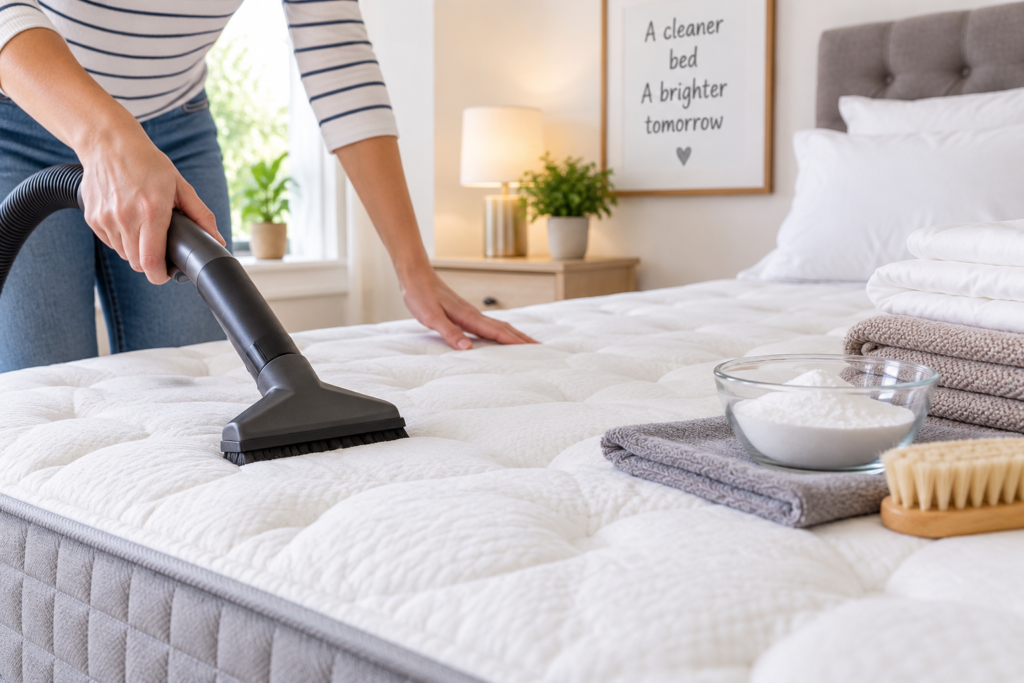
The best way to clean a mattress is to work carefully and use as little moisture as possible. Mattresses are thick and absorbent, so soaking them can make drying difficult and may encourage unpleasant odours or moisture problems inside the mattress.
For a routine clean, you will usually need:
- A vacuum cleaner with an upholstery attachment
- Clean white cloths or microfibre cloths
- A small bowl or container
- A mild cleaning solution suitable for the mattress material
- Baking soda, if suitable for your mattress
- Clean towels
- Good ventilation
Always check the mattress manufacturer’s care instructions before applying cleaning products. Some mattresses, particularly specialist foam, latex and treated mattresses, may have specific cleaning requirements.
If your mattress needs considerably more attention than routine cleaning, our guide to deep cleaning a mattress thoroughly covers the more intensive process.
How to Clean a Mattress Step by Step
A mattress does not usually need aggressive scrubbing or large amounts of cleaning product. The aim is to remove bedding, vacuum away loose debris, deal carefully with marks and allow everything to dry completely before remaking the bed.
1. Strip the Bed Completely
Remove sheets, pillowcases, duvet covers, mattress protectors and any other removable bedding.
Wash washable items according to their care labels. Removing everything gives you access to the entire mattress rather than simply cleaning the visible areas.
This is also a useful opportunity to inspect the mattress for stains, damaged areas or signs that require more specific treatment.
Your pillows collect oils, moisture and everyday dirt too, so consider cleaning your pillows properly while the bed is stripped.
2. Check the Mattress Care Instructions
Before using water, detergent, baking soda or another product, check the manufacturer’s label or care guidance.
This matters because mattress construction varies considerably. A cleaning method suitable for one type of mattress may not be recommended for another.
If you cannot find the instructions, take a cautious approach: avoid saturating the mattress and test any cleaning solution on a small, inconspicuous area first.
3. Vacuum the Entire Mattress
Use the upholstery attachment on your vacuum cleaner and slowly work across the mattress surface.
Pay particular attention to:
- Seams
- Tufted areas
- Piping around the edges
- Creases and indentations
- The sides of the mattress
These areas can trap dust, hair and other loose debris.
Use slow, overlapping passes rather than quickly running the vacuum over the surface. If your mattress can safely be turned or flipped according to the manufacturer’s instructions, vacuum the accessible sides as well.
4. Identify Stains Before Treating Them
Do not automatically apply the same cleaner to every mark. Different stains may require different treatment.
If you know what caused the stain, use an appropriate method rather than experimenting with increasingly strong products.
For example, KeepShine has separate guidance for removing blood stains from a mattress and dealing with coffee stains on a mattress.
The sooner you identify what you are dealing with, the easier it is to avoid spreading or setting the stain.
5. Spot-Clean Marks Carefully
Apply a small amount of an appropriate cleaning solution to a clean cloth rather than pouring liquid directly onto the mattress.
Gently blot the affected area, working from the outside of the mark towards the centre. This can help prevent the stain from spreading.
Avoid vigorous scrubbing. Scrubbing can push contamination deeper into the mattress fibres or enlarge the affected area.
Use another clean, slightly damp cloth to remove cleaning residue where appropriate, again taking care not to saturate the mattress.
6. Freshen the Mattress if Appropriate
Once stains have been treated and excess moisture has been removed, baking soda can sometimes be used to help freshen a mattress and absorb surface odours.
Only use it if it is appropriate for your mattress and consistent with the manufacturer’s guidance.
Apply a light, even layer rather than a thick covering. Leave it undisturbed for a while before vacuuming it away thoroughly.
Baking soda can help with ordinary freshness, but it should not be used to disguise an unresolved moisture, mould or hygiene problem.
7. Vacuum Again
If you have used baking soda, vacuum the mattress thoroughly once it has had time to work.
Move slowly across the entire surface and pay attention to seams and edges where powder can collect.
Check the surface afterwards. If residue remains, repeat the vacuuming rather than brushing the powder deeper into the fabric.
8. Let the Mattress Dry Completely
This is one of the most important parts of cleaning mattress safely.
Open windows where practical and allow plenty of air to circulate around the mattress. If you have spot-cleaned an area, give it sufficient time to dry completely.
Do not remake the bed simply because the surface feels almost dry. Moisture can remain below the surface.
Only replace the mattress protector and bedding when you are confident the mattress is completely dry.
9. Remake the Bed With Clean Bedding
Once everything is dry, replace the mattress protector if you use one and make the bed with freshly washed bedding.
A clean mattress combined with clean bedding helps prevent you immediately transferring accumulated dirt and oils back onto the freshly cleaned surface.
For the rest of the room, you can follow our step-by-step bedroom cleaning guide to tackle the surrounding surfaces, floors and frequently touched areas.
Explore KeepShine’s free downloadable cleaning resources for practical help organising your household cleaning.
Pro Tip

When spot-cleaning a mattress, put your cleaning solution onto the cloth rather than directly onto the mattress. This gives you much better control over the amount of moisture being introduced and makes it easier to treat the surface without soaking the filling underneath.
How to Deal With Different Mattress Stains
Routine vacuuming is relatively straightforward, but stains need more careful attention. What caused the mark, how long it has been there and the mattress material can all influence the safest approach.
Treat Fresh Spills Quickly
If something has just been spilled, remove as much liquid as possible using clean, absorbent cloths or towels. Blot firmly rather than rubbing.
Work from the outside towards the centre so that you do not unnecessarily enlarge the stain. Once you have absorbed as much as possible, use a treatment appropriate to the substance and mattress material.
Do Not Treat Every Food Stain the Same Way
Food and drink can contain very different pigments, fats and other ingredients. A general cleaner may therefore be less effective than a stain-specific approach.
For particular accidents, see our guides to removing chocolate stains from a mattress or treating curry and turmeric stains on a mattress.
Whatever method you use, avoid flooding the area with water in an attempt to rinse the stain away.
Know When a Mattress Needs More Than Spot Cleaning
Several stains, widespread odours or a mattress that has not been cleaned for a long time may require a more thorough approach than routine spot cleaning.
However, more cleaning does not mean more water or stronger chemicals. It means working systematically and using methods appropriate to the mattress.
If you are establishing a regular routine, our practical mattress cleaning schedule can help you decide what needs doing and when.
Mistakes to Avoid
- Using too much water. A mattress can hold moisture deep inside its layers long after the surface appears dry. Use controlled amounts of liquid and avoid soaking the mattress.
- Scrubbing stains aggressively. Hard rubbing can spread a stain and work it further into the fabric. Blot carefully instead and use a treatment suited to the type of stain.
- Using a cleaning product without checking suitability. Mattress materials differ, and a product that works on one surface may not be suitable for another. Check the care instructions and test products cautiously.
- Remaking the bed before the mattress is completely dry. Covering a damp mattress reduces airflow and can trap moisture. Give cleaned areas plenty of drying time before replacing bedding.
- Trying to hide persistent odours. Fragrance or baking soda may improve ordinary freshness, but persistent smells can indicate a problem that needs identifying rather than masking.
For more common problems worth avoiding, see our guide to mattress cleaning mistakes and how to prevent them.
If mattress cleaning is part of a bigger bedroom or home clean you would rather not tackle yourself, KeepShine can help with professional home cleaning.
More Questions About Cleaning Your Mattress
Mattresses need slightly different care from many household surfaces, so here are answers to a few other useful questions you may have.
How often should you vacuum a mattress?
There is no single schedule that suits every household. How quickly dust and debris accumulate depends on factors such as how the bed is used, whether pets have access to it and your general cleaning routine. Vacuuming the mattress periodically when changing or washing bedding can make it easier to keep on top of surface debris.
Can you wash a mattress with water?
A mattress should generally not be treated like a washable fabric item. Large amounts of water can penetrate deeply and take a long time to dry. For ordinary cleaning, controlled spot cleaning is usually more appropriate. Always follow the manufacturer’s care instructions for your particular mattress.
Can you use baking soda on a mattress?
Baking soda is commonly used to freshen mattresses and absorb some surface odours, but you should first check whether it is suitable for your particular mattress. If you use it, apply it sparingly and vacuum it away thoroughly afterwards rather than allowing residue to remain in the fabric
What should you do if a mattress still smells after cleaning?
First make sure the mattress is completely dry. If an odour remains, try to identify its source rather than repeatedly adding fragrance or cleaning products. A persistent musty smell, visible mould or significant contamination may indicate a problem that ordinary surface cleaning cannot resolve.
Should you flip the mattress when cleaning it?
Only if your particular mattress is designed to be flipped. Some modern mattresses have a designated sleeping surface and should only be rotated rather than turned over. Check the manufacturer’s instructions. If both sides are intended for use, cleaning provides a convenient opportunity to inspect and vacuum them.
How can you keep a mattress cleaner between cleans?
Use clean bedding, deal with spills promptly and consider a washable mattress protector suitable for your bed. Regular vacuuming can also reduce the accumulation of surface debris. For a longer-term routine, see our advice on keeping your mattress clean for longer.
Subscribe to KeepShine for more practical cleaning guides, household tips and useful resources to make everyday cleaning easier.
Final Thoughts: Make Mattress Care Part of Your Bedroom Routine
Mattress cleaning becomes much easier when it is treated as occasional maintenance rather than something left until there is a major stain or unpleasant smell.
Start with regular vacuuming, respond to spills promptly and use only as much moisture as necessary when spot-cleaning. Most importantly, give any cleaned areas enough time to dry fully before putting the bedding back on.
Combining those habits with clean bedding and a sensible bedroom cleaning routine can help keep your sleeping space feeling fresher without turning mattress care into a difficult job.