
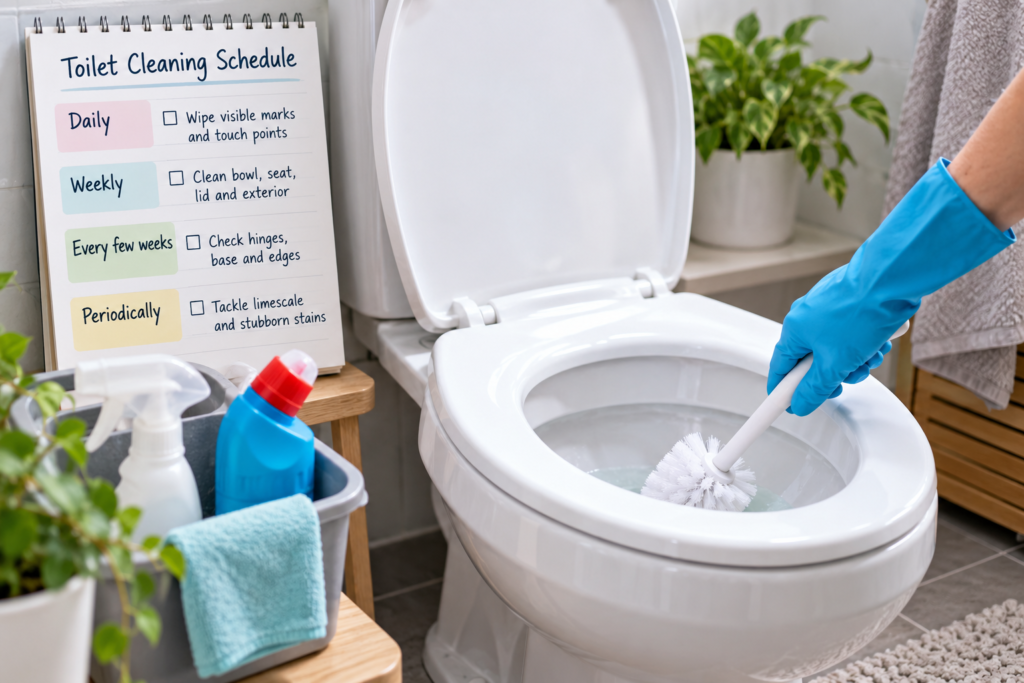
Cleaning your toilet regularly helps control stains, odours and build-up before they become harder to remove. For most homes, cleaning the toilet once a week is a practical starting point.
However, how often to clean a toilet depends on how many people use it, whether it is the main household toilet and how quickly visible marks or smells develop. A busy family bathroom may need attention several times a week, while a lightly used guest toilet may need less frequent cleaning.
The easiest approach is not to wait until the toilet looks dirty. A simple routine combining quick maintenance with regular thorough cleaning keeps the bowl, seat and surrounding areas much easier to manage.
A Practical Toilet Cleaning Schedule
For an average household, aim to give the toilet a proper clean at least once a week, with quick cleaning in between whenever necessary.
A useful toilet cleaning schedule is:
- Daily or as needed: Deal with obvious splashes, marks or spills and wipe frequently touched areas if necessary.
- Once a week: Clean the bowl, rim, seat, lid, flush handle or button and exterior surfaces thoroughly.
- Every few weeks: Pay closer attention to less obvious areas such as hinges, around the toilet base and awkward edges.
- Periodically: Check for limescale, persistent staining and build-up that may require more detailed cleaning.
This is a guideline rather than a strict rule. A toilet used by several people may need cleaning more frequently, particularly around the seat, flush control and exterior.
How Often to Clean Each Part of Your Toilet
Different parts of a toilet become dirty at different rates. Instead of treating toilet cleaning as a single weekly job, it helps to know which areas deserve more frequent attention.
Toilet bowl: about once a week
For most households, cleaning the bowl weekly is a sensible routine. Apply a suitable toilet cleaner according to its instructions, paying attention beneath the rim where deposits can collect.
Allow the product the recommended contact time before scrubbing thoroughly with a toilet brush. Flush afterwards.
If your toilet develops visible marks between weekly cleans, there is no reason to wait for your scheduled cleaning day. A quick brush when you first notice them can prevent deposits becoming more stubborn.
If you need the complete cleaning process, follow our step-by-step guide to cleaning a toilet properly.
Toilet seat and lid: several times a week if heavily used
The seat and lid are frequently touched surfaces, so they may benefit from more regular wiping than the inside of the bowl.
In a busy household, inspect them every day and clean them whenever they are visibly dirty. Otherwise, include them in your weekly clean.
Use a cleaning product suitable for the toilet seat material. Pay attention to the underside of the seat as well as the top, and avoid leaving excess cleaning liquid around hinges and fittings.
Flush handle or button: regularly
The flush control is touched almost every time somebody uses the toilet, yet it is easy to overlook.
Include it in your normal toilet-cleaning routine and wipe it more frequently in a busy household or when someone in the home is unwell. Follow the product instructions for any disinfectant you use, including the stated contact time.
Toilet rim and beneath the rim: weekly
The rim deserves attention whenever you clean the bowl. Deposits can form in areas that are difficult to see when standing above the toilet.
Use your toilet brush to reach beneath the rim, following the instructions for your chosen toilet-cleaning product.
If ordinary weekly cleaning is no longer removing established deposits, a more thorough deep clean of the toilet may be more appropriate than repeatedly scrubbing the same area.
Outside of the toilet: weekly or when needed
Dust, splashes and general bathroom grime can collect on the cistern, sides and exterior of the bowl.
Work from relatively cleaner areas towards dirtier ones rather than using the same cloth everywhere. Clean the top and sides of the cistern, exterior surfaces and the area around the toilet base.
If the whole room needs attention, our guide to cleaning a bathroom properly can help you organise the job efficiently.
Hinges and awkward areas: every few weeks
Seat hinges, fittings and narrow gaps can gradually collect dust and grime even when the visible surfaces look clean.
Inspect these areas during your weekly clean and give them more detailed attention every few weeks or whenever build-up appears.
Use a small cleaning cloth or another suitable tool to reach narrow spaces, taking care not to damage fittings.
Floor around the toilet: at least weekly
The floor immediately around a toilet deserves regular cleaning because dust, hair and splashes can collect there.
Vacuum or remove loose debris first if appropriate for the flooring, then clean the floor using a method suitable for that particular material. Pay particular attention to the area around the base and behind the toilet where accessible.
Do not soak flooring or toilet fittings unnecessarily, especially where moisture could enter joints or edges.
Toilet brush and holder: regularly
Cleaning the toilet but ignoring the brush and holder can leave you with dirty cleaning equipment.
After using the brush, rinse it appropriately and allow it to drain and dry rather than immediately trapping it wet inside a closed holder. Clean the holder regularly too, particularly if water or residue collects inside it.
Replace a brush that is damaged, badly worn or can no longer be cleaned effectively.
Explore KeepShine’s free downloadable cleaning resources if you would like practical help keeping everyday household cleaning more organised.
Pro Tip
Instead of saving every toilet-cleaning task for one big weekly session, deal with small marks as soon as you notice them. A quick wipe or brush can take less than a minute but may prevent dirt, stains and deposits from becoming a much more time-consuming job later.
When Your Toilet May Need Cleaning More Often
A weekly clean works well as a general guideline, but there are situations where increasing the frequency makes sense.
A busy family bathroom
The number of people using a toilet can make a significant difference. A toilet shared by a family throughout the day will generally require more attention than one used by one or two people.
You do not necessarily need to perform a complete clean every day. Instead, check the seat, flush control and surrounding surfaces regularly and deal with visible dirt promptly.
When someone in the household is unwell
If somebody has an infectious illness involving vomiting or diarrhoea, bathroom hygiene becomes particularly important. Frequently touched surfaces may require more regular cleaning and appropriate disinfection.
Follow the instructions on any disinfectant carefully, including dilution where applicable and the required contact time. Never mix cleaning chemicals.
Hard-water and limescale build-up
In hard-water areas, mineral deposits may gradually develop inside the toilet. If you notice limescale returning quickly, waiting several weeks between attention can allow it to become more established.
Regular inspection is useful because early deposits are generally easier to address than thick build-up.
A rarely used toilet
A guest toilet that receives little use may not need the same cleaning frequency as the main bathroom, but it should not simply be forgotten.
Dust can settle on exterior surfaces, waterline deposits can still develop and stale odours may appear. Inspect it regularly and clean it when necessary rather than relying entirely on usage.
Keeping up with small maintenance jobs can also help you keep your toilet cleaner for longer between thorough cleans.
Mistakes to Avoid
- Waiting until the toilet looks obviously dirty. Visible staining is not the only reason to clean. A regular routine prevents grime and deposits accumulating and usually makes each cleaning session easier.
- Mixing different cleaning products. Never combine toilet cleaners, bleach, descalers or other household chemicals unless the manufacturer explicitly states that this is safe. Dangerous gases or reactions can result from incompatible products. Use one appropriate product as directed.
- Using the same cloth throughout the bathroom. A cloth used around the toilet should not then be used on cleaner bathroom surfaces. Keep toilet-cleaning cloths separate or follow an appropriate laundering or disposal routine.
- Forgetting touch points. Concentrating entirely on the bowl can mean the seat, lid and flush control are repeatedly overlooked. Include these areas in your routine rather than judging cleanliness by the bowl alone.
- Scrubbing aggressively with unsuitable materials. Harsh abrasives can damage some surfaces. Use products and tools suitable for the material and check the manufacturer’s care guidance if you are uncertain.
For more common problems that can make the job less effective, see our guide to toilet cleaning mistakes to avoid.
If keeping up with bathroom cleaning is difficult, KeepShine can provide professional home cleaning support as part of your regular cleaning routine.
More Questions About Your Toilet Cleaning Routine
Cleaning frequency varies from household to household, so here are answers to a few other practical questions that can help you decide when your toilet needs attention.
Should I clean my toilet every day?
A complete toilet clean every day is usually unnecessary in an average household. However, quick daily attention can be useful in a heavily used bathroom. Deal with visible marks and splashes promptly and check frequently touched surfaces. Your normal thorough clean can then form part of a regular weekly routine.
How do I know my toilet needs cleaning before cleaning day?
Do not rely solely on your schedule. Visible marks, staining, unpleasant smells, dust around the exterior or developing deposits are all good reasons to clean sooner. A schedule provides consistency, but the actual condition of the toilet should determine whether additional cleaning is needed.
How often should I deep clean a toilet?
There is no single timetable that suits every toilet. Deep cleaning is useful when ordinary maintenance is no longer dealing effectively with areas such as stubborn deposits, hidden grime around fittings or limescale. Regular weekly cleaning should reduce how often a more intensive clean becomes necessary.
Should the toilet be cleaned before or after the shower?
If you are cleaning the whole bathroom in one session, organise the work so that you do not spread toilet contamination onto other surfaces. Use separate cloths and tools for the toilet and cleaner bathroom areas.
For the shower itself, follow our step-by-step shower cleaning guide rather than using toilet-cleaning products on shower surfaces.
How often should I replace my toilet brush?
There is no universal replacement date. Inspect the brush instead. Replace it when the bristles become badly worn, damaged or difficult to clean properly. Keeping the brush rinsed, drained and allowed to dry appropriately after use can also help keep your cleaning equipment in better condition.
What if my toilet still looks dirty after regular cleaning?
Persistent marks may be limescale or established deposits rather than ordinary surface dirt. Repeatedly scrubbing harder is not necessarily the solution. Identify the type of build-up and choose an appropriate product and method, always following the manufacturer’s instructions and avoiding incompatible chemical combinations.
Subscribe to KeepShine for more practical cleaning guides, household routines and useful resources that can make regular cleaning easier to manage.
Final Thoughts: Make Toilet Cleaning Part of a Simple Routine
The best toilet cleaning schedule is one you can realistically maintain. For most households, a thorough weekly clean combined with quick attention whenever marks or spills appear provides a practical starting point.
A busier toilet may need attention more frequently, while a lightly used one may need less. Rather than following the calendar blindly, regularly check the bowl, seat, flush control, exterior and surrounding floor.
Small, consistent cleaning jobs are usually easier to manage than waiting for dirt and deposits to accumulate. Once toilet cleaning becomes part of your normal bathroom routine, keeping the area fresh and presentable requires far less effort.