
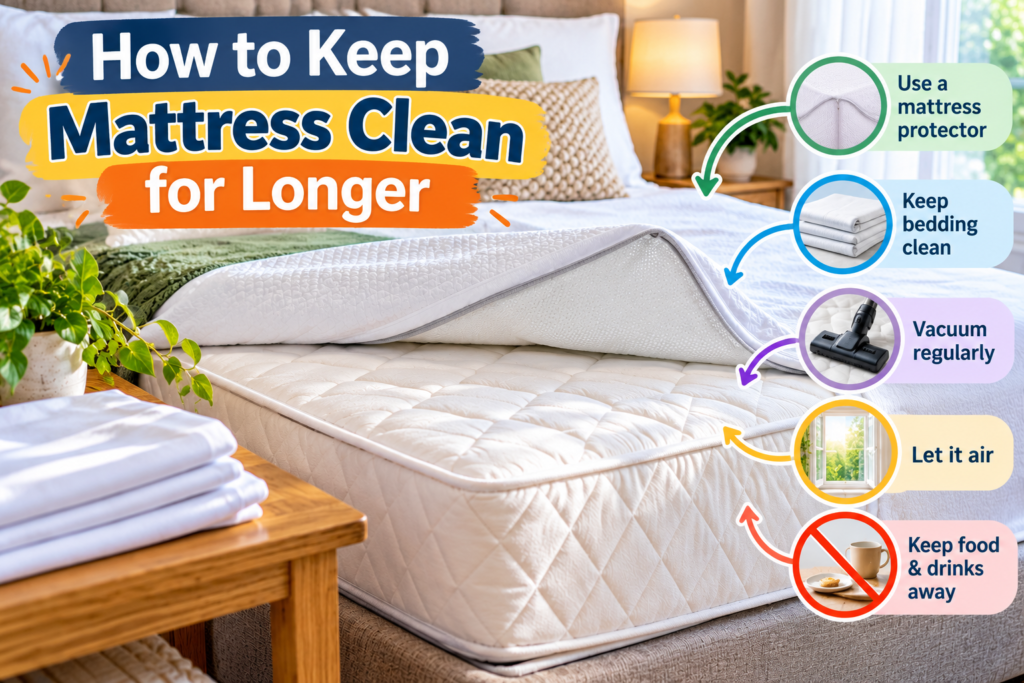
A clean mattress is easier to maintain than to rescue after months of sweat, dust and stains have built up. Learning how to keep your mattress clean for longer can help you maintain a fresher sleeping environment while reducing the need for frequent deep cleaning.
Your mattress is used for several hours every night, yet it is often overlooked when regular household cleaning is done. Body oils, perspiration, skin flakes, dust and accidental spills can gradually work their way into the fabric.
The good news is that you do not need to deep-clean your mattress constantly. A simple routine of protection, regular vacuuming, airing and prompt stain treatment can make a noticeable difference.
The Best Way to Keep a Mattress Clean for Longer
The most effective approach is prevention rather than repeatedly trying to remove dirt after it has settled into the mattress. Use a washable mattress protector, keep bedding clean, vacuum the mattress periodically and deal with spills as soon as they happen.
A useful routine includes:
Weekly: Change and wash your bedding according to your normal household routine and check for obvious marks or spills.
Every few weeks: Vacuum the mattress surface, paying particular attention to seams and edges.
Every few months: Inspect the mattress and protector more thoroughly and air the mattress when practical.
Straight away: Blot spills and treat stains before they have time to dry and become more difficult to remove.
For a wider routine covering the whole sleeping area, you can also follow our guide to cleaning your bedroom properly.
Always check the mattress manufacturer’s care instructions before using any cleaning product or method. Some mattresses, particularly specialist foam mattresses, have specific cleaning requirements.
How to Maintain a Cleaner Mattress
You do not need to use large amounts of water or strong chemicals to keep a mattress in good condition. In fact, excessive moisture can create additional problems, so regular dry maintenance is usually the better starting point.
1. Use a washable mattress protector
A good mattress protector is one of the simplest ways to reduce the amount of dirt and moisture reaching the mattress itself.
The protector acts as a barrier between the sleeper and the mattress, helping to catch perspiration, skin oils, small spills and everyday debris. Unlike the mattress, it can normally be removed and washed.
Wash the protector according to its care label. Do not put it back on the bed until it is completely dry.
A protector is particularly useful if children use the bed, if drinks are regularly kept nearby or if accidental spills are a common occurrence.
2. Wash your bedding regularly
Clean sheets do not replace mattress cleaning, but they reduce the amount of body oils, sweat and loose skin that can accumulate around the sleeping area.
Strip the bed regularly and wash sheets, pillowcases and other washable bedding according to their care instructions.
Your pillows also form part of the sleeping environment, so they should not be overlooked. If they need attention, follow our guide to cleaning pillows properly.
Do not make the bed immediately if the bedding or mattress is damp. Allow moisture to evaporate first.
3. Vacuum the mattress surface
Vacuuming is one of the most practical ways to remove loose dust, hair and other dry debris before it accumulates.
Remove the bedding and mattress protector first. Use a suitable upholstery attachment if your vacuum cleaner has one and gently work across the mattress surface.
Pay particular attention to:
Seams and piping
Edges of the mattress
Areas where the body normally rests
The area underneath pillows
Any visible debris
Avoid aggressively pressing or scrubbing the mattress with the vacuum attachment. Follow the manufacturer’s recommendations for your particular mattress.
If you are unsure how often this should be done, our guide to how often to clean your mattress can help you establish a realistic maintenance schedule.
4. Air the mattress when possible
After removing the bedding, allowing the mattress to air for a while can help reduce trapped everyday moisture.
If practical, leave the bed uncovered for a period after getting up rather than immediately covering everything with heavy bedding.
Good ventilation is useful, but avoid exposing the mattress to excessive moisture or unsuitable conditions. If you are moving the mattress or standing it upright, make sure it is safe to do so and follow the manufacturer’s instructions.
5. Deal with spills immediately
A fresh spill is much easier to manage than an old, dried stain.
If something is spilled on the mattress, remove the bedding and mattress protector and gently blot the affected area with a clean, absorbent cloth.
Do not rub aggressively. Rubbing can spread the liquid and work it further into the fabric.
The main goal is to remove as much moisture as possible without soaking the mattress.
If a stain remains, use only a cleaning method that is suitable for the mattress material and recommended by the manufacturer.
For example, a coffee spill should be treated promptly rather than left to dry into the fabric. If you need specific guidance, see our guide to removing coffee stains from a mattress.
6. Keep food and drinks away from the bed
Eating and drinking in bed may seem harmless, but crumbs, oils and accidental spills create additional cleaning work.
Crumbs can settle into seams and underneath bedding, while drinks can quickly penetrate mattress materials.
If you regularly eat or drink in the bedroom, keeping this activity away from the bed is one of the easiest preventative measures you can make.
7. Check the mattress regularly
You do not need to inspect your mattress every day. A quick check whenever you change or wash the mattress protector is enough to notice problems early.
Look for:
New stains
Damp areas
Torn fabric
Unusual odours
Damage around seams
Signs that the mattress protector needs replacing
Early attention is almost always easier than trying to deal with a problem after it has been left for months.
KeepShine’s free cleaning resources can help you organise regular household cleaning and make everyday maintenance easier.
Pro Tip

A simple habit that can make mattress maintenance much easier is to vacuum the mattress whenever you remove the mattress protector for washing. With the protector already off, you have a convenient opportunity to clean the exposed surface without having to remember a separate mattress-cleaning day.
Keep Moisture Under Control
One of the most important parts of mattress maintenance is avoiding unnecessary moisture.
A mattress contains materials that can be difficult to dry thoroughly once they become wet. Pouring water or cleaning solution directly onto the mattress may therefore create a bigger problem than the original stain.
Instead, think of mattress cleaning as a low-moisture task unless the manufacturer specifically recommends another approach.
For small marks, use as little moisture as reasonably necessary, blot rather than scrub, and allow the area to dry completely before putting bedding back on.
If a mattress has become significantly wet, do not simply cover it and hope the problem disappears. Remove all bedding and protectors, improve ventilation and follow the manufacturer’s drying instructions.
For serious contamination, persistent odours, extensive staining or a mattress that has been heavily soaked, professional advice may be more appropriate than repeatedly applying household cleaning products.
When the mattress does need a more thorough clean, our guide to deep-cleaning a mattress explains how to approach that task separately from everyday maintenance.
Mistakes to Avoid
Soaking the mattress: Applying lots of water can allow moisture to penetrate deeper than you can easily dry. Use a low-moisture approach unless the manufacturer specifically says otherwise.
Scrubbing stains aggressively: Hard rubbing can spread a stain and may damage the mattress fabric. Blot gently and work according to the mattress care instructions.
Using strong chemicals without checking first: Bleach, harsh cleaners and unsuitable stain removers can damage fabrics or materials. Always check the manufacturer’s guidance before applying a product.
Putting bedding back on too soon: Covering a damp mattress or protector traps moisture. Make sure everything is properly dry before remaking the bed.
Ignoring the mattress protector: A protector only helps when it is kept clean and in good condition. Wash it regularly according to its care label and replace it if it becomes damaged or no longer provides adequate protection.
Waiting for a serious problem before cleaning: Regular light maintenance is easier than trying to recover a heavily soiled mattress. Vacuum periodically and deal with spills promptly.
If you want to understand the problems that can arise from using unsuitable cleaning methods, see our guide to common mattress-cleaning mistakes to avoid.
If your mattress or surrounding bedroom has accumulated heavy staining or needs more thorough attention, professional cleaning can be a useful option.
More Questions About Keeping Your Mattress Clean
Here are a few other useful questions that can help you decide how to look after your mattress.
How often should I vacuum my mattress?
There is no single schedule that suits every household, but vacuuming every few weeks is a sensible maintenance routine for many homes. You may choose to vacuum more often if the mattress is exposed to more dust, pets, children or other sources of debris. Always use an appropriate attachment and follow the mattress manufacturer’s care instructions.
Can I use baking soda to clean my mattress?
Baking soda is often recommended as a household odour-control method, but you should not assume it is suitable for every mattress. Some manufacturers may give specific instructions about powders or other cleaning products. Check the care information for your mattress before applying anything to its surface, and avoid methods that could leave residue inside the mattress.
Should I turn or rotate my mattress?
Some mattresses are designed to be rotated, while others should not be turned over. Modern mattresses can have specific construction that means one side must remain facing upwards. Check the manufacturer’s instructions rather than assuming that flipping or rotating the mattress is appropriate.
How can I prevent sweat from getting into my mattress?
A washable mattress protector provides a practical barrier between your body and the mattress. Keeping bedding clean and allowing the bed to air can also help reduce the amount of moisture remaining around the sleeping area. The protector itself should be washed according to its care instructions.
What should I do if I spill a drink on my mattress?
Act quickly. Remove the bedding and protector, then gently blot the affected area with a clean absorbent cloth. Avoid rubbing and avoid pouring more liquid onto the mattress. Continue removing moisture and follow the manufacturer’s cleaning and drying instructions. The mattress should be completely dry before bedding is replaced.
When should I replace a mattress rather than clean it?
Cleaning can deal with surface dirt and some stains, but it cannot restore a mattress that is badly worn or structurally damaged. If the mattress is sagging, damaged, uncomfortable or has persistent problems that cleaning cannot resolve, check the manufacturer’s guidance and consider whether replacement is more appropriate.
Subscribe to KeepShine for more practical cleaning guides, household maintenance tips and useful resources to make everyday cleaning easier.
Final Thoughts: A Simple Routine Keeps Your Mattress Fresher
Keeping a mattress clean for longer does not require constant deep cleaning. The biggest difference comes from preventing dirt and moisture from reaching the mattress in the first place.
Use a washable protector, keep bedding clean, vacuum the mattress periodically and respond quickly when something is spilled. Just as importantly, avoid soaking the mattress or using cleaning products without checking whether they are suitable for its materials.
A few minutes of routine maintenance can save you from dealing with much bigger cleaning problems later. Treat the mattress as part of your regular household cleaning routine rather than something that only needs attention when it becomes visibly dirty.