
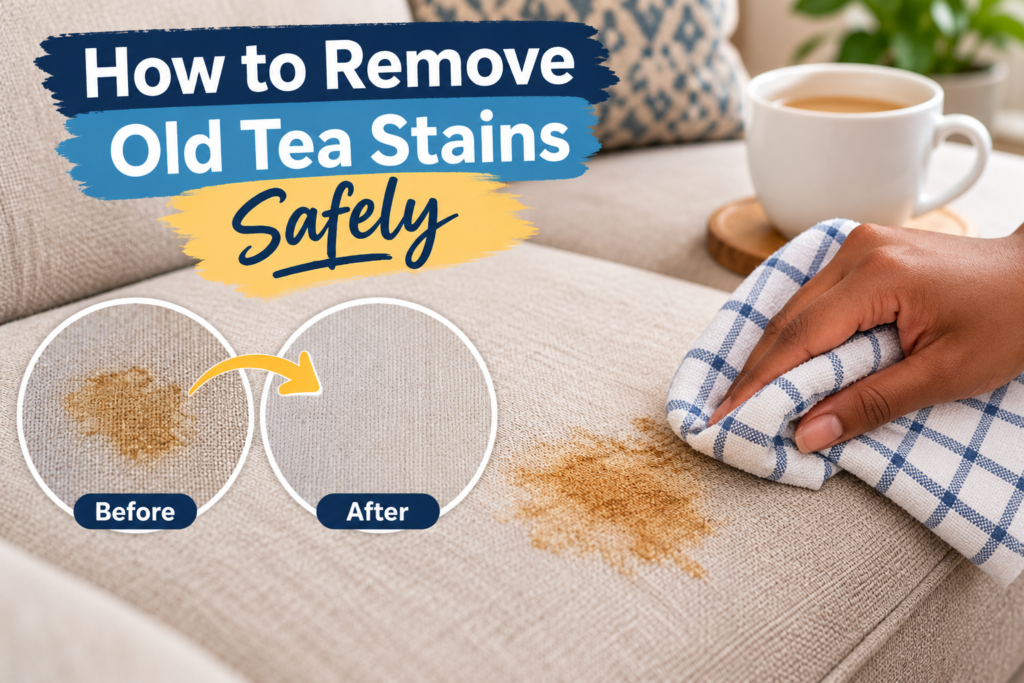
Old tea stains can be stubborn, especially when the tea has dried into fabric, carpet or upholstery. The good news is that set-in tea stains can often be lifted with the right treatment and a little patience.
The key is to loosen the dried residue without damaging the material underneath. This guide explains how to approach old tea stains on common household surfaces, what products to try first, and which mistakes can make the stain harder to remove.
What to Do First When a Tea Stain Has Dried
For an old tea stain, start gently rather than reaching immediately for a strong chemical cleaner. Dried tea contains compounds that can become more firmly attached to fibres over time, but aggressive scrubbing or excessive heat can also make the situation worse.
Before treating the stain:
Check the care label or manufacturer’s instructions, particularly for upholstery and delicate fabrics.
Remove any loose or dried residue without rubbing it deeper into the material.
Test your chosen cleaning solution on a hidden area first.
Work from the outside of the stain towards the centre where possible.
Use a clean white cloth for fabrics and upholstery to reduce the risk of colour transfer.
Never mix different cleaning chemicals.
For washable clothing and fabrics, laundering may provide the final stage of treatment. For carpets, mattresses and sofas, however, controlling the amount of moisture is particularly important.
How to Remove an Old Tea Stain Step by Step
The best method depends on where the stain is located. Always begin with the mildest suitable approach and only move to a stronger treatment if necessary.
1. Remove dried tea residue
If the tea stain has completely dried, gently brush or scrape away any loose residue using a soft brush or the edge of a blunt object.
Do not aggressively scrape the material. The aim is simply to remove anything sitting on the surface so that your cleaning solution can reach the actual stain.
2. Blot with cool or lukewarm water
Dampen a clean white cloth with cool or lukewarm water and gently blot the stained area.
Avoid soaking the material. Too much water can spread the stain, leave water marks or, in the case of mattresses and upholstery, penetrate deeper into the filling.
For an old stain, you may need to blot several times before you see any noticeable change.
3. Use a small amount of mild detergent
If water alone is not enough, mix a small amount of mild washing-up liquid or suitable liquid laundry detergent with water.
Apply a little of the solution to a clean cloth rather than flooding the stain directly. Gently dab the affected area, working from the outside towards the middle.
Allow the solution a few minutes to loosen the stain, provided the material’s care instructions allow this, then blot with a separate cloth dampened with clean water.
This gradual approach is particularly useful when dealing with tea stains on carpet, where excessive moisture can create another problem.
4. Rinse or blot away the cleaning solution
Once the stain has started to lift, use a clean, slightly damp cloth to remove remaining detergent.
This step matters because detergent residue can attract dirt if it is left behind. Continue blotting rather than rubbing.
On washable fabric, you can normally rinse the material more thoroughly according to its care instructions.
5. Repeat instead of scrubbing harder
Old stains often need more than one treatment.
If some discolouration remains, allow the material to dry sufficiently and repeat the appropriate cleaning method rather than applying increasingly aggressive pressure.
Several gentle treatments are generally preferable to one harsh treatment that damages the fibres or surface.
6. Wash washable fabrics if appropriate
For clothing, bedding and other washable fabrics, follow the care label after pre-treating the stain.
A suitable laundry detergent can help remove the remaining residue. If the fabric is colourfast and the care instructions permit it, an oxygen-based stain remover may be considered for particularly stubborn stains.
Do not put the item in a tumble dryer or expose it to high heat until you are satisfied that the stain has gone. Heat can make some stains considerably more difficult to remove.
If you are dealing with clothing or other washable material, you may also find it useful to see our guide to removing tea stains from clothes and washable fabrics.
7. Allow the area to dry properly
After treating carpet, upholstery or a mattress, allow the area to dry thoroughly.
Good ventilation can help. Avoid covering a damp mattress or sitting heavily on freshly cleaned upholstery until it has dried.
If the stain has spread, a strong odour develops or the material remains noticeably damp, stop adding cleaning solution and concentrate on drying it safely.
For more practical ways to keep household cleaning organised, explore KeepShine’s free downloadable cleaning resources.
Pro Tip
For an old tea stain, resist the temptation to scrub harder when the first treatment does not work. Professional cleaners often get better results by repeating a controlled treatment: loosen, blot, rinse and reassess. Keeping the area contained also prevents moisture and dissolved stain from spreading into clean fibres.
Why Some Old Tea Stains Are Harder to Remove
Not every tea stain behaves in exactly the same way. The age of the stain is one factor, but the material, type of tea and what has happened to the item since the spill can make a significant difference.
Heat can make the problem worse
If a stained item has already been tumble-dried, ironed or exposed to another source of high heat, the stain may be more difficult to remove.
That does not necessarily mean it is permanent, but it is a good reason to avoid further heat while you are treating it.
The surface matters
A washable cotton shirt can tolerate very different treatment from a wool carpet, delicate upholstery or a mattress.
For example, a carpet should not be saturated simply because the stain is stubborn. Similarly, upholstery should not be treated with a product unless it is suitable for that fabric or surface.
If tea has been spilled on a sofa, use a method appropriate for the upholstery rather than treating it like a washable garment. Our guide to removing tea stains from a fabric sofa covers the particular considerations involved.
For mattresses, moisture control is especially important. You can read more about dealing with tea stains on a mattress before applying any liquid treatment.
Old stains may need professional treatment
If a stain has been present for a long time, covers a large area, or is on a delicate or expensive material, professional cleaning may be the safer option.
This is particularly relevant when you are unsure whether a cleaning product is compatible with the material. A failed DIY treatment can sometimes cause more visible damage than the original stain.
Mistakes to Avoid
Using boiling or very hot water: Heat is not a universal stain remover. It can make some stains harder to remove and may damage sensitive materials. Start with cool or lukewarm water unless the care instructions say otherwise.
Scrubbing aggressively: Vigorous rubbing can spread the stain and damage fibres, especially on carpet and upholstery. Blotting is usually the safer technique.
Soaking the carpet or furniture: More water does not automatically mean better cleaning. Excess moisture can penetrate backing, padding or fillings and create drying problems.
Using several cleaning chemicals together: Never mix products simply because one treatment has not worked. Some combinations can create dangerous fumes or unwanted chemical reactions.
Skipping a patch test: A cleaning product can affect colour or texture even when it is marketed as suitable for a particular type of stain. Test an inconspicuous area first.
Putting a stained item in the dryer: If the stain is still visible, avoid high heat until you have finished treating it. Drying can make the remaining mark much more difficult to remove.
If a tea stain is proving difficult to treat yourself, KeepShine can provide professional cleaning help for suitable household cleaning needs.
More Questions About Removing Old Tea Stains
Here are a few other useful questions that often come up when dealing with dried or set-in tea marks.
Can an old tea stain still be removed?
Often, yes. An old stain may require several gentle treatments rather than disappearing after one application. The result depends on the material, how long the stain has been present, whether heat has been applied and whether previous cleaning products have affected the fabric.
Does baking soda remove old tea stains?
Baking soda is sometimes suggested as a household stain treatment, but it is not automatically the best choice for every surface. It can be unsuitable for delicate materials or difficult to remove from some fibres. A mild detergent and controlled blotting are a more sensible starting point for many household surfaces.
Can white vinegar remove a set-in tea stain?
Diluted white vinegar is sometimes used for household stain treatment, but it should not be assumed to be safe for every material. Natural fibres, upholstery and carpets can have specific care requirements. If considering vinegar, check the manufacturer’s instructions and test an inconspicuous area first rather than applying it indiscriminately.
How do I remove an old tea stain from a carpet?
Start by removing loose residue, then use a small amount of suitable cleaning solution on a cloth and blot rather than saturating the carpet. Rinse by blotting with clean water and allow it to dry thoroughly. For more detailed carpet guidance, see our guide to removing tea stains from carpet.
Is an old tea stain the same as a coffee stain?
They can require similar approaches, but they are not identical stains. The drink, concentration, material and age of the mark all affect the result. If you are dealing with coffee instead, our guide explains how to tackle coffee stains on carpet.
What if the stain is on a large carpeted area?
Avoid repeatedly wetting a large area without knowing how the carpet and backing should be treated. A small isolated mark can often be approached carefully at home, while extensive staining may be better assessed by a professional cleaner. The same principle applies when several types of staining are present.
Subscribe for more KeepShine cleaning guides and practical tips for dealing with everyday household cleaning problems.
Final Thoughts: Keep Tea Stains From Becoming a Bigger Problem
The easiest tea stain to remove is one that is dealt with before it has had time to dry. When a spill happens, gently blot away as much liquid as possible rather than rubbing it into the material.
For everyday household care, it also helps to deal with stains as part of a wider cleaning routine. If tea has been spilled in a living room, for example, cleaning the affected upholstery and surrounding surfaces together can prevent a small accident from becoming part of a larger build-up of dirt.
You can combine stain treatment with a wider routine by following a step-by-step living room cleaning routine. For bedrooms, our guide to cleaning a bedroom properly can help keep fabrics and other surfaces under control.
The main rule is simple: treat the stain gently, use only a suitable amount of moisture, and give the material time to respond before reaching for something stronger.