
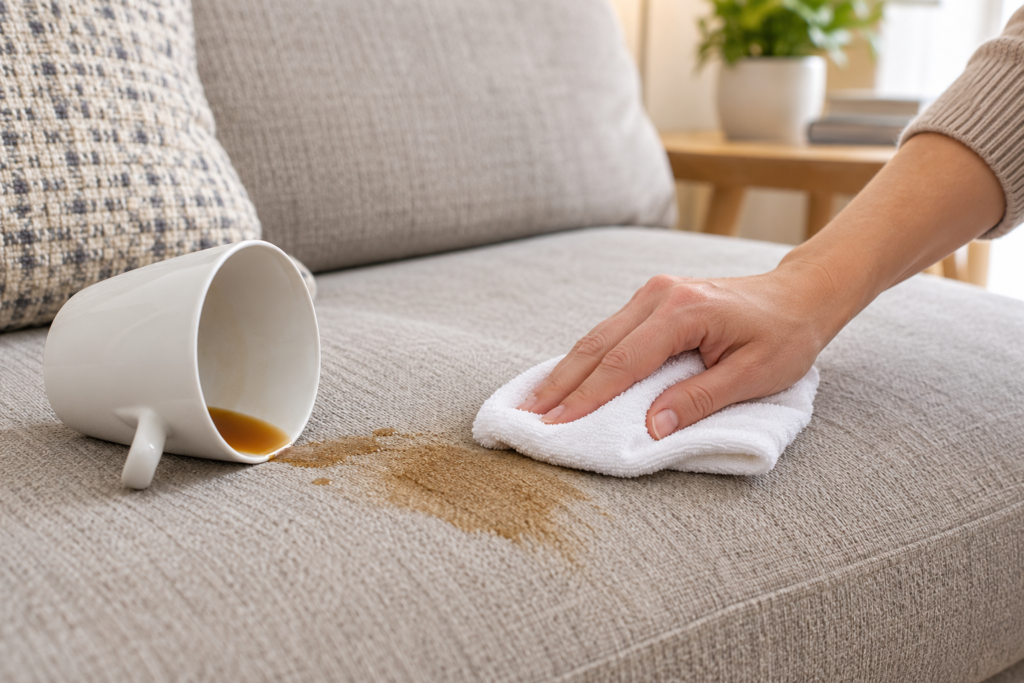
Tea stains on a fabric sofa can often be removed successfully if you act quickly and use a method that suits the upholstery. The key is to blot the tea stain rather than rub it, while avoiding excess moisture that could spread the mark or damage the sofa.
Tea contains natural compounds that can leave a brown or yellowish stain behind, particularly on pale upholstery. Once the liquid soaks into the fibres and dries, the stain can become more difficult to remove.
Fortunately, most fresh tea spills can be dealt with at home using a careful, gradual approach. This guide explains how to remove tea stains from sofa fabric safely, what to do with dried stains and which common mistakes could make the problem worse.
What to Do First When Tea Spills on a Fabric Sofa
The best time to deal with a tea stain is immediately after the spill. Start by placing a clean, absorbent white cloth or plain kitchen paper over the wet area and gently blotting.
Work from the outside of the spill towards the centre. This helps prevent the liquid from spreading into a larger area.
Do not scrub. Rubbing can push the tea further into the upholstery fibres and may disturb the fabric’s texture.
Before applying water or any cleaning solution, check the sofa’s care label or manufacturer’s cleaning instructions. Different upholstery fabrics have different cleaning requirements, and some should not be cleaned with water.
If tea has also reached the floor, deal with it separately using our guide to removing tea stains from carpet.
How to Remove Tea Stains From a Fabric Sofa Step by Step
The safest approach is usually to start gently and only increase the cleaning treatment if the stain remains. Avoid soaking the upholstery, particularly when you do not know how the filling underneath will react to moisture.
1. Blot Up as Much Tea as Possible
For a fresh spill, use a clean white cloth or plain white kitchen paper to absorb as much liquid as you can.
Press gently onto the affected area, lift the cloth, move to a clean section and repeat. Continue until very little moisture transfers onto the cloth.
Avoid coloured towels if possible because dyes may transfer when they become wet.
If the spill contains milk or sugar, prompt cleaning is particularly useful because you are dealing with more than the tea colouring alone.
2. Check the Sofa's Cleaning Instructions
Before wet cleaning the upholstery, find the manufacturer’s care label or cleaning guidance.
Some upholstery is suitable for water-based cleaning, while other fabrics require solvent-based or specialist treatment. Certain delicate materials may also be vulnerable to water marks, colour loss, shrinkage or changes in texture.
If you are unsure what the fabric is or whether your chosen treatment is appropriate, stop and check the manufacturer’s guidance rather than experimenting.
For general sofa maintenance beyond the stain itself, see our guide to cleaning a fabric sofa properly.
3. Test Your Cleaning Method
If the manufacturer’s instructions permit the cleaning method you intend to use, test it on a small, inconspicuous area first.
Choose somewhere such as the back or underside of the sofa where any unexpected change will not be obvious.
Allow the test area to dry fully before deciding that the treatment is safe. Some colour changes and water marks become noticeable only after the fabric dries.
4. Start With a Damp Cloth
For upholstery that can safely be cleaned with water, lightly dampen a clean white cloth with cool or lukewarm water. The cloth should be damp rather than dripping wet.
Gently blot the stained area, working from its outer edge towards the middle.
Frequently move to a clean part of the cloth. Otherwise, you risk transferring tea that you have already lifted straight back onto the upholstery.
Never pour water directly onto the sofa.
5. Use a Mild Cleaning Solution if Needed
If plain water has not removed the stain and the sofa’s care instructions allow water-based cleaning, use a small amount of mild washing-up liquid diluted well in water.
Apply the solution to your cleaning cloth rather than pouring it directly onto the upholstery.
Blot the tea stain gently. Give the solution time to make contact with the affected fibres, but avoid saturating the cushion.
Use only a small amount of detergent. More soap does not necessarily mean better stain removal and can leave a residue that is difficult to rinse from upholstered furniture.
6. Blot Away the Cleaning Solution
Once the stain has lifted, take another clean cloth lightly dampened with plain water and blot the area to remove remaining cleaning solution.
Again, keep moisture to a minimum.
Soap residue left in upholstery can make the fabric feel different and may attract dirt later, so removing as much residue as reasonably possible is an important part of the process.
7. Remove Excess Moisture
Press a clean, dry towel or cloth against the treated area to absorb moisture.
Do not rub the surface dry. Firm but gentle pressing is enough.
If you regularly struggle with marks or uneven results when maintaining upholstered furniture, our guide to fabric sofa cleaning mistakes to avoid covers other problems that can occur during routine cleaning.
8. Let the Sofa Dry Naturally
Allow the upholstery to air-dry completely before sitting on it or replacing cushions and throws.
Good ventilation can help. Open a window where practical or allow air to circulate naturally around removable cushions.
Avoid using strong direct heat unless the manufacturer specifically says it is suitable. Trying to speed up drying with inappropriate heat can affect some upholstery fabrics.
Once completely dry, inspect the area in normal daylight. If a faint stain remains, repeat a gentle treatment rather than immediately using a much stronger cleaner.
Explore KeepShine’s free downloadable cleaning resources for practical help making everyday household cleaning easier to organise.
Pro Tip
When treating upholstery, use several clean white cloths rather than trying to complete the whole job with one. As soon as one section picks up tea, move to a fresh section or change the cloth. This reduces the chance of transferring dissolved staining back onto the sofa while you work.
What to Do With an Old or Dried Tea Stain
A dried tea stain can require more patience because the liquid has already penetrated and dried within the upholstery fibres.
Do not assume that an older stain needs aggressive scrubbing or a very strong cleaning product. A gradual treatment is generally a better starting point.
First, check the sofa’s care instructions and identify whether the upholstery can be wet cleaned. If it can, lightly dampen the stained area with a suitable cleaning solution applied through a cloth. Blot gently and give the treatment a little time to work before blotting again with a clean section of cloth.
You may need to repeat this process rather than trying to remove the entire stain in one treatment.
For stains that have been present for some time, our separate guide to removing old tea stains safely provides further guidance.
Be particularly cautious if the sofa is made from delicate, vintage or unfamiliar fabric. The risk of colour change or water marking may be more significant than the original stain.
It is also worth remembering that not every brown mark on a sofa necessarily comes from tea. If you are unsure what caused an older stain, avoid repeatedly applying different cleaning chemicals in an attempt to find one that works.
If the upholstery remains noticeably marked after appropriate gentle treatment, professional upholstery cleaning may be the safer option.
Mistakes to Avoid
- Rubbing or scrubbing the tea stain. Vigorous rubbing can spread the liquid, push staining deeper into the fibres and potentially alter the fabric’s appearance. Blot using gentle pressure instead.
- Soaking the upholstery. Too much water can penetrate beyond the surface fabric into the cushion filling. It can also make drying considerably slower and may contribute to water marks on some materials.
- Applying cleaner without checking the fabric. A product that works well on one sofa may be unsuitable for another. Always follow the manufacturer’s care guidance and test an appropriate treatment somewhere inconspicuous first.
- Pouring cleaning solution directly onto the stain. This makes it much harder to control how much liquid enters the sofa. Put a small amount onto your cloth and work gradually.
- Mixing different stain-removal products. Combining household chemicals or repeatedly switching between products can damage upholstery and may create unsafe chemical reactions. Stick to one appropriate method and never mix cleaning chemicals unless the product instructions specifically say it is safe.
- Using the sofa before it is completely dry. Pressure on damp upholstery can interfere with drying and may transfer dirt onto the freshly cleaned area. Give the treated section enough time to dry naturally.
If a tea stain is proving difficult to remove or you would rather leave your sofa cleaning to someone else, KeepShine can provide professional cleaning help.
More Questions About Tea Stains on Sofas
Tea spills can vary depending on the drink, upholstery and how long the stain has been there, so here are answers to a few other useful questions.
Can a tea stain permanently mark a fabric sofa?
Some tea stains can become difficult or impossible to remove completely, particularly if they have been left untreated for a long time or the fabric is delicate. However, a visible stain does not automatically mean it is permanent. Start with the gentlest method suitable for the upholstery and avoid aggressive treatments that could cause more noticeable damage.
Is a tea stain with milk harder to clean?
Tea containing milk leaves additional residue compared with plain tea, so it is important to blot the spill thoroughly rather than concentrating only on the brown colouring. Remove as much liquid as possible promptly and use a cleaning method permitted by the sofa manufacturer.
Can I use the same method on a leather sofa?
No. Leather requires different care from fabric upholstery, so do not automatically use a fabric-sofa stain treatment on it. If your sofa is leather, follow the manufacturer’s care instructions and see our guide to cleaning a leather sofa properly.
What if the tea has soaked through a removable cushion?
Blot the surface immediately and check whether the cushion cover can be removed and how the manufacturer says it should be cleaned. Do not automatically put a removable cover into the washing machine: some upholstery covers can shrink, fade or become difficult to refit.
How often should a fabric sofa be cleaned?
Regular light maintenance can help prevent dust, crumbs and everyday dirt from building up, while more thorough cleaning depends on usage, household circumstances and the manufacturer’s recommendations. Our practical fabric sofa cleaning schedule explains how to plan routine care.
What if I spill tea on washable fabric instead?
Washable clothing and household fabrics should be treated according to their own care labels rather than using upholstery instructions. See our guide to removing tea stains from clothes and washable fabrics for the appropriate approach.
Subscribe to KeepShine for more practical stain-removal advice, cleaning guides and useful resources for keeping your home looking its best.
Final Thoughts: A Careful Approach Gives the Best Chance of Removing the Stain
A tea spill does not have to become a permanent feature of your sofa. Acting promptly, blotting instead of rubbing and using as little moisture as necessary can make a significant difference.
Most importantly, treat the upholstery according to its care requirements rather than assuming every fabric can handle the same cleaning method. Start gently, allow the area to dry fully and only repeat the treatment if necessary.
Once the stain is gone, regular sofa care can make future spills easier to manage and help keep the upholstery looking fresh for longer.