
Knowing how often to clean a mattress helps keep the place you sleep fresher and prevents dust, sweat, skin cells and everyday dirt from building up over time.
A mattress does not need a full deep clean every week, but it does benefit from regular care. The right mattress cleaning schedule combines simple weekly habits with occasional vacuuming, stain treatment and a more thorough clean when needed.
How frequently you should clean your mattress also depends on how it is used. Pets, allergies, spills, young children and eating or drinking in bed can all mean it needs attention more often.
This guide explains what to clean weekly, monthly and seasonally, as well as the signs that your mattress may need cleaning sooner.
How Often Should You Clean a Mattress?
For most households, aim to give your mattress a thorough clean around every six months, alongside lighter maintenance throughout the year. Vacuuming the mattress every one to three months can help remove surface dust, hair and debris before they accumulate.
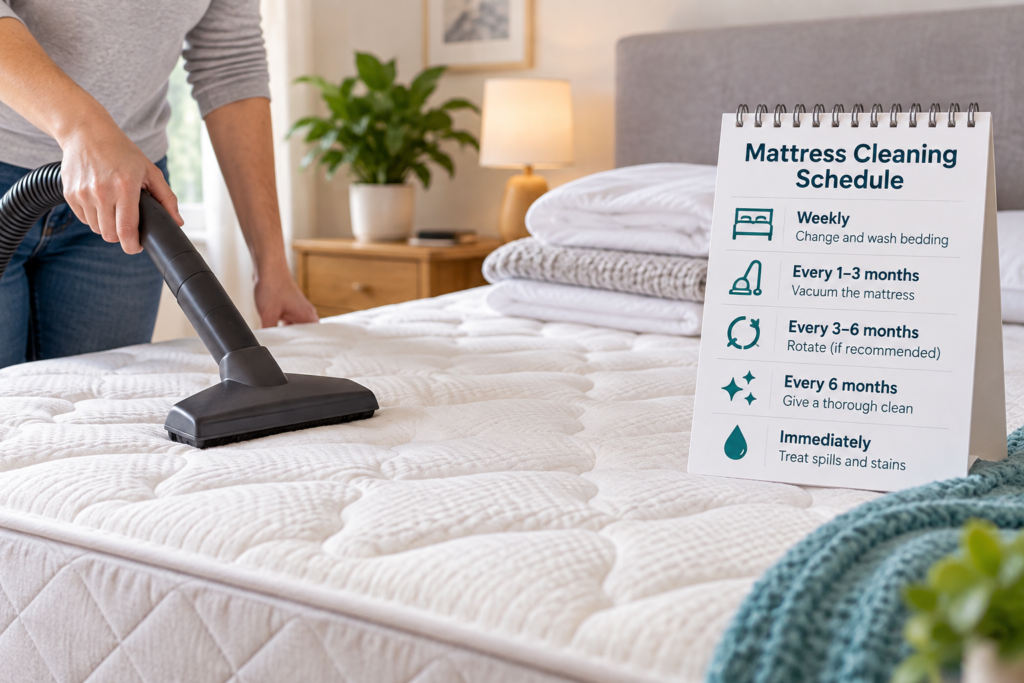
A practical mattress cleaning schedule looks like this:
- Weekly: Wash bed linen and check the mattress for spills or marks.
- Every 1–3 months: Vacuum the mattress surface, seams and edges.
- Every 3–6 months: Rotate the mattress if the manufacturer recommends it.
- About every 6 months: Give the mattress a more thorough clean.
- Immediately: Deal with spills, urine, blood, food or other stains rather than waiting for your scheduled clean.
These timings are useful general guidelines rather than strict rules. Always follow the mattress manufacturer’s care instructions, particularly for specialist materials such as memory foam, latex or mattresses with removable covers.
A Practical Mattress Cleaning Schedule
Keeping a mattress clean is much easier when the work is divided into small, manageable jobs. You do not need to strip, vacuum and thoroughly clean it every week.
Every Week: Change and Wash Your Bedding
Weekly mattress care begins with the bedding rather than the mattress itself.
Remove sheets, pillowcases and other washable bedding and launder them according to their care labels. Regular washing prevents sweat, skin cells, body oils and everyday debris from remaining close to the mattress for long periods.
When the bed is stripped, take a moment to inspect the mattress. Look for new stains, damp patches, crumbs or other debris.
This quick check matters because a fresh spill is generally easier to deal with than a mark that has been left unnoticed for several weeks.
If you are refreshing the whole room at the same time, our guide to cleaning a bedroom properly can help you work through the surrounding space systematically.
Every One to Three Months: Vacuum the Mattress
Vacuuming periodically helps remove loose dust, hair, crumbs and other surface debris.
Strip the bed completely and use a clean upholstery attachment if your vacuum cleaner has one. Work slowly across the mattress surface rather than making a few quick passes.
Pay particular attention to:
- seams;
- piping;
- edges;
- tufted areas;
- buttons or indentations;
- areas where debris visibly collects.
Avoid pressing attachments aggressively into delicate mattress fabrics.
If your mattress manufacturer provides specific cleaning instructions, follow those first. Some mattress types require particular care, and vacuuming recommendations can vary.
While the bedding is removed, it is also a convenient time to check your pillows. Our guide to cleaning pillows properly explains how to care for them without automatically assuming every pillow can be washed in the same way.
Every Three to Six Months: Check Whether It Needs Rotating
Rotation is not technically cleaning, but it fits naturally into a mattress maintenance routine.
Some mattresses are designed to be rotated from head to foot periodically, helping distribute wear more evenly. Others have different manufacturer recommendations, so check the care information supplied with yours.
Do not automatically flip a mattress. Many modern mattresses are designed to be used on one side only.
Cleaning day is a useful reminder to check rotation because the mattress is already stripped and easier to inspect.
About Every Six Months: Give the Mattress a Thorough Clean
Around twice a year is a sensible starting point for a more comprehensive mattress clean in many homes.
Remove all bedding and mattress protectors first. Vacuum carefully, inspect the entire mattress for staining and deal with individual marks using methods suitable for the mattress material.
Avoid saturating the mattress with water or cleaning solution. Mattresses can be difficult to dry internally, and excessive moisture is unnecessary for routine cleaning.
For the complete process rather than everyday maintenance, follow our thorough mattress deep-cleaning guide.
Allow any cleaned or slightly damp areas to dry fully before replacing the mattress protector and bedding. Good ventilation can help, but drying time will depend on the mattress, cleaning method and room conditions.
Immediately: Deal With Spills and Accidents
A cleaning schedule should never mean leaving a fresh stain until the next planned cleaning day.
If something is spilled, remove the bedding and attend to the affected area promptly. Blot liquid rather than rubbing it deeper into the mattress.
Different stains may need different treatment. For example, the approach used to remove blood stains from a mattress will not necessarily be the same as the best method for a drink or food stain.
Always test cleaning products cautiously on an inconspicuous area where appropriate, and check the mattress manufacturer’s instructions before applying unfamiliar products.
Once a Month: Do a Quick Condition Check
You do not necessarily need to clean the mattress monthly, but a quick inspection can catch problems early.
When changing the bedding, look closely for unexplained marks, moisture, unusual odours or signs of damage. Check the sides and seams as well as the sleeping surface.
This takes only a few minutes and helps prevent small cleaning problems from becoming larger ones.
Explore KeepShine’s free downloadable cleaning resources if you would like practical help organising your wider household cleaning routine.
Pro Tip

Use the day you change your bedding as your regular mattress inspection day. With the mattress uncovered, it takes only a minute to check the seams and surface for new marks or debris, making it much more likely that you will spot and treat a problem while it is still fresh.
When Your Mattress May Need Cleaning More Often
A six-monthly thorough clean works as a useful general schedule, but not every household uses a mattress in the same way.
If Pets Sleep on the Bed
Pets can bring hair, dander and outdoor debris onto bedding and mattresses. If your pet regularly sleeps on the bed, more frequent vacuuming may be useful.
Wash pet bedding separately as appropriate and consider using a washable mattress protector to create an additional barrier between the mattress and everyday dirt.
If Someone Has Allergies
If dust or other environmental allergens are a concern in your household, you may prefer more frequent bedding changes and mattress vacuuming.
However, mattress cleaning is only one part of managing the sleeping environment. Floors, soft furnishings, curtains and other dust-collecting surfaces may also need regular attention.
If Children Use the Mattress
Children’s mattresses may experience more drink spills, food marks or night-time accidents.
Rather than relying only on a fixed schedule, inspect the mattress regularly and respond to accidents promptly. A suitable washable mattress protector can also make ongoing maintenance considerably easier.
If Food or Drinks Are Regularly Consumed in Bed
Crumbs and accidental spills can make more frequent vacuuming worthwhile.
Tea and coffee in particular can leave noticeable marks. If an accident happens, use an appropriate treatment rather than repeatedly soaking the area. KeepShine’s guide to removing coffee stains from a mattress covers one common example.
If the Mattress Has Been Stored or Left Unused
A mattress that has been stored for a long period may collect dust or develop a stale smell, particularly if it was stored somewhere poorly ventilated.
Inspect it carefully before making the bed. Vacuum it where appropriate and make sure it is completely dry and in suitable condition before use.
If it needs substantially more than routine maintenance, cleaning your mattress properly is a better starting point than simply covering it with fresh bedding.
Mistakes to Avoid

- Waiting for the six-month clean before treating spills. A schedule is for routine maintenance, not emergencies. Blot and treat fresh spills as soon as reasonably possible using a method appropriate for the mattress and the substance involved.
- Using too much water. Saturating a mattress can make drying difficult. Use moisture sparingly and allow cleaned areas to dry fully before replacing bedding.
- Assuming every mattress can be cleaned the same way. Memory foam, latex, sprung and other mattresses may have different care requirements. Always check the manufacturer’s instructions before using cleaning products or unfamiliar methods.
- Putting bedding back onto a damp mattress. Covering the mattress before it is fully dry can trap moisture. Give cleaned areas enough time and ventilation to dry completely.
- Scrubbing stains aggressively. Hard rubbing can spread some stains and may affect the mattress fabric. Blotting and using a stain-specific method is often more appropriate. Our guide to common mattress cleaning mistakes covers other problems worth avoiding.
If mattress cleaning is part of a larger bedroom or home clean that you would rather not tackle yourself, KeepShine can help with professional home cleaning.
More Questions About Your Mattress Cleaning Routine
Cleaning frequency can change depending on how your mattress is used, so here are answers to a few other practical questions.
Do I need to clean my mattress every month?
Usually, a full mattress clean every month is unnecessary for normal household use. A monthly inspection is more practical: change the bedding regularly, check for marks and vacuum periodically. If there has been a spill, accident or unusual build-up of debris, clean the affected area sooner rather than waiting for your normal schedule.
How often should I vacuum my mattress?
Every one to three months is a practical general routine, although households with pets or more visible hair and debris may choose to vacuum more frequently. Use a clean upholstery attachment where suitable and concentrate on seams, edges and other areas where debris tends to collect.
How often should a mattress be deep cleaned?
For many households, approximately every six months is a reasonable starting point. This is not a universal manufacturer requirement, however. Your mattress type, household circumstances and the manufacturer’s care instructions should determine the final routine.
Should I clean a mattress after every stain?
You do not need to clean the entire mattress every time a small stain appears. Treat the affected area promptly using an appropriate method.
Food stains can differ considerably from one another. For example, strongly coloured foods may require particular care, as explained in our guide to removing curry and turmeric stains from a mattress.
How can I keep my mattress cleaner between scheduled cleans?
Use clean bedding, consider a suitable washable mattress protector, deal with spills promptly and avoid allowing crumbs or debris to accumulate.
Regular small habits often reduce the amount of work required when your thorough cleaning day arrives. For more prevention ideas, see our guide to keeping a mattress clean for longer.
Should I replace bedding immediately after cleaning the mattress?
Only once the mattress is completely dry. If you have used any moisture while treating stains or cleaning the surface, allow adequate drying time before adding a mattress protector, fitted sheet or other bedding. Putting covers onto a damp mattress can trap unwanted moisture.
Subscribe to KeepShine for more practical cleaning guides, household maintenance tips and useful resources to help make routines like mattress care easier to manage.
Final Thoughts: Make Mattress Care Part of Your Regular Routine
Mattress cleaning does not need to become a major monthly job. For most households, regular bedding changes, periodic vacuuming, prompt stain treatment and a more thorough clean roughly every six months provide a practical routine.
The most important part is not waiting for a scheduled cleaning day when something needs immediate attention. Deal with spills and accidents promptly, check the mattress whenever the bedding is removed, and adjust your schedule if pets, children or other circumstances create more frequent cleaning needs.
A few minutes of regular maintenance can make mattress care much easier than leaving everything for one large cleaning job.