
Knowing how often to clean hob surfaces helps prevent burnt-on food, greasy marks and stubborn residue from building up. A simple cleaning routine keeps your hob hygienic, easier to maintain and ready for everyday cooking.
The ideal hob cleaning schedule depends on how often you cook, what you prepare and whether you have a gas, ceramic, electric or induction hob. Some cleaning takes only a minute after a meal, while a more thorough clean is needed less frequently.
The good news is that you do not need to deep clean your hob every day. The key is to deal with spills promptly and give the surface a proper clean at regular intervals.
How Often Should You Clean Your Hob?
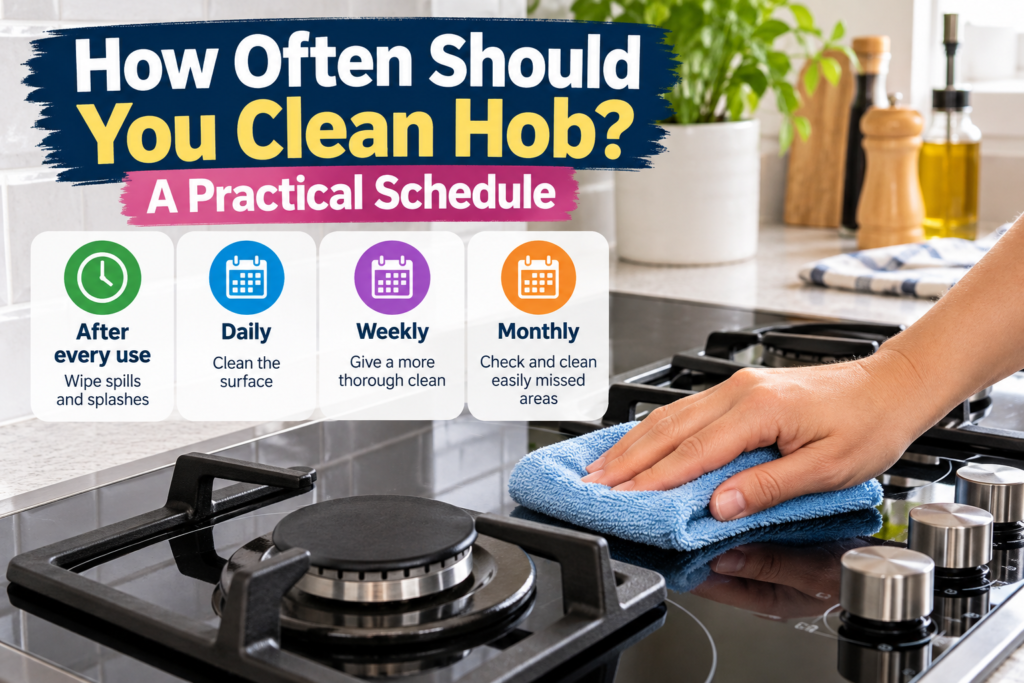
For most households, a practical routine looks like this:
After every use: Wipe away fresh spills, splashes and food residue once the hob is cool enough to clean safely.
Daily: Clean the cooking surface if you use the hob every day, removing grease and marks that have accumulated during cooking.
Weekly: Give the hob a more thorough clean, paying attention to edges, corners, controls and removable components where applicable.
Monthly: Inspect areas that are easily missed and deal with any accumulated grime, following the manufacturer’s cleaning instructions.
These timings are a starting point rather than strict rules. A household that cooks several meals daily may need more frequent cleaning than one that uses the hob occasionally.
The most important habit is to avoid allowing food spills and grease to remain on the surface for several days. Fresh residue is generally easier to remove than dirt that has dried or been repeatedly heated.
A Practical Step-by-Step Hob Cleaning Routine
Following a consistent routine makes hob maintenance quicker and helps prevent unnecessary scrubbing. The exact method depends on your hob type, so always check the manufacturer’s instructions before using cleaning products or tools.
Step 1: Check the Hob and Let It Cool
Switch off the hob and allow the cooking surface to cool before cleaning, unless the manufacturer specifically recommends a different approach for a particular task.
Never assume that an induction hob is completely cool simply because it does not generate heat in the same way as a traditional electric hob. Hot pans can transfer heat to the glass surface.
Avoid applying cold water or cleaning products to a hot surface, particularly glass or ceramic, as sudden temperature changes may cause damage.
Step 2: Remove Loose Food and Crumbs
Once the hob is cool, remove loose crumbs and food particles with a soft cloth or suitable brush.
For gas hobs, lift off removable pan supports and burner components only when they are cool and the manufacturer’s instructions permit it. This makes it easier to reach the surface underneath.
Do not force off parts that appear stuck, and keep water away from electrical connections, ignition components and other areas that should not get wet.
Step 3: Wipe Away Grease and Fresh Spills
Use a soft microfibre cloth dampened with warm water and a suitable hob cleaner, following the product instructions.
Work across the surface to lift grease, splashes and light food residue. Rinse the cloth as necessary rather than spreading greasy residue from one area to another.
For everyday maintenance, a gentle wipe is often enough. If you are unsure which product is suitable for your surface, consult the manufacturer’s care guidance before proceeding.
For a more detailed cleaning method, follow our guide to cleaning your hob properly.
Step 4: Clean Around the Edges and Controls
Grease often collects around the edges of the hob, near control knobs and along the joints between the hob and worktop.
Use a lightly dampened cloth to clean accessible areas without allowing water to run into gaps or electrical components. A soft brush can help remove loose debris from awkward corners.
Avoid spraying cleaner directly into controls or openings. Apply it to the cloth instead, unless the appliance manufacturer explicitly advises otherwise.
Step 5: Clean Removable Parts Where Appropriate
On gas hobs, removable pan supports and burner caps may need occasional individual cleaning.
Follow the manufacturer’s instructions for washing and drying these components. Ensure they are completely dry and correctly positioned before using the hob again.
Never operate a gas hob with components incorrectly fitted. If burner ports become blocked or ignition problems develop, consult the manufacturer’s guidance rather than probing delicate parts with unsuitable tools.
Step 6: Remove Cleaning Residue and Dry the Surface
Wipe away any remaining cleaning product with a clean, damp cloth if the product instructions require rinsing.
Finish with a dry, soft cloth to reduce streaks and water marks, particularly on glass surfaces.
Before cooking again, check that the surface is dry and that any removable components have been replaced correctly.
Explore KeepShine’s free cleaning resources for practical ways to organise household cleaning and make everyday routines easier to manage.
Pro Tip

Keep a clean microfibre cloth and your hob manufacturer’s recommended cleaner within easy reach, but away from heat and cooking splashes. When the hob has cooled, dealing with a spill immediately is usually much easier than removing the same residue after several more cooking sessions.
How to Adjust Your Hob Cleaning Schedule
Not every household needs the same level of cleaning. Adjust your routine according to the amount of cooking you do and the condition of the hob.
If You Cook Every Day
Wipe the hob after each cooking session once it is safe to do so. A quick daily clean prevents grease and food residue from accumulating and reduces the effort needed during your weekly clean.
If you frequently fry food, prepare sauces or cook meals that bubble and splatter, you may need to wipe the surface during cooking breaks, provided it is safe to do so.
If You Cook Occasionally
You may not need a full daily cleaning routine. However, clean spills after use and inspect the hob before your next cooking session.
Dust and grease can accumulate even when an appliance is used infrequently, particularly in a busy kitchen.
If You Have a Busy Family Kitchen
Frequent cooking, multiple users and different cooking styles can mean more spills and splashes. In this situation, a quick wipe after each use is particularly helpful.
A weekly inspection can identify areas that have been missed, such as the sides of the hob, removable supports and surrounding worktop.
If You Notice Burnt-On Residue
Do not wait until your next scheduled deep clean if food has burnt onto the surface. Once the hob has cooled, use a cleaning method approved for its material.
For stubborn build-up, our guide to deep cleaning a hob thoroughly explains how to approach more demanding cleaning tasks.
Why Your Hob Type Matters When Cleaning
The best cleaning frequency is only part of the picture. Your hob’s material and design also affect how you should clean it.
Ceramic and Induction Hobs
Glass and ceramic surfaces show fingerprints, grease and water marks clearly. A quick wipe after cooking helps maintain their appearance.
Use a non-abrasive cloth and products approved for the surface. Avoid rough scouring pads, abrasive powders and unsuitable blades, which may scratch or damage the finish.
For induction hobs, remember that cookware can leave marks even when the cooking surface itself is relatively cool.
Gas Hobs
Gas hobs have more individual components, including pan supports, burner caps and sometimes removable control knobs.
The cooking surface may need daily attention, while removable parts can be cleaned when necessary, often as part of the weekly routine. Always allow components to cool and follow the manufacturer’s instructions.
Make sure burner components are completely dry before refitting them.
Traditional Electric Hobs
Solid electric plates and surrounding surfaces require cleaning according to the manufacturer’s guidance. Avoid soaking electrical components or allowing cleaning liquid to enter openings.
Some models have different care requirements, so do not assume that a method suitable for a glass hob is appropriate for a traditional electric hob.
For a wider kitchen routine, our guide to cleaning a kitchen properly can help you coordinate hob cleaning with the rest of your kitchen.
Mistakes to Avoid
– Leaving spills until the end of the week. Food residue becomes harder to remove when it dries or is repeatedly heated. Wipe spills away as soon as the hob is cool enough to clean safely.
– Cleaning while the surface is too hot. This can cause burns and may damage certain surfaces. Switch off the appliance and follow the manufacturer’s cooling and cleaning instructions.
– Using abrasive materials on glass. Rough pads and unsuitable powders can scratch delicate finishes. Choose non-abrasive cloths and approved cleaning products instead.
– Spraying cleaner directly into controls or openings. Liquid can enter sensitive components and create avoidable problems. Apply cleaner to a cloth and keep moisture under control.
– Refitting gas components before they are dry. Wet or incorrectly positioned components may interfere with normal burner operation. Dry and refit them according to the manufacturer’s instructions.
– Using the same method on every hob. Gas, ceramic, induction and traditional electric hobs have different care requirements. Check the appliance instructions before trying a new product, tool or cleaning technique.
If grease and burnt-on residue have become difficult to manage, KeepShine can help you explore professional cleaning support for a cleaner, more manageable kitchen.
More Questions About Keeping Your Hob Clean
Here are some additional answers to common questions about hob maintenance and cleaning frequency.
Should I clean my hob after every meal?
Ideally, wipe away spills and splashes after every cooking session once the hob has cooled sufficiently. You do not necessarily need to carry out a detailed clean every time. Removing fresh residue and grease regularly prevents build-up and makes your weekly cleaning routine quicker.
How often should I deep clean my hob?
For many households, a thorough weekly clean is a sensible starting point, with additional attention whenever stubborn residue develops. The frequency depends on how much you cook and the type of hob you own. Follow the manufacturer’s guidance for cleaning removable parts and tackling difficult marks.
Can I clean my hob every day?
Yes. Daily cleaning is suitable for most hob surfaces when you use the correct products and methods. Regular gentle cleaning is generally preferable to allowing grime to accumulate and then scrubbing aggressively. Always switch off the appliance, allow it to cool as directed and avoid abrasive materials on delicate finishes.
Should I clean a hob that has not been used for several days?
Yes, if it has accumulated dust, grease or other residue. Check the surface before cooking and wipe it with a suitable cleaner if necessary. An unused hob does not automatically need a deep clean, but it should be clean and in good condition before you prepare food.
Is washing-up liquid suitable for cleaning a hob?
A small amount of washing-up liquid diluted in warm water may be suitable for some hob surfaces, but it is not universally appropriate for every component or finish. Check your manufacturer’s instructions first. Use the product sparingly, remove residue as directed and avoid getting liquid into electrical parts or gas burner openings.
How can I tell when my hob needs cleaning before the next scheduled clean?
Visible grease, sticky patches, food splashes, crumbs and burnt-on marks are useful signs. A persistent film or residue around controls and edges also indicates that the hob needs attention. Do not rely entirely on a calendar: clean when necessary, even if your next scheduled cleaning day has not arrived.
Subscribe to KeepShine for more practical cleaning guides, including advice on keeping your hob, oven and kitchen surfaces easier to maintain.
Final Thoughts: Build a Hob Cleaning Routine That Works
A clean hob does not require hours of work or constant deep cleaning. For most households, the simplest approach is to wipe away spills after use, clean the surface regularly and carry out a more thorough clean when needed.
Adjust the routine to match your cooking habits and the type of appliance you own. A household that cooks several meals every day will usually need more frequent attention than one that uses the hob occasionally.
Most importantly, use gentle methods that suit your hob and follow the manufacturer’s care instructions. If you notice stubborn residue, deal with it before it becomes more difficult to remove.
Start with a quick wipe after your next cooking session and build from there. Consistent maintenance makes hob cleaning more manageable and helps keep your kitchen ready for the next meal.