
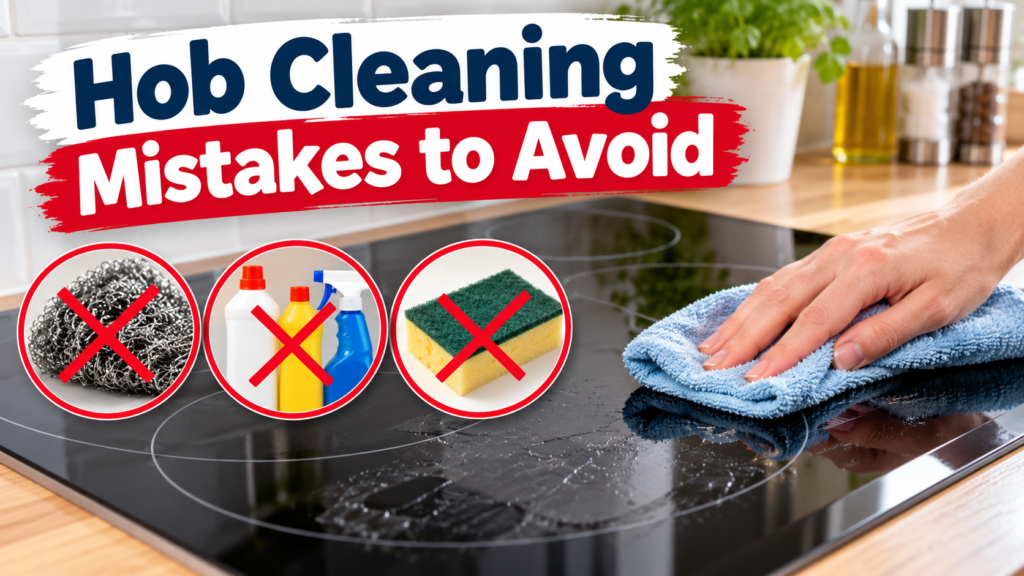
Hob cleaning mistakes can damage the cooking surface, leave stubborn marks and even create avoidable safety risks. Using the wrong products or cleaning tools may seem harmless, but repeated mistakes can affect how well your hob looks and performs.
Whether you have a ceramic, induction, electric or gas hob, cleaning it properly requires a little care. Different surfaces and components have different cleaning requirements, and a method that works on one type may be unsuitable for another.
The good news is that most cleaning problems are easy to prevent. By understanding what not to use, when to clean and how to deal with burnt-on food safely, you can keep your hob looking presentable without causing unnecessary damage.
The Most Important Rules to Follow Before Cleaning Your Hob
Before reaching for a cleaning product, remember these essential rules:
Switch off the hob: Make sure all cooking zones and burners are switched off before cleaning.
Allow it to cool: Never apply cleaning products or scrub a hot surface unless the manufacturer’s instructions specifically recommend otherwise.
Identify the hob type: Ceramic, induction, gas and electric hobs may require different cleaning approaches.
Choose suitable products: Use cleaning products approved for your particular hob surface.
Use non-abrasive tools: Soft microfibre cloths and suitable non-scratch sponges are generally safer choices.
Avoid excess water: Keep moisture away from electrical connections, controls, ignition components and openings.
Check the manufacturer’s instructions: These should always take priority over general cleaning advice.
A few minutes of preparation can prevent scratches, damaged finishes and unnecessary cleaning effort.
Common Hob Cleaning Mistakes and How to Avoid Them
Knowing what to avoid is just as important as knowing how to clean. The following mistakes are particularly common when dealing with everyday cooking spills, grease and burnt-on food.
1. Cleaning the Hob While It Is Still Hot
One of the most common mistakes is starting to clean immediately after cooking.
Although it might seem convenient to wipe away spills straight away, a hot hob can cause cleaning products and water to evaporate quickly. This may leave streaks or residue behind.
There is also a risk of burns when touching the cooking surface or accidentally contacting hot components.
What to do instead:
Switch off the hob and allow it to cool sufficiently before cleaning. If your appliance has a residual heat indicator, pay attention to it. Some ceramic and induction surfaces can remain hot even after cooking has finished.
For gas hobs, allow the burners and pan supports to cool before removing them for cleaning.
2. Using Wire Wool and Abrasive Scouring Pads
Abrasive cleaning tools can cause permanent damage to delicate hob surfaces.
Wire wool, rough scouring pads and some heavy-duty scrubbing brushes can leave scratches, particularly on ceramic and glass surfaces.
Once scratched, a hob may become more difficult to keep looking clean because grease and food residue can collect around damaged areas.
What to do instead:
Use a soft microfibre cloth or a non-scratch sponge. For stubborn deposits on compatible glass-ceramic hobs, a purpose-designed hob scraper may be suitable.
Always check the appliance manufacturer’s instructions before using a scraper. Use it at the recommended angle and never improvise with a kitchen knife or razor blade.
3. Applying the Wrong Cleaning Products
Not every kitchen cleaning product is suitable for every hob.
Strong abrasive cleaners, scouring powders and unsuitable chemical products can damage protective finishes or leave residue.
For example, a product designed for cleaning an oven may be too aggressive for a delicate glass cooking surface. Some products may also be unsuitable for aluminium, stainless steel or printed markings around hob controls.
What to do instead:
Choose a cleaning product specifically labelled as suitable for your hob material.
For routine cleaning, warm water with a small amount of washing-up liquid is often sufficient for compatible surfaces.
If you are unsure whether a product is safe, check the label and the manufacturer’s care instructions before applying it.
4. Using Too Much Water
Water is useful for cleaning, but excessive moisture can create problems.
Pouring water directly onto a hob may allow liquid to enter control panels, ignition systems, electrical connections or other openings.
This is particularly important with gas hobs, where moisture around ignition components can interfere with their operation.
What to do instead:
Dampen a microfibre cloth rather than pouring water onto the appliance.
Wipe the surface carefully and use a separate clean cloth to remove remaining moisture. Avoid flooding burner openings, control panels and electrical components.
5. Scrubbing Burnt-On Food Too Aggressively
Burnt food can be difficult to remove, especially when sugary spills, sauces or grease have been left to harden.
The temptation is to apply more pressure or use a rough cleaning tool. Unfortunately, this can scratch the surface without necessarily removing the deposit.
What to do instead:
Allow the hob to cool completely. Apply a suitable cleaning solution and give it time to loosen the residue, following the product instructions.
For compatible glass-ceramic surfaces, use a suitable hob scraper if necessary.
If the deposit remains, repeat the process rather than increasing the pressure.
6. Ignoring the Removable Parts of a Gas Hob
Cleaning only the visible cooking surface is another mistake.
Gas hobs have several components that collect grease, food splashes and cooking residue, including pan supports, burner caps and other removable parts.
Leaving these components dirty can make the entire cooking area look untidy.
What to do instead:
Once the hob is switched off and completely cool, remove only the parts that the manufacturer identifies as removable.
Clean them using suitable methods for their materials. Dry everything thoroughly before putting it back in the correct position.
Do not immerse components that are not designed to be soaked, and avoid blocking burner openings.
How to Clean Different Types of Hobs Without Causing Damage
The type of hob you own should determine your cleaning method. Applying the same technique to every appliance is not always appropriate.
Ceramic Hobs
Ceramic hobs have smooth glass cooking surfaces that can show fingerprints, grease and dried food spills.
For everyday cleaning:
Switch off the hob and allow it to cool.
Remove loose crumbs using a soft cloth.
Apply a suitable ceramic hob cleaner or a small amount of washing-up liquid mixed with warm water.
Wipe gently using a microfibre cloth.
Remove cleaning residue with a clean damp cloth.
Dry the surface with a soft, lint-free cloth.
For stubborn deposits, use a manufacturer-approved scraper if appropriate.
Induction Hobs
Induction hobs also have smooth glass surfaces, so they need similar care to ceramic models.
However, always check the manufacturer’s cleaning instructions because different finishes and models may have specific requirements.
Avoid abrasive powders, rough pads and unsuitable chemicals. Wipe spills after cooking once the surface is cool enough to handle safely.
Remember that induction cooking does not mean the glass surface cannot become hot. Heat can transfer from the cookware to the cooking surface.
Gas Hobs
Gas hobs require attention to both the surface and the individual burner components.
The pan supports, burner caps and surrounding areas can collect grease and food residue.
Clean removable components separately using suitable products. Make sure they are completely dry and correctly positioned before using the hob again.
Never poke or enlarge burner openings with sharp objects. If a burner remains blocked or does not ignite properly after cleaning, consult the appliance instructions or arrange appropriate professional assistance.
Electric Coil Hobs
Traditional electric coil hobs have exposed heating elements and surrounding surfaces that need different care from smooth glass models.
Switch off the appliance and allow all components to cool completely.
Clean the surrounding surface using a suitable cloth and cleaning product, taking care not to allow liquid into electrical connections.
Only remove heating elements if the appliance is designed to allow this and the manufacturer’s instructions explain how to do so safely.
Keep Your Hob Cleaner With a Simple Daily Routine
A practical hob cleaning schedule can help prevent small spills from becoming difficult cleaning jobs.
Instead of waiting until grease and burnt food have accumulated, make a few simple habits part of your kitchen routine.
After everyday cooking:
Remove loose crumbs once the surface is cool.
Wipe away fresh grease splashes before they become harder to remove.
Clean around the cooking zones using a suitable cloth.
Check the area around control knobs for food residue.
Dry the surface to reduce streaks and water marks.
For a more thorough clean, pay attention to areas that are often missed, including the edges, corners and removable components.
If you want to understand the full cleaning process, our guide to cleaning a hob properly, step by step explains how to approach the different parts of the appliance.
Explore KeepShine’s free downloadable cleaning resources for practical ways to organise your household cleaning and make everyday tasks easier.
Pro Tip

Keep a separate microfibre cloth specifically for your hob. Using the same cloth for greasy worktops, cupboard handles and cooking surfaces can transfer dirt and grease back onto an otherwise clean appliance. Wash your hob cloths regularly and avoid fabric softeners if they reduce the absorbency of your microfibre cloths.
What to Do When Your Hob Has Stubborn or Burnt-On Marks
Sometimes, everyday wiping is not enough. Food spills can become baked onto the surface, particularly when they are exposed to repeated cooking heat.
However, stubborn marks do not automatically mean you need a stronger chemical cleaner or a more aggressive scrubbing tool.
The correct approach depends on the type of mark and the hob material.
Dealing With Burnt Food Residue
Start by identifying whether the mark is food residue or actual surface damage.
For compatible glass-ceramic hobs, apply an appropriate hob cleaner and allow it to work according to the product instructions.
If necessary, use a purpose-designed scraper recommended by the manufacturer. Work carefully without applying excessive pressure.
Avoid scraping in random directions or using household knives to remove hardened food.
Removing Grease Build-Up
Grease often accumulates around the edges of the cooking zones, near controls and around gas burner components.
For smooth surfaces, a small amount of washing-up liquid in warm water can help loosen everyday grease.
For more persistent deposits, use a suitable hob degreaser that is approved for the particular material.
Always rinse away cleaning residue where the product instructions require it.
Understanding Marks That Will Not Disappear
Not every mark on a hob is dirt.
Glass surfaces may develop scratches, discolouration or damage that cannot be removed through ordinary cleaning.
Similarly, some marks on stainless steel may result from changes to the finish rather than accumulated grease.
Do not continue scrubbing an area simply because it looks dirty. If the mark remains after suitable cleaning, consult the manufacturer or an appliance specialist.
For a more detailed cleaning routine, see our guide to deep cleaning a hob thoroughly.
Mistakes to Avoid
Even when you understand the basic cleaning process, a few small habits can undermine your results.
1. Mixing cleaning chemicals: Never combine different cleaning products, particularly bleach with acidic cleaners or ammonia-based products. Dangerous fumes or chemical reactions can occur. Use one suitable product at a time and follow its label.
2. Using oven cleaner on the hob: Oven cleaning products may contain chemicals that are unsuitable for glass, printed markings or other hob finishes. Only use them if the appliance manufacturer specifically approves their use.
3. Leaving cleaning residue behind: Some products can leave streaks or deposits if they are not removed properly. Follow the product instructions and finish with a clean cloth where appropriate.
4. Using a dirty cloth: A cloth containing grease or food particles can spread contamination across the surface. Start with a clean cloth and wash it regularly.
5. Reassembling gas burners while wet: Moisture around burner components can interfere with ignition. Make sure removable parts are completely dry and correctly positioned before switching the hob on.
6. Ignoring damaged glass: Cracks, chips or significant damage to a glass cooking surface should not be treated as ordinary cleaning problems. Stop using the affected appliance and seek advice from the manufacturer or a qualified technician.
If grease and food residue have built up across your kitchen, KeepShine can help with professional kitchen cleaning to restore a fresher, more presentable space.
More Questions About Cleaning and Protecting Your Hob
Here are some additional questions that can help you make better decisions when maintaining your cooking appliance.
Can I Use Baking Soda to Clean a Hob?
Baking soda is mildly abrasive, so it should not automatically be considered safe for every hob. Some manufacturers may recommend particular products containing it, while others advise against abrasive cleaning agents. Check your appliance instructions before using it, especially on glass-ceramic surfaces.
Is White Vinegar Safe for Cleaning a Glass Hob?
White vinegar may help remove certain mineral deposits, but it is not suitable for every appliance or finish. Check the manufacturer’s guidance before using it. Never mix vinegar with bleach or other cleaning chemicals. For routine cleaning, a suitable hob cleaner or diluted washing-up liquid is often a simpler option.
Can I Use a Magic Eraser on My Hob?
A melamine cleaning sponge, commonly sold as a Magic Eraser, has an abrasive action. It may affect delicate finishes, printed markings or protective coatings. Do not assume it is safe for glass or ceramic surfaces. Only use it if your hob manufacturer specifically approves it.
How Often Should I Deep Clean My Hob?
This depends on how frequently you cook and how much grease or food residue accumulates. A quick wipe after cooking helps prevent build-up, while a more thorough clean can be carried out as needed. Gas burner components may need additional attention when they become visibly dirty. Follow the manufacturer’s maintenance recommendations.
Why Does My Hob Still Look Dirty After Cleaning?
Streaks, dried cleaning products, mineral deposits and scratches can all make a hob appear dirty even after cleaning. Try removing any remaining cleaning residue using the recommended method and drying the surface with a clean microfibre cloth. If the mark remains, it may be damage rather than dirt.
Should I Clean My Oven and Hob at the Same Time?
Cleaning both appliances during the same kitchen maintenance session can be practical, as grease and cooking splashes often affect both areas. However, use separate products and methods suitable for each appliance. Our guide to cleaning an oven properly explains how to tackle oven cleaning without damaging its surfaces.
Subscribe to KeepShine for more practical kitchen cleaning advice, including simple ways to keep your hob, oven and cooking areas looking their best.
Final Thoughts: Protect Your Hob With Better Cleaning Habits
A clean hob does not require harsh chemicals, excessive scrubbing or complicated cleaning routines. In most cases, using suitable products, soft cleaning materials and the correct method is enough to maintain a good finish.
The most important habit is to deal with spills before they become difficult to remove. Regular attention also makes it easier to spot damage, identify stubborn deposits and keep different hob components in good condition.
For additional kitchen maintenance advice, explore our guide to keeping your hob clean for longer and learn how small daily habits can reduce the need for intensive cleaning.
You can also improve your overall kitchen routine with our guide to cleaning your kitchen properly.
Ultimately, the best cleaning approach is the one that removes everyday dirt without compromising the appliance. Be gentle, follow the manufacturer’s instructions and make regular maintenance part of your cooking routine.