
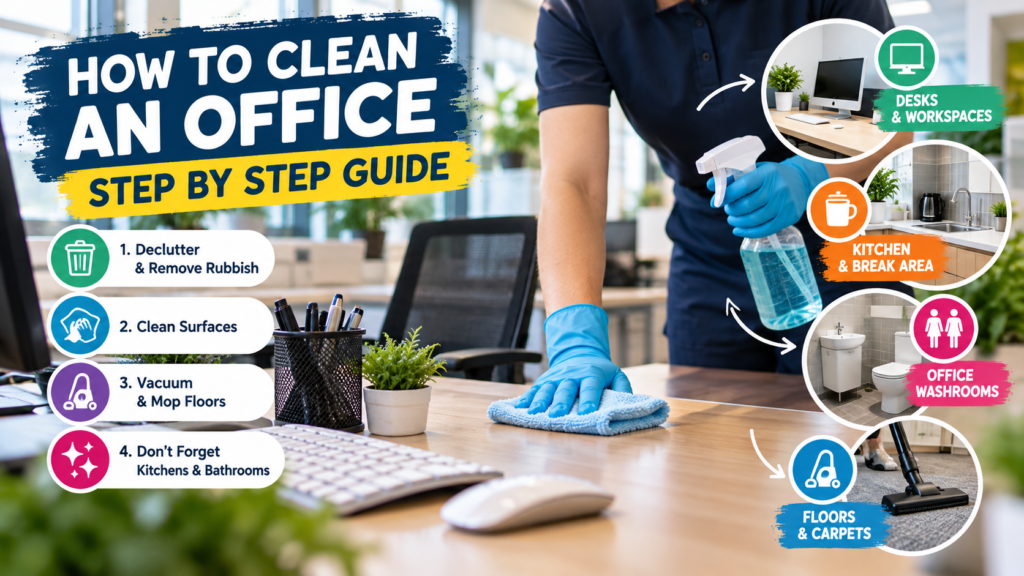
Knowing how to clean an office properly helps maintain a hygienic, comfortable and professional working environment. A good routine removes dust, dirt and everyday grime while reducing the build-up of mess in shared spaces.
Office cleaning involves more than emptying bins and wiping desks. Floors, door handles, keyboards, kitchen surfaces and toilets all need attention, but not necessarily at the same frequency. Cleaning in the correct order also saves time and helps prevent dirt from spreading between areas.
Whether you are responsible for a small home office or a busy workplace, you can achieve better results by following a clear process. The key is to work from top to bottom, clean from the least contaminated areas towards the dirtiest, and use suitable products for each surface.
What Should You Do First When Cleaning an Office?
Before starting, gather your equipment, check which areas need attention and identify any surfaces requiring special care. Preparing properly makes the work more efficient and reduces unnecessary movement around the office.
You will generally need:
Microfibre cloths for desks, shelves and other surfaces.
A suitable all-purpose cleaner for compatible hard surfaces.
A vacuum cleaner with appropriate attachments.
A mop and a suitable floor-cleaning solution.
Bin liners and waste collection bags.
A toilet cleaner and bathroom cloths for washrooms.
Disposable gloves where appropriate.
A suitable disinfectant for frequently touched surfaces when disinfection is required.
Always read product labels and follow the manufacturer’s instructions, including dilution, contact time and ventilation requirements. Never mix cleaning chemicals, particularly bleach with acidic products or ammonia-based cleaners.
Before beginning, check for fragile equipment, electrical cables, confidential paperwork and any workplace-specific cleaning procedures. If you are cleaning a shared office, let staff know about wet floors or temporarily restricted areas.
How to Clean an Office Step by Step
Following a logical sequence helps you clean thoroughly without having to repeat work. The exact time required depends on the office size, number of occupants, level of soiling and facilities available.
Step 1: Remove Rubbish and Clear the Work Areas
Start by collecting rubbish, replacing bin liners and removing waste that has accumulated around desks and communal spaces.
Separate recycling according to the workplace’s waste arrangements. Do not discard documents, notes or other materials that might contain confidential information unless you are authorised to do so.
Straighten chairs and move lightweight items out of the way where appropriate. Ask staff to put away personal belongings and paperwork rather than handling confidential documents yourself.
A clear working area makes it easier to reach surfaces and clean the floor properly.
Step 2: Dust from Top to Bottom
Dust shelves, ledges, window sills, furniture and other accessible surfaces before cleaning lower areas.
Use a clean, dry or slightly damp microfibre cloth, depending on the surface and the type of dust. A slightly damp cloth can help capture dust instead of spreading it into the air.
Pay attention to corners, skirting boards, the tops of cabinets and accessible areas around office equipment.
For monitors, keyboards and other electronics, follow the manufacturer’s cleaning instructions. Avoid spraying liquid directly onto equipment, and never use a wet cloth on electrical connections.
Dusting before vacuuming is important because some dust and debris will fall onto the floor during the process.
Step 3: Clean Desks and Work Surfaces
Use a suitable cleaner to remove marks, spills and everyday grime from desks, meeting tables and other compatible hard surfaces.
Apply the product according to its label, preferably to the cloth rather than directly onto the surface when appropriate. This helps prevent liquid from reaching equipment, paperwork or electrical components.
Wipe the entire accessible surface, paying attention to edges and areas around frequently handled items. Use separate cloths where necessary for different surfaces or contamination levels.
Do not assume every desk can tolerate the same product. Wood, laminate, glass and specialist finishes may have different care requirements, so check the manufacturer’s guidance.
Step 4: Clean Frequently Touched Surfaces
Door handles, light switches, handrails, shared telephones, printer control panels and cupboard handles can accumulate grime through regular use.
Clean these areas with a product suitable for the material. Where disinfection is needed, use an appropriate disinfectant and follow the label instructions for application and contact time.
A quick wipe is not always enough to disinfect a surface. The product may need to remain visibly wet for a specified period, provided this is safe for the material.
Use clean cloths and avoid transferring dirt from toilets or kitchen areas to office desks and shared equipment.
Step 5: Clean the Kitchen and Break Area
Office kitchens and break areas often collect food crumbs, drink spills and grease.
Start by removing rubbish and wiping crumbs from worktops. Clean suitable work surfaces, cupboard handles, tables and the exterior of appliances using compatible products.
Clean sinks and taps with products appropriate for their materials, then rinse or dry surfaces as directed. Remove visible food residue from the microwave interior using a suitable method recommended by its manufacturer.
Pay attention to shared appliances, fridge handles and dining tables. Avoid mixing food-contact cleaning requirements with general office cleaning procedures.
Wash or replace cleaning cloths as appropriate, and keep kitchen cloths separate from those used in washrooms.
Step 6: Clean the Office Washroom
If the office has toilets and washbasins, clean them using dedicated washroom equipment and suitable products.
Work from cleaner areas towards more contaminated areas. Clean mirrors, basins, taps and dispensers before moving to toilets. Follow product instructions for toilet bowls and other sanitary surfaces.
Restock soap, toilet paper and hand towels where provided. Check that dispensers work properly and report leaks, blockages or damage.
Use dedicated cloths, gloves and equipment for washrooms. Never use toilet-cleaning cloths on desks, kitchen surfaces or other shared areas.
Wash your hands after removing gloves and completing the work.
Step 7: Vacuum and Mop the Floors
Clean the floors after dusting, wiping surfaces and collecting debris.
Vacuum carpets and rugs, concentrating on entrances, walkways and areas beneath accessible furniture. Use appropriate attachments for corners and edges.
For hard floors, sweep or vacuum loose dirt before mopping. Choose a floor-cleaning solution compatible with the surface and avoid excessive water, particularly on wood, laminate or other moisture-sensitive flooring.
Place warning signs where necessary and keep people away from wet areas until they are safe to use.
If you need more specific advice, see our guide to [INTERNAL LINK → /how-to-clean-an-office-properly-a-step-by-step-guide/]cleaning an office properly[/INTERNAL LINK] alongside the relevant surface-care guidance for your workplace.
Step 8: Complete a Final Inspection
Before leaving, check that the office looks clean, bins have been emptied and supplies have been replenished.
Look for missed marks on doors, visible dust on accessible surfaces, crumbs beneath tables and streaks on glass. Check that furniture has been returned to its proper position and that cleaning equipment has been stored safely.
Report maintenance problems, damaged equipment or persistent stains rather than attempting repairs or using stronger chemicals without authorisation.
Explore KeepShine’s free cleaning resources for practical ways to organise your cleaning tasks and maintain a tidier environment.
Pro Tip
Use a colour-coded cloth system to reduce the risk of cross-contamination. For example, allocate different cloth colours to general office surfaces, kitchen areas and washrooms, following your workplace’s hygiene policy. Keep the colours consistent and make sure staff understand the system. Colour coding only works when cloths are changed, cleaned and stored correctly.
How to Keep an Office Clean Between Scheduled Cleans
A well-planned cleaning routine works best when daily habits support it. Without basic maintenance, even a thorough clean can quickly be undone by food spills, overflowing bins and dust accumulating in busy areas.
Establish a Practical Cleaning Schedule
Not every task needs to be completed every day. The appropriate frequency depends on how many people use the office, the nature of the work and the condition of each area.
Frequency | Typical cleaning tasks |
|---|---|
Daily or after use | Remove rubbish, clean spills, tidy kitchen surfaces and check washrooms. |
Several times a week | Vacuum busy areas and clean frequently touched surfaces, depending on use. |
Weekly | Dust accessible furniture, clean less frequently touched surfaces and mop suitable hard floors. |
Periodically | Clean behind accessible furniture, tackle neglected areas and arrange deeper cleaning where needed. |
This is a starting point rather than a universal schedule. Shared desks, busy reception areas and heavily used washrooms may need more frequent attention.
For more detailed planning, use a suitable schedule based on your workplace’s actual needs. Our guide to how often an office should be cleaned explains how to organise recurring tasks.
Encourage Staff to Maintain Their Workspaces
Cleaning staff cannot always compensate for everyday habits that create unnecessary mess. Encourage employees to dispose of rubbish, report spills promptly and keep personal belongings organised.
Staff should also avoid leaving food uncovered, allowing dirty crockery to accumulate or storing items in a way that blocks access to surfaces.
A clean-desk policy can help, but it should be practical. Employees may need to keep essential documents and equipment accessible during the working day.
Know When a Deeper Clean Is Needed
Routine cleaning addresses everyday dirt, but it may not reach areas that are difficult to access or have accumulated grime over time.
A deeper clean may include accessible areas behind furniture, detailed skirting-board cleaning, upholstery care and more intensive attention to neglected surfaces.
The appropriate work depends on the office layout and materials. If carpets have persistent marks or upholstery needs specialist treatment, use a method suitable for the fabric rather than applying general-purpose chemicals.
You can also learn more about deep cleaning an office when routine maintenance is no longer enough.
Mistakes to Avoid
– Cleaning floors before dusting surfaces. Dust and crumbs can fall onto freshly cleaned floors, creating unnecessary extra work. Dust and wipe surfaces first, then vacuum and mop.
– Using one cloth everywhere. Reusing the same cloth across desks, kitchens and washrooms can spread contamination. Separate equipment by area and replace or clean cloths regularly.
– Spraying products directly onto electronics. Liquid can enter openings and damage equipment. Follow manufacturer guidance and use a suitable cloth and cleaning method.
– Using too much cleaning solution. Excess product can leave sticky residue, streaks or surface damage. Follow the recommended dilution and application instructions rather than assuming more product means better results.
– Ignoring wet-floor safety. Recently mopped floors can create a slipping hazard. Use appropriate warning signs and keep people away until the floor is safe.
– Mixing cleaning chemicals. Combining products can release dangerous fumes or cause harmful reactions. Use one suitable product at a time and follow its label.
If keeping your workplace consistently clean is becoming difficult, KeepShine can help you explore professional cleaning support suited to your office’s needs.
More Questions About Office Cleaning
Here are answers to a few additional questions that can help you plan an effective office cleaning routine.
How long does it take to clean an office?
The time required depends on the size of the premises, the number of rooms, the amount of furniture and how heavily the office is used. A small office with minimal facilities may take considerably less time than a large workplace with meeting rooms, kitchens and washrooms. Assess the tasks and condition of each area before estimating the cleaning time.
Should office cleaning take place before or after working hours?
Cleaning outside normal working hours can make it easier to access desks and shared areas without interrupting staff. However, the best time depends on security arrangements, access permissions, ventilation and workplace policies. Some tasks, such as cleaning kitchen spills or replenishing washroom supplies, may need attention during the day.
What is the difference between office cleaning and office deep cleaning?
Routine office cleaning focuses on maintaining everyday cleanliness through tasks such as dusting, bin emptying, surface wiping and floor care. Deep cleaning gives additional attention to neglected or harder-to-reach areas and may include detailed cleaning of furniture, skirting boards and other accessible surfaces. The exact scope depends on the building and the cleaning agreement.
How can I clean office keyboards and computer screens safely?
Start by checking the manufacturer’s instructions. Turn off equipment and disconnect it where the manufacturer recommends doing so. Use a suitable lint-free cloth and avoid spraying liquid directly onto the device. Do not allow moisture to enter openings, and never use abrasive products unless specifically approved. Different screen coatings and keyboard designs may require different cleaning methods.
Which cleaning products are best for an office?
There is no single product suitable for every office surface. A compatible general-purpose cleaner may be sufficient for many hard surfaces, while washrooms, glass, floors and electronic equipment may require different products or methods. Choose products based on the material, type of dirt and intended use, and follow the label instructions.
How can I make office cleaning more efficient?
Plan tasks in a consistent order, keep equipment organised and avoid moving repeatedly between rooms. Group similar activities together, such as emptying bins or wiping frequently touched surfaces. A written task list can also help ensure that less obvious areas are not forgotten. Review the routine regularly and adjust it when occupancy or workplace use changes.
Subscribe to KeepShine for more practical cleaning guides, workplace hygiene advice and useful tips to make everyday cleaning easier.
Final Thoughts: Make Office Cleaning Part of Your Workplace Routine
A clean office is easier to maintain when cleaning follows a clear, repeatable process. Start by removing rubbish, work from top to bottom, use separate equipment for different areas and finish with the floors and a final inspection.
The most effective routine is not necessarily the one with the longest task list. It is the one that addresses the areas people use most, protects surfaces and equipment, and fits the actual needs of the workplace.
Review your cleaning schedule periodically and make changes when the office becomes busier or particular areas need more attention. With sensible preparation and consistent maintenance, you can keep the workplace looking professional without wasting time repeating tasks or using unnecessary products.