
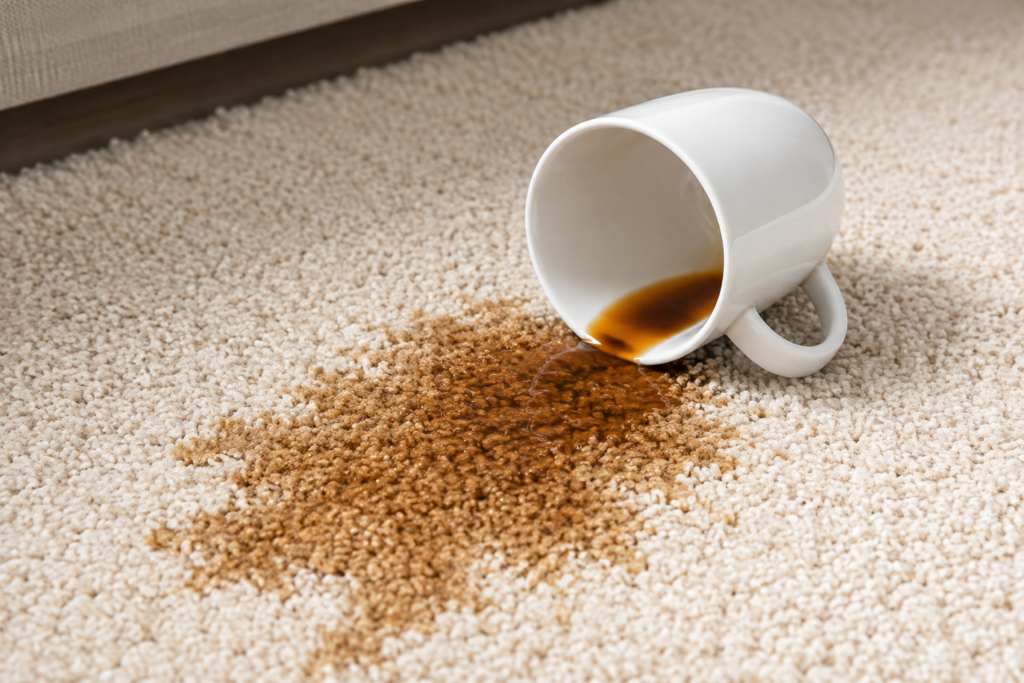
Coffee stains on carpet are much easier to remove when you act quickly, but even a dried mark can often be improved with the right method. The key is to blot the spill, work gently and avoid soaking or scrubbing the carpet.
Coffee can leave a noticeable brown stain because the liquid quickly works its way between carpet fibres. If the drink contains milk, cream or sugar, there is also more residue to remove than with plain black coffee.
Fortunately, you usually do not need aggressive cleaning products. This guide explains how to remove coffee stains from carpet safely, what to try when the stain has dried, and which common cleaning mistakes could make the problem worse.
What to Do First When Coffee Spills on Carpet
Start by removing as much liquid as possible. Use a clean white cloth or plain white kitchen paper and gently blot the spill, working from the outside towards the centre. Keep changing to a clean section as the coffee transfers onto the cloth.
Do not rub or scrub. Scrubbing can spread the coffee across a larger area and push it further into the carpet fibres.
Once you have absorbed as much as possible, you can begin treating the remaining stain. Before applying any cleaning solution, check the carpet manufacturer’s care instructions where available and test your chosen solution on a small, hidden area. This is particularly important for wool, natural-fibre, delicate, antique or specialist carpets.
If you regularly deal with different marks around the home, our wider guide to removing older coffee stains safely may also be useful when a spill has already had time to dry
How to Remove Coffee Stains From Carpet Step by Step
For many ordinary colourfast synthetic carpets, a careful blotting and mild cleaning method is a sensible place to start. You will need clean white cloths or kitchen paper, lukewarm water, a small bowl and a little mild washing-up liquid.
Avoid applying large quantities of water or cleaner. Carpet coffee stain removal works best when you use controlled amounts and remove moisture as you go.
1. Blot Up Fresh Coffee Immediately
Place a clean, absorbent cloth over the wet area and press gently. Lift it, move to a dry section and repeat.
Always work from the outer edge towards the middle. This helps contain the spill rather than spreading it into surrounding fibres.
Continue until very little coffee transfers to the cloth.
If you are dealing with tea rather than coffee, the basic principle of acting quickly is similar, although treatment can vary. See our guide to removing tea stains from carpet for more specific advice.
2. Dilute the Remaining Coffee Carefully
Dampen a clean white cloth with a small amount of lukewarm water. Blot the stained area rather than pouring water directly onto the carpet.
The aim is to dilute and lift remaining coffee without saturating the backing underneath.
Blot again with a dry cloth to absorb the diluted liquid. You may need to repeat this several times, especially after a larger spill.
Avoid hot water. Heat is unnecessary and may not be suitable for every carpet or stain.
3. Prepare a Mild Cleaning Solution
If water alone has not removed the mark, mix a small amount of mild washing-up liquid into lukewarm water. You only need enough detergent to create a gentle cleaning solution; excessive soap can leave a sticky residue that attracts dirt later.
Before treating the visible stain, test the solution somewhere inconspicuous. Apply a small amount, blot it and allow the test area to dry. Stop if you notice colour transfer, fading, texture changes or any other unwanted reaction.
For wool or other specialist carpets, follow the manufacturer’s care guidance or use a product specifically approved for that carpet type rather than assuming a household solution is suitable.
4. Blot the Stain With the Cleaning Solution
Lightly dampen a clean white cloth with your prepared solution. Do not pour it directly onto the carpet.
Starting at the edge of the stain, gently blot towards the centre. Give the solution time to contact the stained fibres without soaking them.
Move to clean areas of the cloth as the coffee transfers. Reusing a dirty section can put some of the stain straight back onto the carpet.
Be patient. Several gentle applications are usually preferable to aggressive scrubbing.
5. Rinse Away Cleaning Residue
Once the visible coffee mark has lifted, dampen another clean cloth with plain lukewarm water and blot the treated area.
This step is important because detergent left in carpet fibres may make the area feel stiff or encourage dirt to stick to it.
Use only enough water to remove the cleaning residue. A carpet does not need to become saturated to be rinsed effectively.
6. Blot the Carpet as Dry as Possible
Press a clean, dry towel or absorbent cloth firmly over the damp area. Repeat with dry sections until you have removed as much moisture as possible.
Then allow the carpet to air-dry thoroughly. Keep people and pets away from the damp patch if possible so dirt is not tracked onto it.
Avoid placing furniture back onto damp carpet, as furniture legs may leave marks or transfer colour.
7. Check the Area Once It Is Completely Dry
A carpet can look different while damp, so wait until it has dried fully before deciding whether the stain is gone.
If a faint brown mark remains, repeat the gentle treatment rather than immediately moving to a much stronger chemical.
For general carpet care beyond a single spill, our step-by-step guide to cleaning living room carpet explains how to look after larger carpeted areas without focusing only on individual stains.
Explore KeepShine’s free downloadable cleaning resources for practical help with keeping household cleaning tasks organised and manageable.
Pro Tip

After treating a coffee stain, place several layers of clean white kitchen paper or an absorbent white towel over the damp patch and press firmly to draw out remaining moisture. Check the area again after it dries completely; moisture deeper in the fibres can sometimes carry traces of the stain back towards the surface as the carpet dries.
How to Deal With Dried or Stubborn Coffee Stains
Finding a coffee stain after it has dried does not necessarily mean it is permanent. However, an old stain usually needs more patience because the coffee residue has already dried onto and between the carpet fibres.
Start by lightly dampening the affected area with lukewarm water using a clean cloth. Allow the moisture a little time to soften the dried residue, but do not soak the carpet. Blot repeatedly with a dry white cloth and see whether brown residue begins transferring.
You can then use the same mild cleaning approach described above, provided it is suitable for your carpet. Work gradually and rinse away detergent afterwards.
A stain from coffee containing milk or cream deserves particular attention because you are dealing with more than the colour of the coffee. Remove the spill thoroughly rather than simply trying to make the brown mark disappear. If an old milky-coffee spill develops a persistent smell or has soaked deeply into the carpet and underlay, professional treatment may be more appropriate.
Our dedicated guide explains additional considerations when you need to treat an old coffee stain safely.
It is also worth considering what lies underneath the visible surface. Repeatedly flooding a stubborn stain with cleaning solution can drive moisture into the carpet backing and underlay without necessarily removing more of the mark.
If coffee has spilled onto another upholstered surface as well, do not automatically use the carpet method. Upholstery fabrics have different care requirements. Follow our separate guidance on removing coffee stains from a fabric sofa instead.
Mistakes to Avoid

- Scrubbing the stain vigorously. Rubbing can spread coffee into surrounding fibres and may distort the carpet pile. Blot with controlled pressure instead, moving from the outside towards the centre.
- Pouring cleaning solution directly onto the carpet. More liquid does not necessarily mean better stain removal. Excess moisture can penetrate the carpet backing and underlay, making drying more difficult. Apply small amounts using a cloth.
- Using a cleaning product without testing it first. Carpet fibres, dyes and finishes vary considerably. A product that is suitable for one carpet may cause fading or texture changes on another. Always follow product and carpet-care instructions and test an inconspicuous area first.
- Leaving detergent in the fibres. Soap residue can make the treated patch sticky and encourage fresh dirt to collect there. After cleaning, lightly rinse the area with plain water and blot thoroughly.
- Assuming every carpet can be treated identically. Wool, natural fibres and specialist carpets may require different care from common synthetic carpets. When you are unsure of the material or cleaning restrictions, check the manufacturer’s guidance or seek professional advice.
If a stubborn coffee stain remains or you would rather leave deeper carpet cleaning to a professional, KeepShine can help you explore a suitable cleaning option.
Common Questions About Coffee Stains on Carpet
Coffee spills can behave differently depending on what was in the drink, how long it has been there and the type of carpet, so here are answers to a few other useful questions.
Can old coffee stains come out of carpet?
Often they can be improved significantly, although the result depends on the carpet, the age of the stain and any previous treatment. Start by gently re-moistening the dried residue and working gradually rather than saturating the area. Older marks may require repeated treatment or professional cleaning.
Is black coffee easier to remove than coffee with milk?
Plain coffee generally leaves fewer types of residue because there is no milk, cream or added sugar to deal with. Milky or sweetened coffee may leave additional residue even after the visible brown colour has faded, so thorough blotting, cleaning and rinsing become especially important.
Should I use baking soda on a coffee stain?
Avoid assuming that common household substances are automatically suitable for every carpet. Carpet materials and dyes vary, and powders can also be difficult to remove completely from some fibres. Check your carpet’s care guidance and use a treatment known to be suitable for the particular material.
Can I use a carpet stain remover?
A commercial carpet stain remover may be appropriate if its manufacturer states that it is suitable for your carpet type and the type of stain involved. Follow the label instructions carefully, including any dilution, application, ventilation or testing requirements. Avoid mixing different cleaning products together.
What if coffee spills somewhere other than the carpet?
Use a method designed for the affected material rather than transferring the carpet method to every surface. For example, KeepShine has separate guidance on removing coffee stains from clothes and washable fabrics and dealing with coffee stains on a mattress.
Why can a coffee stain seem to return after cleaning?
Sometimes a mark becomes noticeable again as the carpet dries because moisture and remaining residue travel back towards the surface. Excessive wetting can contribute to this problem. Blot out as much moisture as possible after treatment, let the area dry completely and reassess it before applying more cleaner.
Subscribe to KeepShine for more practical stain-removal advice, everyday cleaning guides and useful resources for keeping your home easier to manage.
Final Thoughts: Keeping Your Carpet Looking Its Best After a Spill
The most important thing when you get coffee on a carpet is to respond quickly without becoming too aggressive. Absorb the spill first, use small amounts of an appropriate cleaning solution, work from the outside in and remove both the stain and any cleaning residue.
Once the area is dry, return to normal carpet care rather than repeatedly treating a stain that has already disappeared. Regular vacuuming and prompt attention to future spills can make everyday maintenance much easier.
For more general carpet-care advice, you can also explore our guide to cleaning bedroom carpet properly, including practical steps for keeping carpeted rooms fresh and well maintained.