
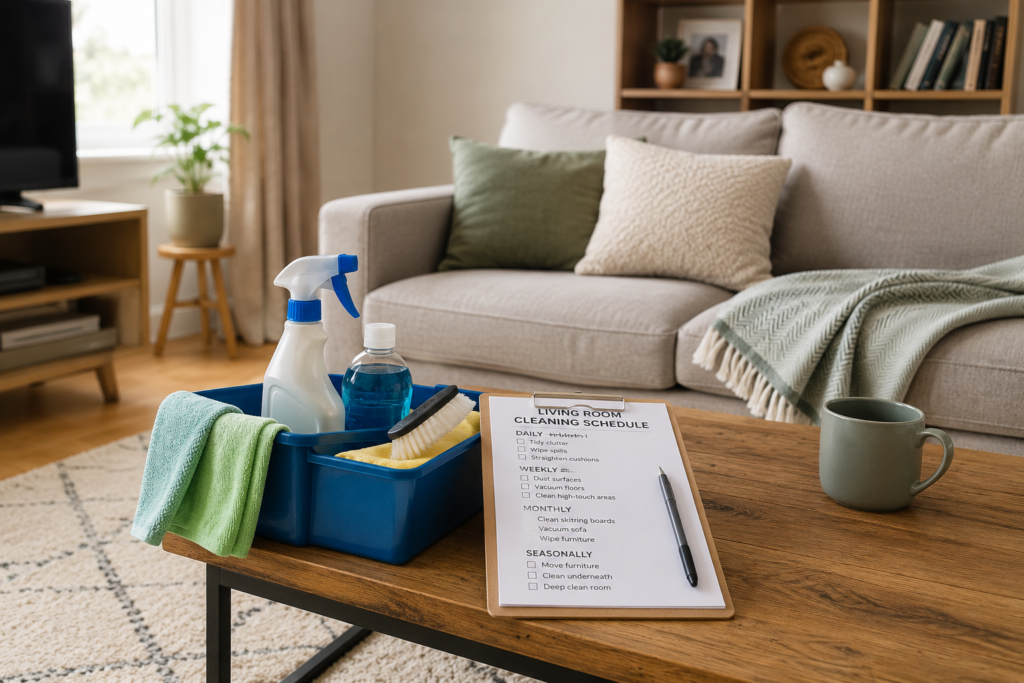
A living room cleaning schedule does not need to mean cleaning the whole room every day. Most living rooms stay manageable with a few daily habits, a more thorough weekly clean and occasional deeper cleaning.
How often to clean your living room also depends on how the space is used. A busy family room with children, pets, food and frequent visitors will usually need attention more often than a lightly used sitting room. The aim is to clean according to what actually becomes dirty rather than treating every task as a weekly job.
A simple routine can prevent dust, crumbs, clutter and stains from building up while keeping the amount of work required at any one time reasonable.
A Simple Living Room Cleaning Schedule
For most homes, it is practical to divide living room cleaning into daily, weekly, monthly and occasional deep-cleaning tasks.
You do not necessarily need to clean on an exact timetable. Instead, use the schedule as a starting point and adjust it according to your household.
A useful general routine is:
- Daily or as needed: tidy clutter, deal with spills, remove food and straighten cushions.
- Weekly: dust accessible surfaces, vacuum or clean the floor and give frequently touched areas attention.
- Monthly: clean less accessible areas, vacuum upholstery more thoroughly and tackle dust that is easily missed.
- Every few months: move furniture where practical, clean underneath and behind it, and give the room a more detailed clean.
- Immediately when needed: deal with spills, stains, muddy marks or anything that could become harder to remove if left.
If you prefer to tackle everything in one organised session, our step-by-step guide to cleaning a living room properly explains a practical order to follow.
How Often to Clean Each Part of Your Living Room
Different parts of a living room become dirty at different rates. Rather than trying to clean everything equally often, concentrate your regular effort on the areas that collect the most dust, dirt and everyday mess.
Daily: Spend a Few Minutes Resetting the Room
Daily living room cleaning should be quick. You are not trying to perform a full clean; you are simply preventing everyday mess from accumulating.
Depending on your household, this might include:
- returning cups, plates and glasses to the kitchen;
- putting toys, books, blankets and other belongings away;
- straightening cushions and throws;
- picking up visible crumbs;
- wiping fresh spills;
- removing rubbish; and
- dealing with obvious muddy or dirty marks.
If nobody has used the living room much that day, there may be very little to do.
Spills are the main exception. It is generally better to deal with them promptly, particularly on carpets and upholstery. Before using a cleaning product on a sofa, rug or delicate surface, check its care instructions and test products appropriately.
Weekly: Dust the Main Surfaces
Once a week is a sensible starting point for dusting frequently exposed surfaces in an average living room.
Work from higher areas downwards so that any loosened dust can be collected when you clean the floor. Pay attention to shelves, tables, windowsills, lamps, television units and other surfaces where dust is visible.
You may need to dust more frequently if your home becomes dusty quickly, you have pets, windows are regularly open or the room receives heavy use.
Do not automatically spray cleaning solution directly onto televisions, speakers or other electrical equipment. Follow the manufacturer’s cleaning guidance and use an appropriate method for the particular item.
Weekly: Vacuum Carpets and Rugs
For many households, vacuuming the living room once a week is a reasonable baseline. High-traffic rooms may need it several times a week, especially when there are children or pets.
Move light objects where practical rather than vacuuming only around them. Pay attention to the edges of the room and the areas around sofas and chairs, where crumbs and debris often collect.
Rugs may have specific care requirements, so check their labels or manufacturer’s instructions before using products or more intensive cleaning methods.
Weekly or As Needed: Clean Hard Floors
Hard flooring can often be vacuumed, swept or otherwise cleared of loose debris weekly, with additional cleaning when marks appear.
How you clean it depends on the flooring material. Wood, laminate, vinyl, stone and tiles do not necessarily tolerate the same products or amount of moisture.
Always use a method suitable for your floor and avoid assuming that a general-purpose cleaner is appropriate for every surface.
Weekly: Pay Attention to High-Touch Areas
Some of the smallest areas in the living room are touched the most.
Remote controls, door handles, light switches, frequently handled table surfaces and similar points can be checked during your weekly clean and cleaned when necessary.
Take particular care with electronic controls. Avoid saturating them with liquid, and follow the manufacturer’s guidance where applicable.
Every Few Weeks: Vacuum the Sofa
Sofas can quietly collect crumbs, hair, dust and other debris between cushions and along seams.
Every few weeks, remove loose cushions where the design allows and vacuum accessible crevices using a suitable attachment. Homes with pets, young children or frequent snacking on the sofa may need this more often.
The upholstery itself should be treated according to its care instructions. Fabric types differ considerably, and a method that is suitable for one sofa could mark or damage another. For a more detailed routine, see our guide to cleaning a fabric sofa properly.
Monthly: Clean the Areas You Normally Miss
Once a month, spend a little time on places that are not normally included in the weekly clean.
These may include:
- skirting boards;
- picture frames;
- less accessible shelves;
- lamp bases and shades where appropriate;
- furniture legs;
- corners and edges;
- accessible areas underneath furniture; and
- decorative items that collect dust.
You do not have to clean every one of these on the same day. Rotating a few monthly jobs can make the routine easier to maintain.
Every Few Months: Give the Room a Deeper Clean
A deeper clean reaches the areas that ordinary weekly cleaning does not.
Where practical, move suitable furniture and clean underneath and behind it. Pay attention to hidden dust, edges, upholstery, skirting boards and other areas that are easy to overlook.
This is also a useful time to assess whether rugs, curtains, blinds, upholstery or other furnishings need appropriate cleaning according to their care requirements.
For a more intensive room reset, follow our thorough living room deep-cleaning guide.
Explore KeepShine’s free downloadable cleaning resources if you would like practical help organising your regular household cleaning.
Pro Tip

Instead of saving every less-frequent task for one exhausting deep clean, rotate one small extra job into each weekly clean. You might clean skirting boards one week, vacuum sofa crevices the next and tackle furniture edges the week after. Over time, the entire room receives attention without dramatically increasing the length of your regular cleaning session.
When Your Living Room Needs Cleaning More Often
A cleaning frequency is useful, but the condition of the room matters more than the calendar. Some households will naturally need to clean more frequently.
Homes With Children
A family living room can quickly become a space for playing, eating, relaxing and homework. That usually means more crumbs, fingerprints, toys and general clutter.
A short daily reset combined with regular floor cleaning can stop this from turning into a much larger weekend job.
Homes With Pets
Pet hair, tracked-in dirt and debris can increase the frequency of vacuuming considerably. Sofas and rugs may also need more regular attention if pets use them.
Rather than waiting for a fixed cleaning day, vacuum when visible hair or debris starts accumulating.
Living Rooms Where People Eat
If meals or snacks are regularly eaten in the living room, check sofas, rugs and the floor for crumbs more frequently.
Fresh spills should be dealt with promptly using a method appropriate for the affected material. Leaving a spill until the next scheduled clean can allow it to spread, dry or become more difficult to address.
Heavily Used Rooms
If the living room is the main gathering space in your home, weekly cleaning may not always be enough.
Instead of repeatedly deep cleaning, add short maintenance sessions between your main cleans. Small habits can make a significant difference, and our guide to keeping your living room clean for longer covers practical ways to reduce everyday build-up.
Mistakes to Avoid

- Cleaning everything at the same frequency. Your floor may need attention several times before the top of a rarely touched cabinet does. Base the frequency on how quickly each area actually becomes dirty.
- Waiting for cleaning day to deal with spills. A weekly schedule should not apply to accidental spills. Deal with them promptly using an appropriate method for the material rather than allowing them to sit for several days.
- Only cleaning the visible centre of the room. Vacuuming the obvious floor area while repeatedly ignoring edges, underneath accessible furniture and sofa crevices allows debris to accumulate unnoticed.
- Using the same cleaner on every surface. Living rooms can contain wood, glass, fabric, electronics, stone, laminate and painted surfaces. Check product labels and manufacturer care instructions instead of assuming one cleaning solution is safe for everything.
- Trying to deep clean every week. An unnecessarily demanding schedule can be difficult to maintain. Regular maintenance combined with periodic deeper cleaning is usually more practical.
For more common problems that can make cleaning less effective, see living room cleaning mistakes worth avoiding.
If keeping on top of your living room and the rest of your home is becoming difficult, KeepShine can provide professional cleaning help when you need it.
More Questions About Your Living Room Cleaning Routine
Cleaning frequency varies between households, so here are answers to a few other practical questions that may help you decide when to clean your living room.
Should I clean my living room every day?
You generally do not need to thoroughly clean the entire living room every day. A quick daily tidy may be enough to remove cups, rubbish, toys and obvious crumbs and to deal with spills. More substantial jobs such as dusting and vacuuming can usually be incorporated into a weekly routine and adjusted according to how quickly your room becomes dirty.
How often should I vacuum my living room?
Once a week is a practical starting point for many households, but there is no universal rule. A high-traffic living room or a home with pets or children may need vacuuming several times a week. A lightly used room may need it less frequently. Visible crumbs, hair and debris are useful signs that it is time to vacuum.
How often should a living room be deep cleaned?
There is no fixed interval that suits every home, but every few months can be a useful starting point for a more detailed clean. You may need one sooner after particularly heavy use, decorating or another event that creates unusual dust or dirt. Deep cleaning should complement your regular routine rather than replace it.
What day of the week is best for cleaning the living room?
Choose a day that fits your routine rather than searching for a particular “best” day. Some people prefer cleaning before the weekend, while others find a weekend clean easier. The most effective schedule is one you can maintain consistently without allowing every cleaning task to accumulate.
How do I know when to clean the living room before the scheduled day?
Visible dust, crumbs, pet hair, marks, unpleasant odours, clutter or a spill are all good reasons to clean sooner. A schedule provides structure, but it should never stop you responding to the actual condition of the room.
Should every room in my home follow the same cleaning schedule?
Not necessarily. Different rooms have different uses and cleaning needs. Kitchens and bathrooms, for example, may require attention at different intervals from living spaces. Even equipment and appliances have their own maintenance needs, which is why cleaning frequency is best considered according to the particular space or item rather than following one timetable for everything.
Subscribe to KeepShine for more practical cleaning guides, realistic routines and useful resources to make looking after your home easier.
Final Thoughts: Build a Routine That Works for Your Home
The most useful living room cleaning schedule is one that matches how your household actually uses the room.
Start with a few minutes of tidying when needed, give the main surfaces and floors regular attention, rotate less frequent tasks into your routine and schedule a deeper clean occasionally. Increase the frequency when children, pets, food or heavy daily use create more mess.
Most importantly, do not wait for the entire room to become dirty before doing anything. Small, consistent jobs are usually easier to manage than allowing everything to build into one large cleaning session.
A realistic routine keeps the work spread out and makes it much easier to maintain a living room that feels comfortable, cared for and ready to use.