
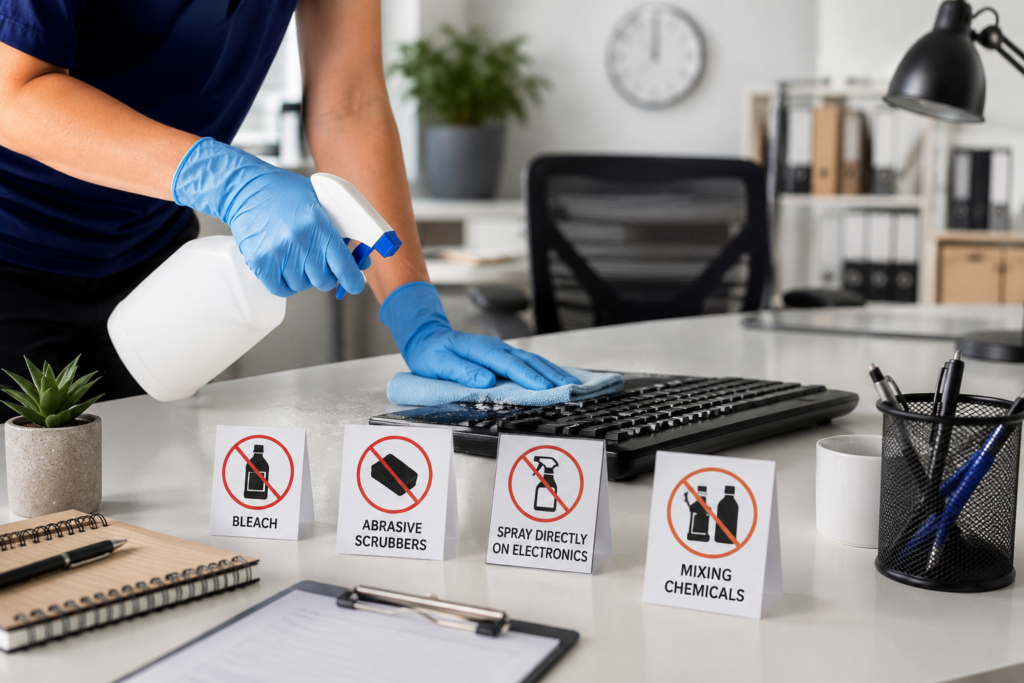
Office cleaning mistakes can damage desks, screens, flooring and equipment, while poor cleaning methods may simply move dirt and germs around rather than removing them.
An office contains many different materials in a relatively small space: electronics, upholstered chairs, hard flooring, carpets, painted surfaces, glass and shared equipment. A cleaning method that works perfectly on one of these may be unsuitable for another.
Knowing what not to use in an office is therefore just as important as knowing how to clean it. The following advice will help you avoid common cleaning errors, protect workplace surfaces and achieve better results without making routine cleaning unnecessarily complicated.
What to Check Before Cleaning an Office
Before reaching for a spray or cloth, identify what you are actually cleaning. Desks, computer screens, keyboards, office chairs and floors may all require different products and techniques.
The safest general approach is to use the least aggressive method that will clean the surface effectively. Check product labels and, where appropriate, the manufacturer’s care instructions before applying a cleaner to furniture, electronics or specialist flooring.
If you are unsure whether a product is suitable, test it on a small, inconspicuous area first. Never assume that a cleaner described as “multi-purpose” is appropriate for every office surface.
For a complete routine rather than just the mistakes covered here, our step-by-step guide to cleaning an office properly explains how to approach the different areas systematically.
The Office Cleaning Mistakes That Cause the Most Problems
1. Spraying cleaning products directly onto electronics
Computer monitors, keyboards, telephones, printers and other electrical equipment should not be treated like ordinary hard surfaces.
Spraying liquid directly onto equipment can allow moisture to enter openings, seams or internal components. Instead, follow the manufacturer’s cleaning guidance and, where permitted, apply an appropriate product lightly to a cloth rather than directly to the equipment.
Never saturate electronic equipment. Where equipment needs to be switched off or disconnected before cleaning, follow workplace procedures and manufacturer instructions.
Desks also deserve their own approach because of the mixture of equipment, paperwork and frequently touched surfaces found on them. Our guide explains how to clean an office desk properly without simply spraying everything in sight.
2. Using the same cloth throughout the office
One cloth may look like an efficient way to clean quickly, but using it across toilets, kitchens, desks and shared workplace surfaces can transfer contamination from one area to another.
Use separate cloths for different cleaning areas or tasks. If your workplace uses a colour-coded cleaning system, follow it consistently.
Replace or wash reusable cloths regularly rather than continuing to clean with a cloth that has become visibly dirty.
3. Using too much cleaning product
More product does not necessarily produce a cleaner surface.
Excess cleaner can leave sticky or greasy residues that attract dust and fingerprints. On flooring, excessive product may also leave an undesirable film and, depending on the product and surface, could affect slip resistance.
Follow the product’s directions for use and dilution rather than estimating. Concentrated cleaning chemicals should never be made stronger simply because an area looks particularly dirty.
4. Using harsh products without checking the surface
Office furniture can include laminate, wood veneer, painted finishes, plastics, metals, glass and specialist coatings. A chemical that works well on one material may mark, dull or discolour another.
Avoid automatically reaching for abrasive pads, strong chemicals or solvent-based cleaners when dealing with stubborn marks.
Start with a suitable gentle method, check the care instructions where available and test unfamiliar products discreetly before treating a prominent area.
5. Cleaning in the wrong order
Cleaning the floor first and then dusting shelves, desks and other surfaces means debris can fall onto an area you have already cleaned.
A more efficient approach is generally to work from higher surfaces towards lower ones, dealing with loose dust and debris before wet cleaning and leaving the floor until later in the routine.
For a more organised sequence, follow our thorough office deep-cleaning guide when the workplace needs more than its normal maintenance clean.
6. Ignoring high-touch areas
A desk may look clean while frequently handled items around it have been missed.
Door handles, light switches, drawer handles, shared telephones, meeting-room controls and other frequently touched surfaces can easily escape attention because they occupy very little physical space.
Include them deliberately in the cleaning routine rather than relying on visible dirt to remind you.
7. Mixing cleaning chemicals
Never mix cleaning chemicals unless the manufacturer specifically instructs you to do so.
In particular, bleach should not be mixed with other cleaning products. Dangerous gases can be produced when incompatible chemicals are combined.
Keep products in their original labelled containers where possible, follow label instructions and make sure anyone responsible for workplace cleaning understands how the products should be used safely.
8. Forgetting contact time when disinfecting
Cleaning and disinfecting are not exactly the same task.
If a disinfectant is required, simply spraying it onto a surface and immediately wiping it away may not follow the product’s directions. Some products need the surface to remain wet for a specified contact time.
Always follow the label rather than guessing how long a disinfectant should remain on the surface.
9. Cleaning around clutter instead of moving manageable items
Wiping around stationery, paperwork, mugs and small objects can leave rings of dust and untouched patches across desks and shelves.
Where workplace rules allow, move manageable items, clean underneath them and replace them afterwards. Personal papers, confidential documents and employees’ belongings should be handled according to the organisation’s policies rather than moved indiscriminately.
10. Treating every floor in exactly the same way
Carpet, vinyl, laminate, tile and other flooring materials do not necessarily tolerate the same products or amount of moisture.
Using excessive water or an unsuitable chemical can cause poor results and may damage some flooring.
Identify the flooring type and follow appropriate care instructions. Vacuuming or removing loose debris before wet cleaning also prevents you from simply spreading dirt across the floor.
Explore KeepShine’s free downloadable cleaning resources for practical help organising everyday and workplace cleaning tasks.
Pro Tip
When an office repeatedly looks dusty soon after cleaning, investigate where the dust is coming from rather than simply cleaning more often. Cluttered surfaces, neglected edges, fabric furniture and ineffective dust-removal techniques can all contribute. Removing dust properly with suitable equipment is usually more effective than repeatedly moving it from one surface to another.
Preventing Damage While Keeping an Office Clean
Avoiding damage is partly about choosing the right product, but technique matters just as much.
Be particularly careful with screens and specialist finishes
Computer and television screens may have coatings that can be damaged by unsuitable chemicals or abrasive materials. Do not assume that ordinary glass cleaner is appropriate.
Check the equipment manufacturer’s cleaning instructions and use only a recommended or compatible method.
The same caution applies to coated desks, natural wood, stone and specialist flooring. If you cannot confidently identify the material, avoid experimenting with aggressive products.
Control moisture
Water is useful for many cleaning tasks, but excessive moisture creates unnecessary risk around electronics, furniture joints and moisture-sensitive flooring.
Cloths generally need to be damp rather than dripping wet. Spills should also be dealt with promptly using a method appropriate for the affected material.
Maintain the office instead of waiting for heavy build-up
Allowing dirt to accumulate often encourages people to compensate with stronger chemicals, harder scrubbing and much more time.
Regular maintenance reduces that problem. If you are deciding how frequently different tasks need attention, our practical office cleaning schedule can help you separate frequent tasks from those that only need periodic attention.
Simple habits between scheduled cleans also matter. Our advice on keeping an office clean for longer covers practical ways to reduce unnecessary build-up.
Mistakes to Avoid
- Using abrasive scrubbers on delicate surfaces. A stubborn mark does not automatically require aggressive scrubbing. Abrasive pads may scratch plastics, coated furniture, stainless steel and other finishes. Start gently and check the material before increasing abrasion.
- Leaving surfaces excessively wet. Soaking desks, furniture or floors does not improve cleaning and can create problems for moisture-sensitive materials. Use only the amount of water or cleaning solution required.
- Vacuuming around cables carelessly. Office floors often contain chargers, extension leads and equipment cables. Check the area first and avoid pulling, trapping or running cleaning equipment over cables.
- Using dirty cleaning equipment. A dirty mop, cloth or vacuum can undermine otherwise good cleaning. Maintain equipment properly and replace or clean reusable items when necessary.
- Forgetting hidden areas indefinitely. Desk edges, spaces beneath furniture and less visible corners do not necessarily need attention every day, but ignoring them continuously allows dust and debris to accumulate. Include these areas periodically as part of a deeper clean.
If keeping a workplace consistently clean is becoming difficult to manage internally, KeepShine can provide professional office cleaning tailored to the premises and cleaning requirements.
More Questions About Avoiding Office Cleaning Errors
Different workplaces contain different furniture, equipment and surfaces, so these answers cover a few additional questions that may arise when cleaning an office safely.
Can I use disinfectant on every office surface?
No. A disinfectant should only be used on surfaces for which it is suitable and according to its label instructions. Some furniture finishes, screens and other materials may require different care. Cleaning may also be sufficient for some tasks where disinfection is not required, so avoid applying strong products automatically.
Should office computers and keyboards be cleaned every day?
The appropriate frequency depends on how the equipment is used, whether it is shared and the workplace’s cleaning requirements. Frequently touched shared equipment may need more attention than equipment used by one person. Always use a method suitable for the device and follow the manufacturer’s instructions.
How often does an office need a deep clean?
There is no single interval suitable for every workplace. Occupancy, footfall, type of work, flooring, shared facilities and the effectiveness of routine cleaning all influence how quickly deeper cleaning becomes necessary. A well-maintained office may still need periodic attention to areas that are not included in everyday cleaning.
Is it safe to clean an occupied office?
Routine cleaning can often take place while people are present, but the work needs to be organised safely. Avoid creating trip hazards with cables or equipment, manage wet floors appropriately and follow workplace procedures for chemicals and restricted areas. Some cleaning tasks may be better completed when an area is unoccupied.
Are household cleaning methods suitable for offices?
Some basic principles are similar, but offices introduce shared equipment, higher footfall, workplace procedures and different materials. Cleaning a home environment therefore does not automatically prepare someone for every workplace task. If useful, our bedroom cleaning guide demonstrates how cleaning methods also need to change according to the room and surfaces involved.
Subscribe to KeepShine for more practical cleaning guides, safer cleaning advice and useful resources for maintaining cleaner homes and workplaces.
Final Thoughts: Better Office Cleaning Starts With the Right Method
Good office cleaning is not about using the strongest chemical, the wettest cloth or the greatest amount of product. It is about matching the method to the surface and carrying out each task carefully.
Identify materials before cleaning them, follow product labels, respect manufacturer care instructions and keep cleaning equipment itself clean. Pay particular attention around electronics and avoid mixing chemicals or transferring dirt between different areas.
Combined with a sensible routine, these simple precautions can help you clean an office effectively while reducing unnecessary risk to furniture, flooring and equipment.