
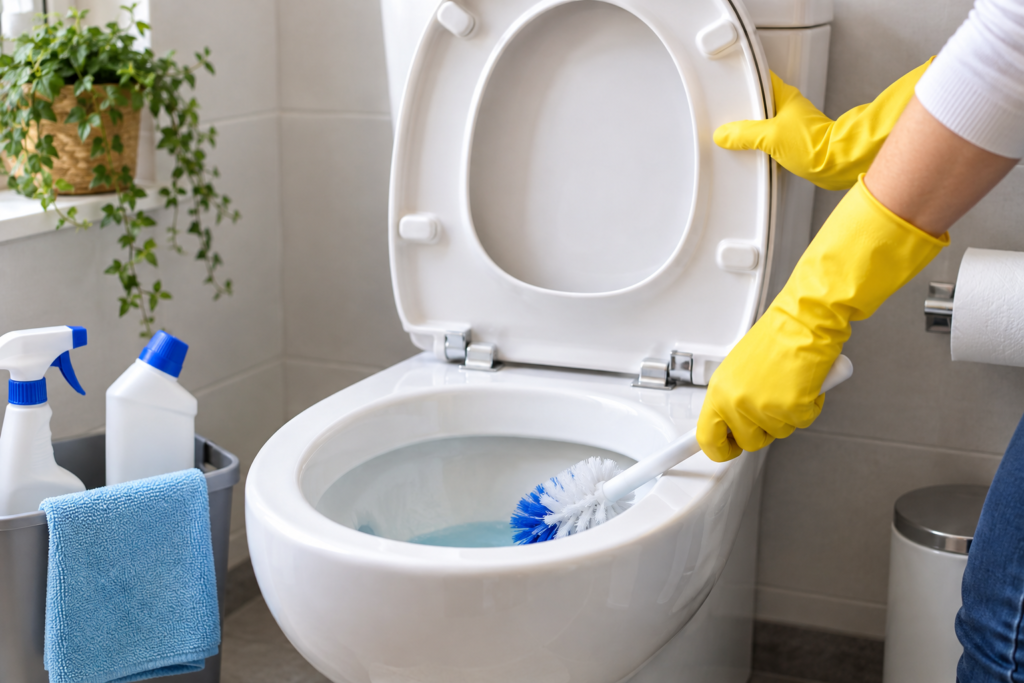
A proper toilet deep clean goes beyond a quick brush around the bowl. It tackles hidden grime, limescale, bacteria-prone areas and the surfaces that routine cleaning can miss.
Even a toilet that looks reasonably clean can develop deposits beneath the rim, around fittings and at the base. Giving these areas occasional extra attention helps keep the toilet fresh, easier to maintain and more pleasant to use.
This guide explains how to deep clean a toilet thoroughly and safely, from preparing the area and cleaning the bowl to dealing with stubborn deposits and often-forgotten surfaces.
What You Need Before Deep Cleaning a Toilet
A thorough clean is easier when everything is ready before you begin. You do not need a cupboard full of specialist products, but you should choose products suitable for your toilet and surrounding surfaces.
Have these basics ready:
- Rubber cleaning gloves
- Toilet cleaner suitable for the bowl
- Toilet brush
- Separate cleaning cloths or disposable paper towels
- Bathroom surface cleaner or disinfectant suitable for the surfaces being cleaned
- A small cleaning brush or old toothbrush for awkward areas
- A bucket or container if needed
- Clean water for rinsing cloths
Open a window or use bathroom ventilation where possible.
Most importantly, never mix cleaning chemicals. In particular, bleach should never be combined with acidic toilet cleaners, descalers, vinegar, ammonia or other cleaning products. Follow the product label and use one cleaning method at a time.
How to Deep Clean a Toilet Step by Step
Deep cleaning works best when you move systematically from the surrounding surfaces to the detailed areas that are easily overlooked. Give cleaning products their stated contact time rather than immediately wiping them away.
1. Clear and prepare the area
Remove toilet rolls, bins, toilet brushes, decorative items and anything else that could get in the way.
Put on your gloves and ventilate the bathroom. If the toilet is visibly dusty, remove loose dust and hair before introducing wet cleaning products. Otherwise, you can end up pushing damp dust around the hinges and base.
If the rest of the room also needs attention, our guide to cleaning a bathroom properly can help you organise the job efficiently.
2. Apply toilet cleaner inside the bowl
Flush the toilet first if necessary, then apply a suitable toilet cleaner according to its label.
Pay particular attention to the area beneath the rim, where deposits can develop out of sight. Allow the product to remain for the recommended contact time.
Do not immediately start scrubbing. Giving an appropriate cleaner time to work can make deposits easier to remove and reduce unnecessary effort.
3. Clean the toilet from top to bottom
While the bowl cleaner is working, begin cleaning the outside of the toilet.
Start with the flush button or handle and work downwards. Clean:
- The top and sides of the cistern
- Flush button or handle
- Toilet lid
- Top and underside of the seat
- Seat edges
- Hinges and fittings
- Outside of the bowl
- Pedestal and base
Using a top-to-bottom order helps prevent dirty water or loosened grime from contaminating areas you have already cleaned.
Use products appropriate for each surface and avoid saturating hinges, fittings or gaps with liquid.
4. Pay attention to the hinges and seat fittings
Toilet seat hinges are easy to overlook during routine cleaning. Use a small brush or carefully folded cloth to reach around the fittings.
Do not force cleaning tools beneath parts that could become damaged or loosened. If your toilet seat is designed to be removed for cleaning, follow the manufacturer’s instructions rather than guessing how the mechanism works.
Wipe the area carefully afterwards so that cleaning residue is not left trapped around the fittings.
5. Scrub beneath the rim
Return to the bowl once the cleaner has had the recommended time to work.
Use the toilet brush to scrub beneath the rim thoroughly. Work around the full circumference rather than concentrating only on visible marks.
Then scrub down the sides of the bowl towards the waterline. Pay extra attention to areas where staining or mineral deposits tend to collect.
6. Scrub the bowl and waterline
Continue around the entire inside surface of the bowl, including the waterline and lower bowl.
Persistent staining may require a suitable limescale-removing product rather than harder scrubbing. Always check the product instructions and make sure it is suitable for the toilet surface.
Avoid abrasive tools that could scratch the glazed finish. Scratches can make a surface more difficult to keep clean in future.
Flush when the product instructions indicate it is safe to do so, rinsing the bowl and toilet brush.
7. Clean around the base of the toilet
The floor immediately around the toilet can collect dust, splashes and grime.
Wipe around the pedestal and the point where the toilet meets the floor. Use a suitable floor-cleaning product and avoid flooding sealant, joints or flooring with excessive water.
If there is a persistent smell around the base despite thorough cleaning, do not simply cover it with fragrance. An ongoing odour may need further investigation, particularly if you notice moisture or signs of a plumbing problem.
8. Disinfect appropriate high-touch areas
Once visible dirt has been removed, use an appropriate disinfectant on suitable high-touch surfaces if required.
The flush control, lid and seat are obvious areas to consider. Follow the disinfectant’s instructions, including any required contact time.
Cleaning and disinfecting are not exactly the same task: removing visible grime first helps the disinfecting stage work as intended.
9. Finish with clean, dry surfaces
Use a clean cloth to remove remaining product residue where necessary and dry external surfaces.
Return bathroom items only once the area is clean and dry. Clean or replace any cloths and tools used during the job, and wash your hands thoroughly after removing your gloves.
If your shower needs the same level of attention, follow our guide to cleaning a shower properly rather than transferring toilet-cleaning tools between different bathroom areas.
Explore KeepShine’s free downloadable cleaning resources for practical help organising household cleaning and making bigger cleaning jobs easier to manage.
Pro Tip
Keep one small cleaning brush specifically for the toilet’s exterior fittings and awkward crevices, and never use it elsewhere in the bathroom. Colour-coding or clearly labelling toilet-cleaning tools is a simple way to prevent them accidentally being used on sinks, baths or other household surfaces.
Tackling Limescale and Stubborn Toilet Deposits
One of the main differences between routine cleaning and deep cleaning toilet surfaces is the attention given to built-up deposits.
Limescale forms when minerals from hard water accumulate on surfaces. Inside a toilet, it may appear around the waterline, beneath the rim or in areas that remain wet.
Give the right product time to work
Heavy deposits rarely disappear simply because you scrub harder. A toilet-safe descaling product may be more effective, but it must be used according to its instructions.
Never combine a limescale remover or acidic cleaner with bleach. If you are changing products, thoroughly rinse as directed and follow the manufacturer’s safety guidance rather than experimenting with chemical combinations.
Avoid damaging the toilet surface
It can be tempting to attack stubborn marks with abrasive pads or sharp objects. This risks scratching or damaging the glazed surface.
Instead, repeat a suitable cleaning treatment if the product instructions allow it. Several careful treatments can be preferable to aggressive scraping.
Once the toilet is restored, regular maintenance helps stop deposits becoming difficult again. Our guide explaining how often to clean your toilet can help you establish a sensible routine between deeper cleans.
Keeping the surrounding room maintained matters too. Dirt, dust and moisture elsewhere in the bathroom can quickly make a freshly cleaned toilet area feel untidy again.
Mistakes to Avoid
- Mixing cleaning chemicals. Combining products can create dangerous fumes or reactions. Never mix bleach with acidic toilet cleaners, descalers, vinegar, ammonia or other cleaners. Follow product labels and use one method safely at a time.
- Cleaning only inside the bowl. The seat, hinges, flush control, cistern, pedestal and surrounding floor all need attention during a deep clean. Concentrating entirely on the bowl leaves important high-touch and grime-prone areas untouched.
- Using the same cloth throughout the bathroom. A cloth used around the toilet should not then be taken to the sink, taps or other surfaces. Keep toilet-cleaning cloths and brushes separate to reduce cross-contamination.
- Scrubbing stubborn deposits with abrasive tools. Rough scourers and sharp objects can damage the toilet’s glazed surface. Use an appropriate toilet-safe product and allow sufficient contact time instead.
- Skipping the manufacturer’s instructions. Products vary in how they should be applied, how long they should remain on a surface and which materials they are suitable for. Following the label is safer than assuming every bathroom cleaner works in the same way.
For more everyday problems that can make cleaning less effective, see our guide to common toilet-cleaning mistakes to avoid.
If you would rather leave a thorough bathroom clean to someone else, KeepShine can help with professional home cleaning.
More Questions About Deep Cleaning Your Toilet
Deep cleaning can raise a few practical questions, particularly when you are dealing with limescale, cleaning products or deciding how often a more thorough clean is necessary.
How often should I deep clean my toilet?
There is no single schedule suitable for every household. Usage, household size, water hardness and how regularly the toilet receives routine cleaning all affect how quickly grime builds up.
Rather than waiting for heavy deposits, combine regular cleaning with periodic deeper attention to the rim, hinges, base and other easily missed areas.
What is the difference between regular and deep toilet cleaning?
Routine cleaning generally deals with fresh dirt and frequently touched surfaces before significant build-up develops.
A deep clean is more detailed. It includes awkward areas such as hinges, fittings, beneath the rim and around the pedestal while giving more attention to limescale and accumulated grime. You can use our regular toilet-cleaning method between deeper sessions.
How can I keep my toilet cleaner after a deep clean?
Deal with marks and splashes promptly, clean the bowl regularly and wipe frequently touched exterior surfaces before grime accumulates.
Small, consistent jobs usually require much less effort than allowing everything to build up until the next deep clean. For more practical ideas, see how to keep your toilet clean for longer.
Why does my toilet still look stained after cleaning?
A mark that remains after ordinary cleaning may be mineral build-up rather than surface dirt. Hard-water deposits can become particularly noticeable around the waterline.
Use a product specifically suitable for the type of deposit and the toilet surface, following its instructions carefully. Avoid assuming that stronger chemicals or harder scrubbing will automatically produce a better result.
Should I use bleach every time I deep clean the toilet?
Not necessarily. The appropriate product depends on what you are trying to remove and the surfaces involved.
A disinfectant, general bathroom cleaner and limescale treatment perform different jobs. Choose a suitable product for the problem rather than combining several cleaners. If using bleach, follow its label carefully and never mix it with other cleaning chemicals.
Should I deep clean the whole bathroom at the same time?
You can, especially when the entire bathroom needs attention, but organise the work to avoid spreading contamination. Keep toilet cloths and brushes separate and work systematically through the room.
A full bathroom clean also gives you the opportunity to deal with the shower, sink, taps, floors and other areas instead of focusing only on one fixture.
Subscribe to KeepShine for more practical cleaning guides, household tips and useful resources to make jobs such as bathroom cleaning easier to manage.
Final Thoughts: Make Thorough Toilet Cleaning Easier Next Time
A successful toilet deep clean is less about using lots of powerful products and more about cleaning methodically, giving suitable products time to work and paying attention to areas that routine cleaning often misses.
Once the bowl, rim, seat, hinges, exterior and surrounding area have been properly cleaned, regular maintenance can prevent grime and deposits from becoming difficult again.
Keep toilet-cleaning equipment separate from other household tools, deal with new marks promptly and periodically check the less visible areas. A little regular attention makes the next thorough clean considerably more manageable and helps keep the whole bathroom feeling fresh and well cared for.