
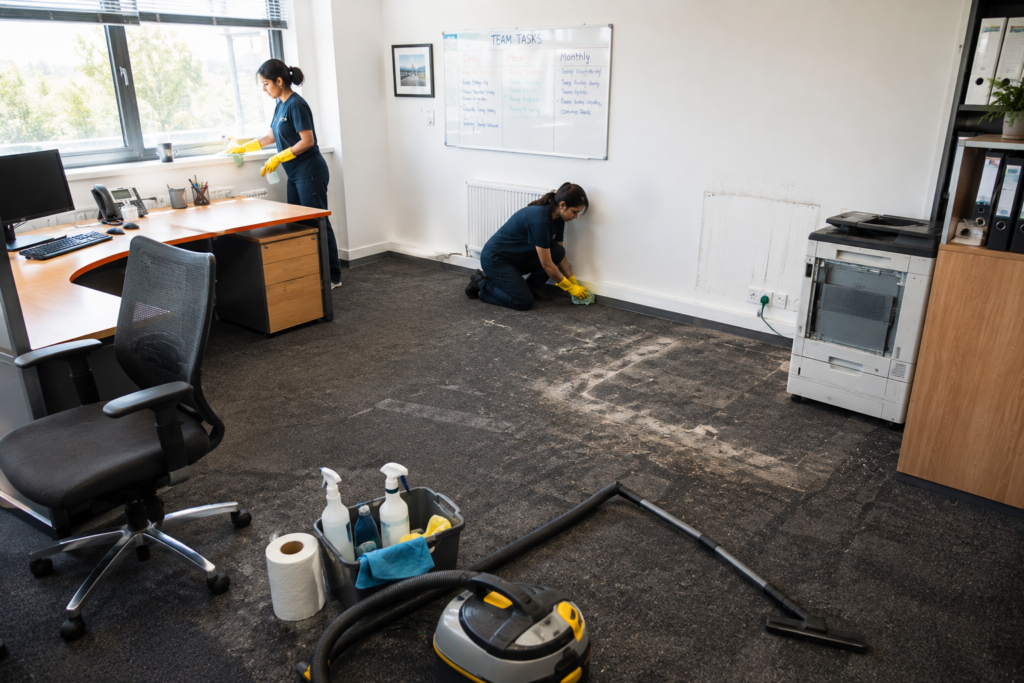
A proper office deep clean goes beyond emptying bins and wiping desks. It tackles the dust, grime and overlooked areas that routine office cleaning can miss.
Whether you are refreshing a small home office or tackling a larger workplace, working systematically makes the job much easier. Cleaning in the right order also helps prevent dust and dirt from being transferred back onto surfaces you have already finished.
This guide explains how to deep clean an office thoroughly, including desks, equipment, floors, shared touchpoints and those easy-to-forget areas that can gradually become dirty.
What to Do Before Deep Cleaning an Office
Before you begin, remove as much clutter as possible. Papers, stationery, boxes, mugs and personal belongings make it difficult to reach surfaces properly and can considerably slow down a deep clean.
Gather the basic supplies you are likely to need, such as:
- Microfibre cloths
- Suitable surface cleaner
- Disinfectant for appropriate high-touch surfaces
- Glass cleaner
- Vacuum cleaner with suitable attachments
- Mop and appropriate floor cleaner
- Bin bags
- Duster or extendable dusting tool
- Protective gloves where appropriate
Always check the care instructions for office furniture, flooring, screens and electronic equipment before applying cleaning products. Avoid spraying liquid directly onto electrical equipment.
If you are unsure where ordinary cleaning ends and deeper cleaning begins, our guide to cleaning an office properly step by step explains the foundations of routine office cleaning.
How to Deep Clean an Office Step by Step
Deep cleaning an office is easiest when you work from high areas to low areas and deal with the floor last. This prevents falling dust and debris from undoing work you have already completed.
1. Clear Clutter and Prepare the Room
Start by clearing accessible surfaces. Remove rubbish, recycling, used cups and anything that obviously does not belong in the room.
Move lightweight items where practical so you can reach underneath and behind them. Documents and personal possessions should be organised rather than discarded unless you have permission to do so.
In a workplace, be particularly careful with confidential paperwork. Never throw documents away simply because they appear unwanted.
2. Dust High and Overlooked Areas
Begin above normal eye level.
Dust accessible:
- Tops of cupboards and shelving
- Door frames
- Window frames
- Blinds
- Light fittings where they can be safely reached
- Air vents and grilles
- Picture and noticeboard frames
- Corners where cobwebs collect
Use an extendable duster rather than standing on unsuitable furniture. For anything that cannot be reached safely from floor level, use appropriate access equipment or leave it for someone equipped to do the job safely.
Working from the top down means loose dust can fall onto lower surfaces that have not yet been cleaned.
3. Clean Shelves, Cabinets and Storage Areas
Empty accessible shelves and storage areas where practical, working one section at a time so that documents and supplies do not become mixed up.
Remove loose dust first, then wipe suitable surfaces with a lightly dampened microfibre cloth and appropriate cleaner.
Pay attention to cupboard handles, drawer pulls and the edges of shelving. These smaller areas are easily overlooked during routine cleaning.
Allow surfaces to dry before replacing paperwork, files or equipment.
4. Deep Clean Desks and Workstations
Desks often contain much more than visible surface dust. Move removable objects and clean the entire accessible desktop rather than wiping only around equipment.
Wipe the edges and underside lip of the desk, drawer handles, cable-access covers and other regularly touched areas.
For a more detailed workstation routine, follow our guide to cleaning an office desk properly.
Avoid moving important paperwork unnecessarily, particularly when cleaning somebody else’s workstation.
5. Clean Computers and Office Equipment Carefully
Switch off equipment where appropriate before cleaning and follow the manufacturer’s care instructions.
Use suitable methods for monitors, keyboards, mice, telephones, printers and other electronics. Never saturate equipment or spray cleaning solution directly onto screens, keyboards, sockets or electrical components.
A soft microfibre cloth can remove surface dust from many items, while suitable equipment-cleaning products can be used where the manufacturer permits them.
Pay particular attention to frequently touched items such as mice, keyboards and telephone handsets.
6. Clean Chairs Thoroughly
Office chairs collect dust, crumbs, hair and debris around seats, backs, arms, wheels and adjustment mechanisms.
Vacuum upholstered chairs using an appropriate attachment. Wipe hard surfaces with a product suitable for the material.
Check beneath the seat and around the base, where dust can accumulate unnoticed. Remove hair and debris caught around castors where this can be done safely without damaging the chair.
7. Clean Doors, Handles and High-Touch Points
Deep cleaning should include areas touched repeatedly throughout the working day.
Depending on the office, these may include:
- Door handles
- Light switches
- Handrails
- Drawer and cupboard handles
- Shared telephones
- Printer controls
- Kitchen appliance handles
- Meeting-room controls
Clean first if the surface is visibly dirty, then use an appropriate disinfectant where required, following the product’s instructions, including any stated contact time.
8. Clean Windows, Glass and Internal Partitions
Remove dust from frames, sills and tracks before cleaning the glass.
Use a suitable glass-cleaning product and a clean cloth to reduce smears. Pay attention to fingerprints around doors and glass partitions, particularly at hand height.
For external windows or areas requiring work at height, use an appropriately equipped professional rather than attempting unsafe access.
9. Vacuum and Deep Clean the Floor
Leave the floor until most other cleaning has been completed.
Vacuum carefully around desk legs, beneath movable furniture, along skirting boards and into corners. Use appropriate attachments around edges and other difficult areas.
For hard floors, mop using a product suitable for the particular flooring. Avoid excessive water, especially around electrical sockets, floor boxes and sensitive flooring materials.
Carpets may occasionally require deeper extraction or specialist treatment, but always check the flooring manufacturer’s recommendations first.
A good deep clean should leave the whole room refreshed rather than simply making the most visible surfaces look tidy.
Browse KeepShine’s free downloadable cleaning resources for practical ways to make regular cleaning and household organisation easier.
Pro Tip
Divide a larger office into manageable zones and completely finish one zone before moving to the next. This makes it easier to check what has actually been deep cleaned and reduces the chance of missing less obvious areas behind furniture, underneath desks or along room edges.
Keeping an Office Cleaner After a Deep Clean
A thorough office deep clean is most useful when it is followed by consistent maintenance. Allowing dust, clutter and spills to build up again simply creates another large cleaning job later.
Create a routine based on how the office is actually used. Busy shared workplaces usually need more frequent attention than small offices occupied by only one or two people. Our practical office cleaning schedule can help you decide which tasks should be completed daily, weekly or less frequently.
Encourage people to deal with spills promptly, return items to storage and keep desks reasonably uncluttered. Small habits make routine cleaning faster because cleaners can reach the surfaces that need attention.
It also helps to distinguish between everyday cleaning and periodic deep cleaning. Routine work might include vacuuming, emptying bins and wiping frequently used surfaces, while deeper sessions can focus on furniture, edges, storage areas, vents and spaces underneath or behind movable items.
If the office repeatedly becomes untidy soon after cleaning, look at the cause rather than simply cleaning more often. Poor storage, overflowing bins, excessive desk clutter or unclear responsibility for shared spaces may be contributing to the problem.
Our guide to keeping an office clean for longer covers practical habits that can reduce unnecessary build-up between cleans.
Mistakes to Avoid
- Cleaning from the floor upwards. Vacuuming or mopping first means dust from shelves, desks and higher surfaces can fall onto your freshly cleaned floor. Work from high to low and finish with the flooring.
- Spraying cleaner directly onto electronics. Liquid can enter keyboards, monitors and other equipment and potentially cause damage. Follow the manufacturer’s instructions and, where suitable, apply the recommended product to a cloth rather than directly to equipment.
- Using one cloth throughout the entire office. Continuing with a heavily soiled cloth can transfer dirt between desks, shared areas and other surfaces. Change or clean cloths as necessary and keep cloths used for dirtier areas separate.
- Using unsuitable products on every surface. Wood, laminate, glass, upholstery, screens and flooring can require different care. Check labels and manufacturer guidance rather than assuming that one general cleaner is suitable for everything.
- Only cleaning what is immediately visible. Tops of cupboards, chair bases, skirting boards, corners and spaces underneath furniture are precisely the areas that distinguish a deep clean from an ordinary tidy-up. Our guide to common office cleaning mistakes covers other easily avoided problems.
If giving your workplace a thorough deep clean is difficult to fit around everyday work, KeepShine can provide professional cleaning support to help.
More Questions About Deep Cleaning an Office
Office spaces vary considerably, so these answers cover a few practical questions you may still have when planning a deeper clean.
How often should an office be deep cleaned?
There is no single frequency suitable for every office. Consider the number of people using the space, visitor levels, the type of work carried out and how effectively routine cleaning is maintained. A busy shared office may need deeper attention more regularly than a lightly used private workspace.
How long does it take to deep clean an office?
The time required depends on the office’s size, condition, layout and contents. An uncluttered small office can be considerably quicker than a workspace containing numerous desks, storage areas and shared facilities. Rather than rushing, work systematically through defined areas and check each one before moving on.
Should employees clear their desks before a deep clean?
Where possible, yes. Removing unnecessary paperwork, cups and personal belongings gives much better access to the desktop and surrounding areas. However, cleaners should not reorganise, discard or move important documents without permission, particularly where confidential information may be involved.
Do office carpets need deep cleaning every time?
Not necessarily. Regular effective vacuuming may be sufficient between periodic deeper carpet cleans. If carpets have staining, embedded soil or heavy traffic patterns, deeper treatment may be appropriate. The correct method depends on the carpet material, condition and manufacturer’s care recommendations.
What is the difference between regular office cleaning and a deep clean?
Regular cleaning concentrates on recurring tasks needed to maintain the workplace, such as bins, floors and frequently used surfaces. Deep cleaning goes further by addressing accumulated dirt and less frequently cleaned areas such as furniture bases, storage spaces, edges, high surfaces and areas underneath movable items.
Can I use the same deep-cleaning method in a home office?
Most of the same principles apply. Clear clutter, dust from high to low, clean the workstation and equipment carefully, and finish with the floor. If your workspace is part of a bedroom, you may also find our step-by-step bedroom cleaning guide useful for cleaning the rest of the room.
Subscribe to KeepShine for more practical office cleaning guides, straightforward cleaning advice and useful resources.
Final Thoughts: Make Your Next Office Deep Clean Easier
The key to thoroughly cleaning an office is not simply using more cleaning products or spending longer on visible surfaces. A systematic approach makes the biggest difference.
Clear clutter first, work from high surfaces downwards, clean workstations and shared touchpoints carefully, and leave the flooring until last. Take particular care around electrical equipment and materials that require specialist cleaning products.
Once the office has been deep cleaned, a sensible maintenance routine will make the next session much more manageable. Regular attention to the areas that accumulate dirt fastest can help prevent a full deep clean from becoming an unnecessarily large job.