
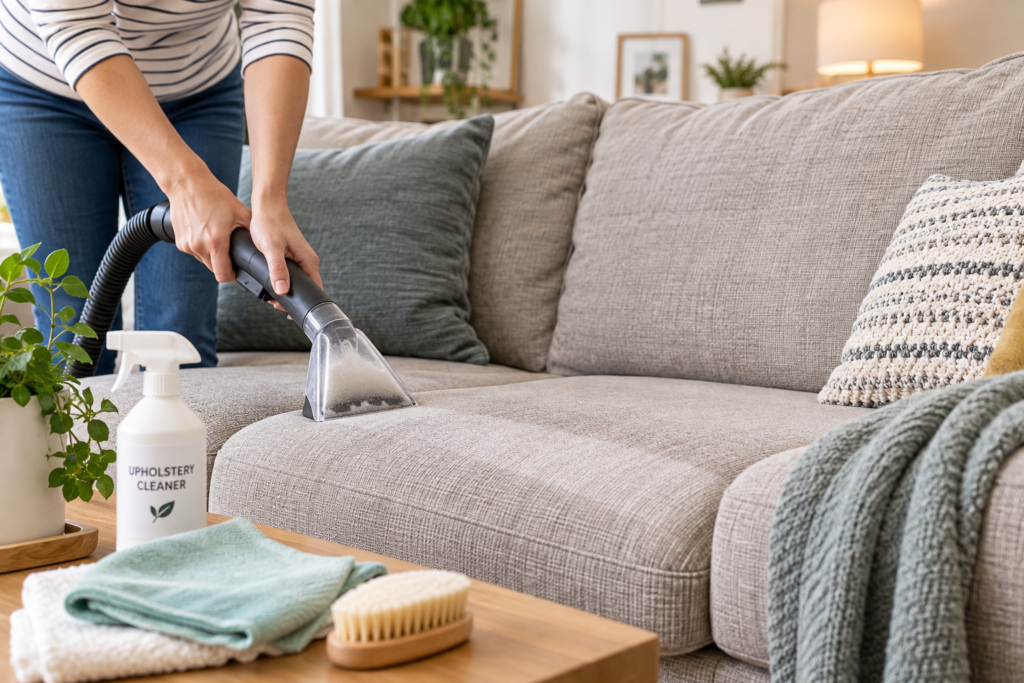
A fabric sofa can hold onto dust, crumbs, body oils and everyday marks long after the surface looks reasonably clean. Deep cleaning a fabric sofa removes this built-up dirt more thoroughly and helps refresh the upholstery without unnecessarily soaking or damaging it.
The right method depends on the sofa’s fabric and care instructions. Taking time to check these first, vacuum thoroughly and use suitable cleaning products can make a noticeable difference to the finished result.
This guide takes you through the process from preparation and stain treatment to cleaning, drying and putting your sofa back into use.
Before You Deep Clean Your Fabric Sofa
Before reaching for upholstery cleaner, check the sofa’s care label or manufacturer’s cleaning instructions. Upholstery fabrics vary considerably, and a method that works well on one sofa may cause shrinking, colour changes, water marks or other damage to another.
Look for any cleaning code or specific instructions supplied by the manufacturer. If you are unsure what the fabric can tolerate, avoid experimenting with water or cleaning products until you have confirmed the recommended method.
You will generally need:
- A vacuum cleaner with an upholstery or soft brush attachment
- Clean white or colourfast microfibre cloths
- A soft upholstery brush if suitable for the fabric
- A manufacturer-approved upholstery cleaning product
- A small bowl or container if the product requires dilution
- Dry towels or cloths for blotting moisture
If your sofa only needs routine maintenance rather than a full deep clean, our step-by-step fabric sofa cleaning guide may be a better place to start.
How to Deep Clean a Fabric Sofa Step by Step
Deep cleaning works best when you deal with loose debris first, identify stains separately and then clean the upholstery methodically. Trying to wash everything at once can push dirt further into the fabric or leave some areas much wetter than others.
1. Check the Sofa Before You Start
Remove throws, cushions and anything stored between or underneath the seats.
Inspect the upholstery carefully. Look for existing stains, faded areas, loose threads, damaged seams and sections that are already discoloured. Knowing what is there before cleaning helps you avoid mistaking old damage for something caused during the process.
Check whether cushion covers are removable, but do not assume that removable means machine washable. Follow the care label or manufacturer’s instructions.
2. Vacuum the Sofa Thoroughly
Vacuuming is one of the most important parts of a fabric sofa deep clean.
Start with the main seating surfaces and work slowly rather than quickly passing the vacuum over them. Pay particular attention to seams, piping and tufted sections where fine debris collects.
Remove loose cushions where possible and vacuum:
- The front and back of each cushion
- Underneath the seat cushions
- Along seams and edges
- Between the back and seat
- Around the arms
- Crevices and corners
- The accessible area underneath the sofa
Use an appropriate upholstery attachment and avoid dragging a hard nozzle aggressively across delicate fabric.
Removing dry dirt before introducing moisture prevents dust and crumbs from turning into a muddy residue during cleaning.
3. Deal With Individual Stains
Treat noticeable stains separately before cleaning the wider upholstery.
First identify what caused the stain if possible. Different substances respond to different treatment methods, so repeatedly applying a general cleaner is not always the best approach.
Blot rather than scrub fresh marks. Scrubbing can spread a stain and work it further into the fibres.
For specific spills, use the appropriate treatment rather than guessing. KeepShine has separate guides for dealing with coffee stains on a fabric sofa and chocolate stains on fabric upholstery.
For blood, follow a suitable method carefully rather than using hot water, which can make protein-based stains harder to remove. See our guide to removing blood stains from a fabric sofa.
Always test any treatment on a hidden area first when the manufacturer permits its use.
4. Test Your Cleaning Product
Even when a product is sold as an upholstery cleaner, test it before treating a large visible section.
Choose a small, inconspicuous area and use the product exactly as directed. Allow the test area to dry fully before deciding whether it is suitable.
Check for:
- Colour transfer onto your cloth
- Fading
- Darkening
- Water marks
- Changes in texture
- Dye bleeding
If you notice an unwanted change, stop and use a cleaning method appropriate for that particular upholstery instead.
5. Clean the Upholstery in Manageable Sections
Once you know the cleaning method is suitable, work systematically rather than randomly cleaning patches.
Follow the cleaner’s instructions for application, dilution and removal. Use as little moisture as necessary and work one manageable section at a time.
Pay extra attention to areas that receive frequent contact, such as armrests, headrests and the front edges of seat cushions. These areas can accumulate body oils and dirt even when they do not have obvious stains.
Avoid repeatedly saturating a stubborn patch. More liquid does not necessarily mean more cleaning power and can make drying considerably harder.
6. Remove Residue Where Required
Some upholstery cleaning products require residue to be removed after cleaning, while others do not.
Follow the product and sofa manufacturer’s instructions rather than automatically rinsing the fabric. If residue removal is required, keep additional moisture to a minimum.
Cleaning-product residue left in upholstery can sometimes make the surface feel stiff or encourage dirt to cling to it more quickly.
7. Let the Sofa Dry Completely
Drying is part of the deep-cleaning process, not something to rush through afterwards.
Increase ventilation by opening windows where practical and safe. Keep cushions separated if possible so air can circulate around them.
Do not replace cushions or throws while upholstery is still damp, and avoid sitting on the sofa until it is completely dry.
How long this takes varies with the fabric, cleaning method, amount of moisture, room temperature, ventilation and cushion thickness.
8. Finish and Reassemble the Sofa
Once everything is fully dry, inspect the upholstery in good natural light.
If the fabric permits it, gently brush or vacuum the surface to restore the appearance of the fibres and collect anything loosened during cleaning.
Replace cushions in their correct positions and return throws or covers only when both the sofa and accessories are completely dry.
For day-to-day care afterwards, our guide to keeping a fabric sofa clean for longer can help reduce how quickly dirt builds up again.
Browse KeepShine’s free downloadable cleaning resources for practical ways to make household cleaning and organisation easier.
Pro Tip

After cleaning removable cushions, avoid putting them straight back into position while their undersides are still damp. Leaving space around each cushion while it dries improves airflow on more than just the visible surface and helps prevent moisture becoming trapped between the cushion and sofa base.
Getting Better Results With Heavily Used Fabric Sofas
Some sofas need more attention because of children, pets, frequent visitors or simply years of everyday use. In these cases, the goal should still be controlled cleaning rather than using increasingly strong products.
Armrests, headrests and the front of seat cushions often become darker gradually because they receive repeated contact with hands, hair, clothing and skin. Vacuum these areas carefully before applying an appropriate upholstery cleaner. If the discolouration remains after one careful treatment, avoid repeatedly soaking the same section.
Old stains can also be difficult because you may not know what caused them or what products have previously been used. If a mark does not respond to the first suitable treatment, reassess it before trying something different. Combining cleaning chemicals without knowing whether they are compatible can damage upholstery and may be unsafe.
Curry and turmeric are particularly noticeable on light fabrics and may require more targeted treatment. If that is the problem you are dealing with, follow our separate advice on removing curry and turmeric stains from a fabric sofa.
Deep cleaning the sofa is also a good opportunity to clean the surrounding room. Dust underneath furniture, vacuum the floor properly and clean nearby surfaces so freshly cleaned upholstery is not immediately exposed to the same accumulated dust. Our complete living room cleaning guide covers the wider room in a practical order.
For a typical household sofa, deep cleaning should complement regular vacuuming and prompt treatment of spills rather than replace them.
Mistakes to Avoid

- Using too much water. Saturating upholstery can make it difficult to dry properly and may contribute to water marks, odours or other problems. Use only the amount required by the approved cleaning method.
- Scrubbing stains aggressively. Vigorous rubbing can spread the stain, push it deeper into the fabric or disturb the upholstery fibres. Blot and treat the affected area using a method appropriate for the stain and material.
- Skipping the patch test. A cleaner may affect colour or texture even if it appears suitable for upholstery. Test an inconspicuous section and allow it to dry before treating a large visible area.
- Assuming removable covers are machine washable. A zip does not automatically mean a cover belongs in the washing machine. Washing unsuitable covers can cause shrinking, fading or difficulty refitting them.
- Mixing cleaning products. Combining different household cleaners can damage fabric and, depending on the products involved, create dangerous fumes. Use one appropriate product according to its instructions.
- Using the sofa before it has dried. Sitting on damp upholstery can compress the fabric and interfere with drying. Give the sofa sufficient ventilation and wait until it is completely dry.
For more common problems worth avoiding, see our guide to fabric sofa cleaning mistakes.
If your sofa needs more intensive attention than you are comfortable tackling yourself, KeepShine can help with professional home cleaning.
More Questions About Deep Cleaning a Fabric Sofa
Deep cleaning often raises questions about drying, equipment, stains and how frequently the job really needs doing, so here are answers to some common concerns.
How often should you deep clean a fabric sofa?
There is no single schedule that suits every household. How frequently your sofa needs deeper cleaning depends on how heavily it is used, whether you have children or pets, the upholstery type and how well it is maintained between cleans. Our fabric sofa cleaning schedule explains how to judge an appropriate routine.
Can I use a carpet cleaner on my fabric sofa?
Only if the machine is specifically suitable for upholstery and its use is compatible with your sofa manufacturer’s care instructions. Do not assume that equipment designed for carpets is automatically safe for furniture. Upholstery construction, dyes, fibres and drying requirements can differ considerably.
Can I deep clean a sofa without a machine?
Depending on the fabric and manufacturer’s instructions, yes. Thorough vacuuming, appropriate stain treatment and careful manual upholstery cleaning can provide a substantial clean without an extraction machine. The important point is to use a method suitable for your particular upholstery rather than choosing one simply because it requires certain equipment.
Why does my sofa look patchy after cleaning?
Patchiness may result from uneven moisture, remaining dirt, cleaning residue, changes in the direction of the fabric pile or differences in drying time. Allow the sofa to dry completely before assessing it. If patches remain, check the care instructions before attempting another treatment.
Should I steam clean my fabric sofa?
Not automatically. Some upholstery may tolerate an appropriate steam-cleaning method while other materials may be damaged by heat or moisture. Check the sofa manufacturer’s instructions and the equipment guidance before using steam. If suitability cannot be confirmed, choose a safer approved cleaning method.
What should I do if a stain is still visible after deep cleaning?
Avoid repeatedly soaking or scrubbing it. Identify the stain if possible and use an appropriate targeted treatment that is safe for the upholstery. Older stains, dye-based marks and previously treated stains can be particularly difficult, and sometimes professional assessment is preferable to repeated experimentation.
Subscribe to KeepShine for more practical cleaning guides, household care tips and useful resources to help keep your home looking its best.
Final Thoughts: Keep Your Fabric Sofa Fresh Between Deep Cleans
A successful deep clean starts with careful preparation and ends with thorough drying. Vacuum first, treat stains appropriately, use only products suitable for the upholstery and resist the temptation to compensate for stubborn dirt with extra water or aggressive scrubbing.
Afterwards, small habits can make the next deep clean easier. Vacuum the sofa regularly, deal with spills promptly and pay attention to high-contact areas before they become heavily soiled.
Most importantly, treat the sofa according to its particular fabric rather than relying on a one-method-fits-all approach. Careful cleaning usually produces better results than simply cleaning more aggressively.