
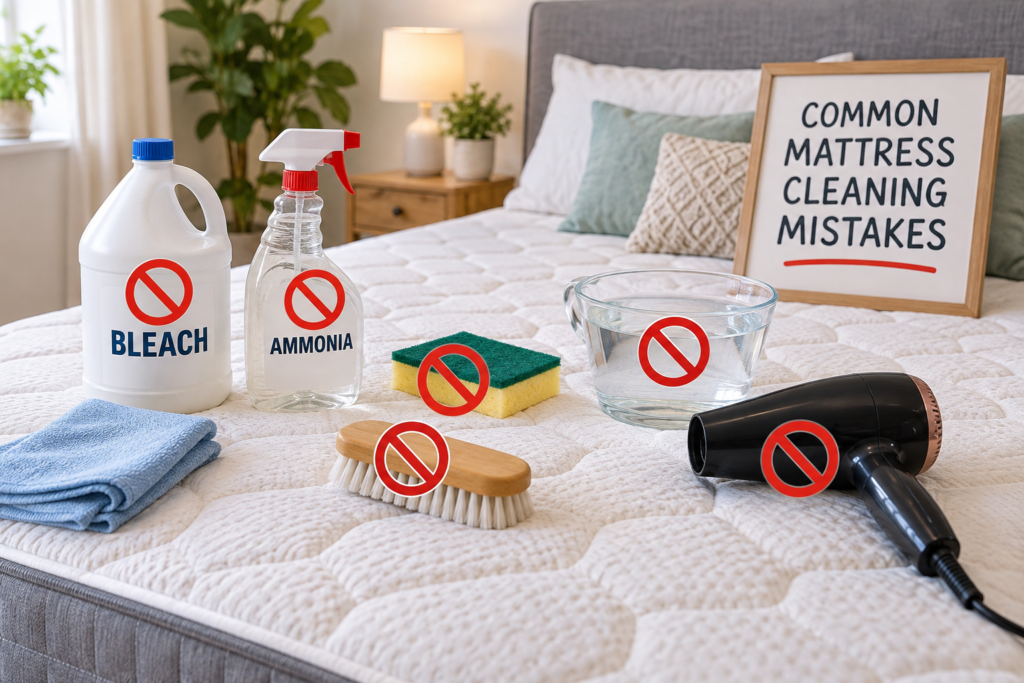
Mattress cleaning mistakes can leave your bed damp, stained or damaged instead of fresh and clean. Knowing what not to use on a mattress is just as important as knowing how to clean one.
Mattresses are different from many household surfaces because they cannot simply be soaked, rinsed and left to dry. Moisture can penetrate deep into the materials, harsh products may affect fabrics or foams, and aggressive scrubbing can make stains more difficult to manage.
The good news is that most problems are avoidable. By using small amounts of moisture, choosing suitable cleaning products and allowing plenty of drying time, you can clean a mattress safely without creating additional problems.
The Most Important Rule When Cleaning a Mattress
The safest general approach is to use as little liquid as possible. A mattress is made from layers that can hold moisture long after the outer fabric appears dry. Saturating it can therefore cause unpleasant smells, slow drying and potentially create conditions in which mould or mildew can develop.
Before using any cleaning product, check the mattress manufacturer’s care instructions and any cleaning information on its label. Materials such as memory foam, latex, natural fibres and traditional sprung mattresses may have different care requirements.
For routine cleaning, vacuuming and prompt spot treatment are usually preferable to heavily wetting the mattress. If you are unsure about the overall process, our step-by-step mattress cleaning guide explains a practical approach from stripping the bed through to drying it properly.
Common Mattress Cleaning Mistakes and How to Avoid Them
1. Using Too Much Water
One of the biggest mattress cleaning errors is treating a mattress as though it were a washable carpet or piece of clothing.
Pouring water directly onto a stain or applying large amounts of cleaning solution can push moisture through the cover and into the internal layers. Once moisture penetrates deeply, drying becomes considerably more difficult.
Instead, apply a small amount of an appropriate cleaning solution to a clean cloth rather than pouring it directly onto the mattress. Work gradually and use only enough moisture to treat the affected area.
If you are carrying out a more thorough clean rather than dealing with one small mark, follow a careful mattress deep-cleaning method that keeps moisture under control.
2. Scrubbing Stains Aggressively
When something spills on a mattress, vigorous scrubbing can feel like the quickest way to remove it. Unfortunately, it can spread the stain over a larger area and drive the substance further into the fabric.
Blotting is usually the better first response.
Use a clean, absorbent cloth and press gently onto a fresh spill to lift as much liquid as possible. Work from the outside of the affected area towards the centre so you are less likely to spread it.
Different stains also require different treatment. Blood, for example, should not automatically be treated in the same way as food or drink. For this type of mark, use a suitable method such as our guide to removing blood stains from a mattress.
3. Applying a Cleaner Without Testing It First
Even a household cleaner that appears mild may affect the mattress fabric, colour or finish.
Before treating a visible area, test a small amount in an inconspicuous spot and allow it to dry. Check for discolouration, fabric changes or other unwanted effects before continuing.
Avoid assuming that a product is mattress-safe simply because you have successfully used it elsewhere in your home.
If the mattress manufacturer specifies particular cleaning products or prohibits certain substances, follow those instructions.
4. Using Harsh Chemicals or Mixing Cleaning Products
More powerful does not necessarily mean cleaner.
Strong bleaching agents, solvents and other aggressive products can damage some mattress fabrics and materials. They may also leave residues or strong odours where you sleep.
Never mix household cleaning chemicals unless the product instructions specifically state that it is safe to do so. In particular, bleach should never be mixed with ammonia, acids or other household cleaners because dangerous gases can be produced.
Choose the mildest suitable method for the problem you are treating and follow product safety instructions carefully.
5. Trying to Treat Every Stain in the Same Way
A cup of coffee, chocolate, curry and blood can all leave marks, but their composition is different. Using one universal stain-removal technique can produce disappointing results and may even make some stains harder to remove.
Identify what caused the stain before choosing a treatment.
For example, if you are dealing with food containing strongly coloured spices, follow an approach specifically designed for curry and turmeric stains on a mattress rather than repeatedly applying a general-purpose cleaner.
The same principle applies to other stains: treat the substance, not simply the colour you can see.
6. Forgetting to Vacuum Before Spot Cleaning
Dust, hair, skin particles and other loose debris naturally collect on a mattress over time. Applying moisture before removing this material can make the cleaning process messier.
Strip the bed first, then vacuum the mattress carefully using an appropriate upholstery attachment if your vacuum has one. Pay attention to seams, edges and crevices where debris tends to accumulate.
Avoid pressing so aggressively that you damage the mattress surface.
Vacuuming first gives you a cleaner surface to work on and makes it easier to see which areas genuinely require further attention.
7. Making the Bed Before the Mattress Is Completely Dry
A mattress may feel dry on the surface while moisture remains underneath.
Putting sheets, protectors and bedding back on too soon reduces airflow and can trap remaining moisture. Instead, allow the mattress to dry thoroughly in a well-ventilated room.
Open windows when weather and security allow, and give the mattress plenty of time. A fan can also help improve air circulation.
Do not judge dryness solely by how long the mattress has been sitting. Drying time varies according to how much moisture was used, the mattress materials, room temperature, humidity and ventilation.
8. Using Heat Without Checking Whether It Is Suitable
It can be tempting to speed up drying with a powerful hairdryer, heater or another direct heat source.
However, excessive heat can damage or alter some foams, adhesives, fabrics and other mattress components. Keep strong heat sources away unless the manufacturer specifically confirms that the method is suitable.
Good airflow is generally a safer way to encourage drying.
9. Ignoring the Mattress Care Instructions
Mattresses can contain very different materials, and advice suitable for one construction may not be appropriate for another.
Before steam cleaning, applying stain removers, using deodorising products or attempting any substantial wet cleaning, check the manufacturer’s instructions.
This is particularly important if your mattress is still covered by a warranty, as inappropriate cleaning methods could potentially affect its terms.
10. Waiting Too Long to Deal With Spills
Fresh spills are often easier to manage than stains that have had time to dry and settle into the fabric.
When a spill happens, remove the bedding and blot up excess liquid promptly. Avoid rubbing it around or soaking the area with water in an attempt to flush it out.
Once the excess has been absorbed, choose a treatment appropriate to the substance. Coffee spills, for example, can be approached using our guide to removing coffee stains from a mattress.
Acting promptly can reduce the amount of intensive cleaning required later.
Explore KeepShine’s free downloadable cleaning resources for practical help with keeping household cleaning organised and manageable.
Pro Tip

After spot cleaning, place a dry white towel over the damp area and press firmly to absorb additional moisture before leaving the mattress to air-dry. Using a white towel also makes it easier to see whether colour or residue is still transferring from the mattress without introducing dye from a coloured cloth.
What to Do When a Mattress Stain Will Not Come Out
Repeatedly cleaning a stubborn mark can sometimes cause more harm than leaving a faint stain alone.
If your first appropriate treatment improves the stain but does not remove it completely, allow the mattress to dry before deciding whether another treatment is necessary. Continuously adding cleaner while the area remains wet can saturate the mattress and make it difficult to judge whether you are actually making progress.
For stains such as chocolate, carefully remove any solid residue first and then use an appropriate treatment rather than aggressively rubbing the mark. Our guide to removing chocolate stains from a mattress covers that problem in more detail.
Also consider the condition of the mattress itself. A mark that has been present for a long time may have penetrated beyond the surface fabric. Complete removal is not always possible without risking damage.
Persistent odours, extensive dampness or suspected mould deserve particular attention. Simply covering an odour with fragrance does not address its cause. If a mattress has remained significantly wet, smells persist after proper drying, or there are signs of mould growth, consider seeking appropriate professional advice and whether the mattress remains suitable to use.
Prevention can make future cleaning much easier. A suitable washable mattress protector provides an additional barrier against sweat, spills and everyday dirt, while regular light cleaning helps prevent debris from accumulating.
For a sensible ongoing routine, see our practical mattress cleaning schedule.
Mistakes to Avoid
- Soaking a stain to try to rinse it out. Excess water can carry the spill deeper into the mattress and greatly increase drying time. Use controlled amounts of moisture and blot instead.
- Scrubbing harder when a stain remains. Aggressive rubbing can spread stains and affect the mattress surface. Give the treatment time to work and blot gently instead of relying on force.
- Combining different cleaning products. Mixing chemicals can create dangerous reactions and does not guarantee better cleaning. Use one suitable product according to its instructions and never experiment with chemical combinations.
- Covering a mattress while it is still damp. Mattress protectors and sheets can trap residual moisture. Allow the cleaned area to dry completely before remaking the bed.
- Using strong fragrance to disguise an odour. A persistent smell may indicate that moisture or contamination remains. Identify and deal with the cause rather than simply masking it.
- Skipping routine maintenance until the mattress looks dirty. Regular vacuuming and prompt attention to spills can reduce the need for intensive cleaning. Our guide to keeping your mattress clean for longer covers simple preventative habits.
If mattress cleaning is part of a larger bedroom clean you’d rather not tackle yourself, KeepShine can help with professional home cleaning.
More Questions About Cleaning a Mattress Safely
A few common questions can help you avoid damage and make better decisions when caring for your mattress.
Can I steam clean my mattress?
It depends on the mattress and the manufacturer’s instructions. Steam introduces both heat and moisture, which may be unsuitable for certain foams, adhesives or other materials. Never assume that a mattress can be steam cleaned. Check its care guidance first and make sure any permitted method allows the mattress to dry thoroughly.
Can I use bleach on a mattress?
Bleach can discolour fabric and may damage some mattress materials, so it should not be treated as a general mattress cleaner. Check the manufacturer’s instructions and use a milder suitable method where possible. Never mix bleach with other household cleaning chemicals.
How often should I vacuum my mattress?
There is no single schedule suitable for every household. How frequently you need to vacuum depends on factors such as pets, allergies, use and how quickly debris accumulates. Vacuuming whenever you change or thoroughly clean the bed can be a useful habit, while periodic deeper cleaning can be planned separately.
Should I flip my mattress after cleaning it?
Only if the manufacturer says the mattress is designed to be flipped. Many modern mattresses have a designated sleeping surface and should only be rotated, while others may allow both flipping and rotation. Cleaning is not a reason to ignore the manufacturer’s positioning instructions.
Can I put bedding back on if the mattress feels slightly damp?
It is better to wait until the mattress is completely dry. Bedding and mattress protectors can restrict airflow and trap remaining moisture. Continue ventilating the room and give the cleaned area additional drying time before making the bed.
How can I make cleaning the whole bedroom easier?
Work systematically rather than repeatedly moving dust from one surface to another. Cleaning high surfaces before lower ones and dealing with the mattress while the bedding is removed can make the process more efficient. For the wider room, follow our step-by-step bedroom cleaning guide.
Subscribe to KeepShine for more practical cleaning guides, household tips and useful resources to make caring for your home easier.
Final Thoughts: Clean Carefully Rather Than Aggressively
A mattress does not usually need large amounts of water or powerful chemicals to be cleaned effectively. The safer approach is to remove loose debris first, identify stains correctly, use appropriate products sparingly and allow every treated area to dry thoroughly.
Most mattress cleaning mistakes happen when people try to speed up the process by adding more water, stronger products, harder scrubbing or excessive heat. Taking a controlled approach helps protect the materials while still giving you the best chance of achieving a good result.
When in doubt, check the mattress manufacturer’s care instructions before trying a new cleaning method. A little extra caution can prevent a small cleaning job from becoming a much bigger problem.