
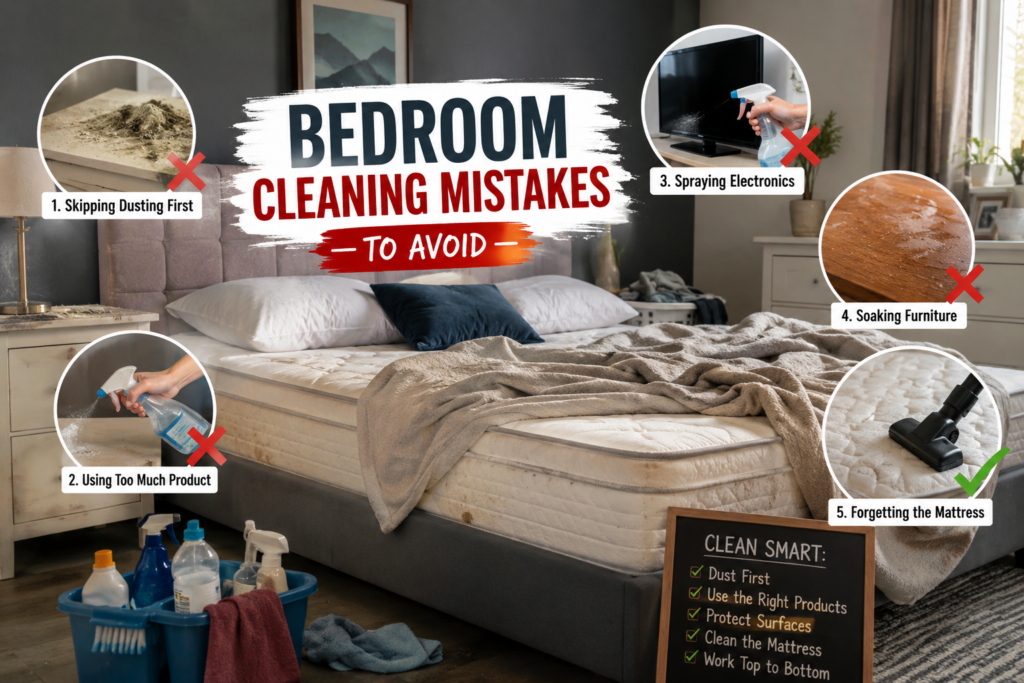
Bedroom cleaning mistakes can leave surfaces damaged, dust circulating and your room feeling less fresh even after you have cleaned it. Knowing what to avoid can make cleaning safer, quicker and more effective.
Bedrooms contain a surprising mix of materials: painted furniture, fabrics, mattresses, electronics, mirrors, flooring and delicate decorative items. A cleaning method that works perfectly on one surface may cause damage to another.
The good news is that most bedroom cleaning errors are easy to prevent. A sensible cleaning order, suitable products and a little attention to labels and care instructions can help you get better results without creating unnecessary work.
The Most Important Rule: Match the Cleaning Method to the Surface
Before using any cleaner in your bedroom, check what you are actually cleaning. Avoid assuming that an all-purpose spray is suitable for every bedside table, headboard, screen, mirror or piece of furniture.
When you are unsure, check the manufacturer’s care instructions and test the product on a small, inconspicuous area first. This is particularly important for painted, lacquered, polished, natural wood and upholstered surfaces.
It also helps to work systematically rather than spraying and wiping randomly around the room. If you are unsure where to begin, our step-by-step guide to cleaning a bedroom properly explains a practical cleaning order.
A few basic principles prevent many problems:
- Dust before vacuuming or mopping the floor.
- Use as little moisture as necessary on moisture-sensitive surfaces.
- Never mix cleaning chemicals unless the manufacturer specifically instructs you to do so.
- Apply products according to their labels rather than assuming stronger or more product means cleaner.
- Give damp fabrics and surfaces enough ventilation to dry properly.
Common Bedroom Cleaning Mistakes and What to Do Instead
The following mistakes can make bedroom cleaning less effective and, in some cases, damage the things you are trying to clean.
1. Cleaning the Floor Before Dusting
Vacuuming first can feel productive, but cleaning from the bottom upwards often means doing the floor twice.
When you dust shelves, wardrobes, lampshades, window areas and furniture afterwards, some loosened dust and debris will inevitably fall. That puts it straight back onto your freshly cleaned floor.
Instead, start higher in the room and gradually work downwards. Dust upper surfaces, clean furniture and deal with lower areas before vacuuming the floor near the end.
This simple change can make the whole process more efficient.
2. Using Too Much Cleaning Product
More cleaner does not automatically produce a cleaner bedroom.
Using excessive furniture polish, detergent or surface cleaner can leave sticky or cloudy residue. That residue may attract dust, create streaks or require another round of cleaning to remove.
Follow the product instructions and use only the recommended amount. When cleaning something delicate, check that the product is actually intended for that material.
If a surface remains dirty after one careful clean, identify the type of dirt or stain rather than immediately adding more product.
3. Spraying Cleaner Directly Onto Electronics
Televisions, monitors, alarm clocks, speakers and other electronics require more care than ordinary furniture.
Spraying liquid directly onto them can allow moisture to enter openings, edges or electrical components. Instead, switch equipment off where appropriate and follow the manufacturer’s cleaning guidance. A suitable cloth lightly dampened with an appropriate cleaning solution may be safer when the manufacturer permits it.
Never saturate electrical equipment, plugs, sockets or cables.
4. Soaking Wooden or Painted Furniture
Bedroom furniture often needs only light cleaning rather than heavy wet washing.
Leaving excessive moisture on natural wood, veneered surfaces, painted furniture or MDF can potentially cause staining, swelling, lifting or deterioration depending on the material and finish.
Use a well-wrung cloth when damp cleaning is appropriate, rather than leaving the surface visibly wet. Dry it afterwards if required by its care instructions.
For valuable or unfamiliar furniture, identify the finish before choosing a cleaner.
5. Making the Bed Before Dealing With Dust
A beautifully made bed can quickly become a landing place for dust if you then clean shelves, wardrobes or a dusty headboard above it.
When possible, deal with dusty surfaces before finishing the bed. If you are changing the bedding, remove used bed linen carefully rather than shaking it vigorously around the room.
Once surrounding cleaning is complete, you can make the bed without dropping more dust onto fresh bedding.
6. Forgetting the Mattress
A bedroom can look spotless while one of its largest fabric surfaces receives very little attention.
Mattresses collect dust, skin flakes and other debris over time. When suitable for your mattress, vacuuming the surface with an appropriate upholstery attachment can form part of routine care.
For more detailed guidance, follow our step-by-step method for cleaning a mattress properly.
Avoid soaking a mattress. If moisture is used for spot treatment, follow its care instructions and allow the area to dry completely before replacing bedding.
7. Using the Same Cloth Everywhere
One cloth travelling around an entire bedroom can simply move dust and grime from one surface to another.
A cloth used on a dirty windowsill, for example, should not immediately be used on a bedside table without being cleaned or replaced.
Use clean cloths and change or rinse them as they become dirty. It can also help to keep separate cloths for different types of cleaning, particularly mirrors and glass where residue from another product can cause streaks.
8. Scrubbing Stains Aggressively
When a mark refuses to disappear, the natural reaction is often to scrub harder. That can make matters worse.
Aggressive rubbing may spread a stain, disturb fabric fibres, remove a surface finish or create a visibly different patch.
First identify the material and, where possible, the cause of the stain. Blot liquid spills rather than rubbing them further into fabric, and use a treatment suitable for the particular material.
For delicate upholstery, rugs, mattresses or valuable furniture, test any treatment somewhere inconspicuous first.
9. Ignoring Product Labels and Warning Instructions
Cleaning products are not interchangeable.
Some are designed for particular materials, while others may require dilution, ventilation, gloves or specific contact times. Never combine different cleaning chemicals simply because you think the mixture will clean more effectively.
Read and follow the label, keep products away from children and pets, and store them as directed.
If the product instructions conflict with the care instructions for the item you want to clean, do not take the risk. Find a method confirmed as suitable for that particular surface.
Browse KeepShine’s free downloadable cleaning resources for practical help organising your cleaning and making everyday household tasks easier.
Pro Tip

Keep a small set of clean microfibre cloths for bedroom cleaning and fold each cloth into sections before you begin. As one section becomes dusty, refold it to expose a clean side. This gives you several usable cleaning surfaces from one cloth and helps prevent you from repeatedly wiping collected dust back onto furniture.
Bedroom Items That Need Extra Care
Some cleaning mistakes happen because the whole bedroom is treated as though every surface is the same. A safer approach is to adjust your method according to the material.
Mattresses and Upholstered Headboards
Fabric surfaces should not normally be saturated with cleaning solution. Excess moisture can penetrate deep into padding and may take much longer to dry than the surface suggests.
Deal with spills promptly, follow the item’s care instructions and allow adequate drying time before putting bedding or cushions back in place.
If your mattress needs more than routine attention, a thorough bedroom deep clean is a good opportunity to tackle the mattress, bed frame and normally overlooked areas together.
Wood, Veneer and Painted Furniture
Do not assume that a product labelled as a furniture cleaner is suitable for every type of furniture.
Natural wood, veneer, laminate, painted surfaces and high-gloss finishes can have very different care requirements. Test unfamiliar products discreetly and avoid abrasive pads unless the manufacturer specifically says they are suitable.
Mirrors and Glossy Surfaces
Using too much spray is a common cause of streaking. A small amount of suitable product and a clean cloth will often produce a better result than saturating the surface.
Be particularly careful around mirror frames and edges where excess liquid may reach materials that are less moisture-resistant.
Areas Close to the Bathroom
If your bedroom has an en-suite, avoid carrying bathroom cloths around the bedroom and using them on furniture or other frequently touched surfaces.
Keeping cleaning cloths and tools appropriately separated helps prevent grime being transferred between areas. Our guide to cleaning a bathroom properly covers a sensible approach for tackling that room separately.
Mistakes to Avoid

- Mixing cleaning products: Combining chemicals can produce dangerous reactions. Never create homemade chemical mixtures unless the combination is specifically confirmed as safe for that purpose; follow product labels instead.
- Cleaning delicate surfaces without testing first: An unfamiliar cleaner can discolour, dull or otherwise affect some finishes. Test it on an inconspicuous area and check the item’s care instructions before treating a visible section.
- Using dirty cleaning tools: A dusty cloth, overloaded vacuum attachment or dirty mop can redistribute grime instead of removing it. Start with clean equipment and change or clean tools as necessary.
- Leaving cleaned fabrics damp: Putting bedding onto a mattress or replacing cushions against upholstery before everything has dried can trap moisture. Allow adequate ventilation and make sure cleaned fabric surfaces are fully dry.
- Forgetting hidden dust: Cleaning only visible furniture leaves dust beneath the bed, behind bedside tables and around skirting boards. Include these areas periodically rather than trying to reach every hidden space during every quick clean.
- Trying to do every task during every clean: Not everything needs deep cleaning each time. A realistic bedroom cleaning schedule helps separate frequent tasks from occasional deeper jobs.
If you would rather leave a thorough bedroom or whole-home clean to someone else, KeepShine can provide professional cleaning help to suit your needs.
More Questions About Cleaning Your Bedroom Safely
A few practical questions often come up when trying to keep a bedroom clean without damaging furniture, fabrics or other belongings.
Should I dust or vacuum my bedroom first?
Dust first and vacuum afterwards in most situations. Work from higher surfaces towards lower ones so that loosened dust can eventually be collected from the floor.
Vacuuming near the end means you are less likely to clean the floor and then immediately cover it with dust from shelves, lamps or furniture.
Can I use an all-purpose cleaner on bedroom furniture?
Not automatically. Bedroom furniture can be made from wood, veneer, laminate, painted materials, glass and many other finishes.
Check the cleaner’s label and the furniture manufacturer’s care guidance. If suitability is uncertain, do not assume it is safe simply because the product says “all-purpose”.
How often does a bedroom need a deep clean?
There is no single schedule that suits every household. Pets, allergies, the number of occupants, flooring type and how the room is used can all affect how quickly dust and grime accumulate.
Regular light cleaning generally reduces the amount of work required when you eventually deep clean.
How can I stop my bedroom becoming dusty again so quickly?
Reducing clutter on exposed surfaces, vacuuming regularly, washing bedding appropriately and keeping cleaning tools clean can all help.
Rather than waiting until dust becomes obvious, build small maintenance jobs into your routine. Our guide to keeping a bedroom clean for longer covers practical ways to reduce the amount of cleaning required between bigger sessions.
Is it safe to wet-clean a mattress?
A mattress should not normally be soaked. Whether any wet-cleaning method is appropriate depends on its materials and the manufacturer’s instructions.
For a small spill or stain, use an appropriate treatment sparingly and avoid saturating the filling. Most importantly, ensure the treated area dries completely before replacing bedding.
Do I need to move all the furniture every time I clean?
Usually not. Frequently used and exposed areas can be cleaned routinely, while heavier furniture and difficult-to-reach spaces can be tackled periodically.
This is where separating routine cleaning from deeper cleaning becomes useful. It keeps the bedroom manageable without turning every cleaning session into a major project.
Subscribe to KeepShine for more practical bedroom cleaning advice, household cleaning guides and useful resources to make looking after your home easier.
Final Thoughts: A Safer Routine Gives Better Results
Good bedroom cleaning is not about using the strongest product or scrubbing every surface as hard as possible. It is about choosing methods that suit the materials in the room and completing jobs in a sensible order.
Start high and work down, control how much moisture and cleaning product you use, keep your tools clean and pay extra attention to mattresses, electronics and delicate furniture.
A manageable routine also prevents cleaning from becoming unnecessarily time-consuming. Following a proper bedroom cleaning routine and saving heavier jobs for occasional deep cleans can help you maintain a comfortable, fresh bedroom without risking avoidable damage.