
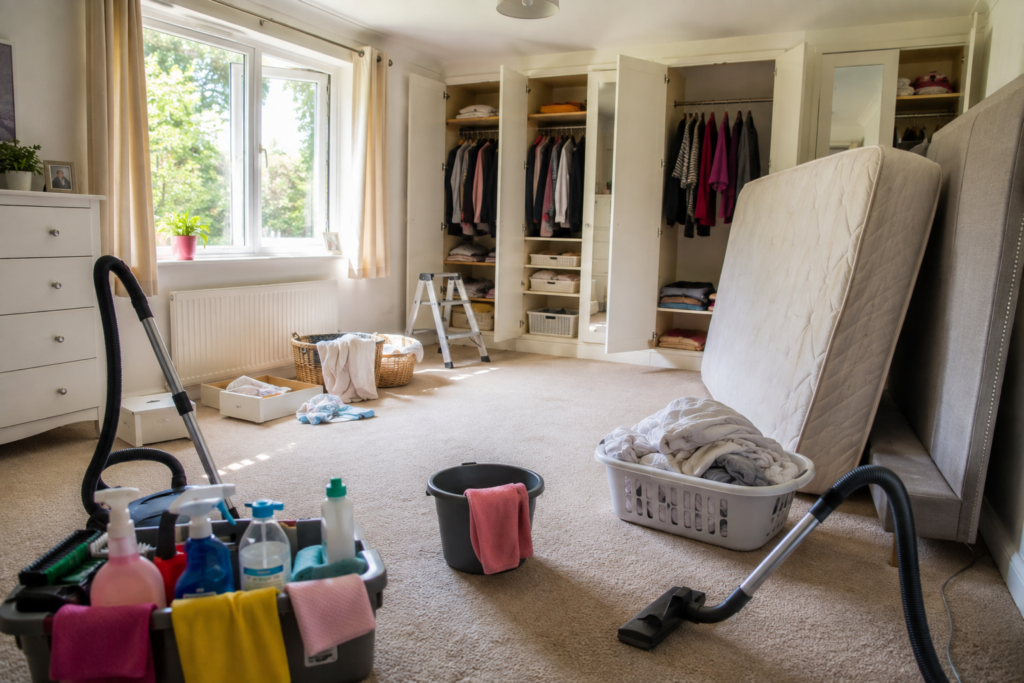
A bedroom can look tidy while still hiding dust, allergens and grime in places that everyday cleaning misses. Learning how to deep clean a bedroom helps you tackle the entire room systematically rather than simply cleaning the visible surfaces.
A proper deep clean reaches underneath furniture, around skirting boards, inside storage areas and across soft furnishings such as your mattress. It also gives you an opportunity to declutter and reset the room so that regular cleaning becomes easier afterwards.
You do not need specialist equipment or an entire day in most cases. The key is working in the right order so that you are not repeatedly cleaning the same areas.
What to Do Before You Start Deep Cleaning Your Bedroom
Before reaching for cleaning products, clear enough space to work properly. Put away obvious belongings, remove rubbish, take mugs or glasses to the kitchen and place laundry in the appropriate basket.
Gather the basics you are likely to need:
- Microfibre cloths
- A vacuum cleaner with suitable attachments
- A mop if you have a hard floor
- A bucket or bowl
- Appropriate surface cleaner
- Glass cleaner if required
- A soft brush or duster
- Fresh bedding
- Laundry bags or baskets
Open a window if weather and security allow. Ventilation can make the room more comfortable while you work, particularly when using cleaning products.
Deep cleaning is different from your normal bedroom routine. If you only need an everyday clean, our step-by-step guide to cleaning a bedroom properly covers the regular tasks without going into the same level of detail.
How to Deep Clean a Bedroom Step by Step
Work from the top of the room down and deal with the floor towards the end. Dust and debris will inevitably fall while you clean, so this order prevents you from vacuuming or mopping twice.
1. Strip the Bed and Start the Laundry
Remove sheets, pillowcases and duvet covers and wash them according to their care labels.
Check pillows, duvets, mattress protectors and other washable bedding too. These do not necessarily need washing every time you deep clean, so follow their care instructions rather than automatically putting everything in the washing machine.
Starting the laundry first means it can run while you tackle the rest of the bedroom.
2. Declutter Before Cleaning
Go around the room and remove anything that does not belong there. Sort clothes, paperwork, toiletries, books and other belongings rather than simply moving them from one surface to another.
You do not have to completely reorganise every cupboard. Concentrate on creating enough clear space to clean areas that are normally obstructed.
If clutter regularly makes bedroom cleaning difficult, consider whether frequently used belongings need more convenient storage.
3. Remove High-Level Dust and Cobwebs
Start at the highest points in the room.
Check ceiling corners, light fittings, the tops of wardrobes, curtain poles, door frames and other raised surfaces. Use an appropriate long-handled duster or vacuum attachment rather than balancing unsafely on furniture.
Take particular care around light fittings and other electrical fixtures. Switch them off before cleaning nearby and avoid applying liquid directly to electrical components.
Working high to low allows any loosened dust to fall onto surfaces you have not cleaned yet.
4. Clean Blinds, Curtains and Window Areas
Dust blinds carefully, paying attention to individual slats where dirt accumulates. Vacuum curtains using a suitable attachment if their care instructions allow it.
Wipe the window sill, frame and surrounding ledges. Clean the inside of the glass with an appropriate glass cleaner, following the product instructions.
Pay attention to corners where dust, dead insects and debris can collect unnoticed.
If you find mould or significant condensation around windows, treat the underlying moisture problem rather than simply wiping away what you can see.
5. Dust and Wipe Furniture Thoroughly
Clear bedside tables, dressing tables, shelves, desks and other furniture before wiping them.
Dust first, then clean each surface using a product appropriate for the material. Do not assume that one cleaner is suitable for painted wood, untreated timber, laminate, glass and other finishes.
Remember easily missed areas such as:
- Furniture legs
- Drawer handles
- Bed frames
- Headboards
- Shelf edges
- Mirror frames
- The sides and backs of accessible furniture
Move lightweight furniture where it is safe to do so. This exposes the dust that ordinary cleaning often leaves behind.
6. Clean Inside Drawers and Wardrobes Where Needed
A bedroom deep clean is a useful opportunity to deal with storage areas, but you do not necessarily need to empty your entire wardrobe every time.
Work one section at a time. Remove the contents of a drawer or shelf, vacuum or wipe the empty area and allow it to dry before replacing your belongings.
Avoid putting damp clothes or other items back into enclosed storage.
This is also a convenient time to identify clothes you no longer wear, but keep decluttering separate from cleaning if making lots of decisions is slowing you down.
7. Deep Clean the Mattress and Bed Area
With the bedding removed, inspect your mattress and vacuum its surface and seams using a clean upholstery attachment where appropriate.
If you discover marks or spills, check the manufacturer’s care instructions before applying moisture or cleaning products. Mattresses can be difficult to dry thoroughly, so soaking one in an attempt to remove a stain can create a bigger problem.
For more detailed mattress care, follow our guide to cleaning a mattress properly.
Wipe or vacuum the bed frame and headboard according to their materials. If possible, clean underneath the bed thoroughly rather than simply vacuuming around its edges.
8. Clean Frequently Touched Areas
Small areas touched every day can easily be overlooked during general dusting.
Clean door handles, wardrobe handles, drawer pulls, switches and other frequently handled surfaces using a method appropriate for the material.
Do not spray liquid directly onto switches, sockets or electrical equipment. Apply an appropriate product to a cloth where suitable and keep moisture away from electrical openings.
9. Vacuum Upholstery and Soft Furnishings
Vacuum upholstered chairs and other suitable fabric furnishings with the correct attachment.
Check cushions, throws and removable covers for care labels before washing them. Do not assume that every fabric cover is machine washable simply because it can be removed.
This is also a good opportunity to inspect soft furnishings for stains or damage that need separate attention.
10. Vacuum and Clean the Floor
Finish with the floor once dusting and furniture cleaning are complete.
Vacuum thoroughly, including edges, corners and underneath furniture you can safely access. Use a crevice attachment around skirting boards and other narrow areas.
For hard flooring, mop afterwards if appropriate for the floor type. Avoid excessive water, particularly on materials that can be damaged by moisture, and follow the flooring manufacturer’s care guidance where available.
Once everything is clean and dry, replace the furniture and make the bed with fresh bedding.
Explore KeepShine’s free downloadable cleaning resources if you would like practical help keeping household cleaning more organised.
Pro Tip

Once you have pulled furniture away from walls, vacuum the exposed floor and the back or underside of the furniture before putting it back. These hidden areas can hold surprisingly large amounts of dust, and dealing with both surfaces at the same time means you will not immediately transfer old dust back into your freshly cleaned bedroom.
How to Keep Your Bedroom Clean After a Deep Clean
The easiest way to protect the work you have just done is to prevent everyday mess from building back up.
You do not need to deep clean the whole bedroom every week. Instead, use regular maintenance to deal with dust, laundry, surfaces and floors before they become larger jobs. Our practical bedroom cleaning schedule can help you decide which jobs need doing frequently and which can be left for occasional deeper cleaning.
Try to deal with small sources of clutter as they appear. Put dirty clothes into a laundry basket rather than onto a chair, return items to drawers after using them and avoid allowing bedside tables to become permanent storage areas.
Ventilation matters too. Where practical, allowing fresh air into the bedroom can help with stuffiness and moisture. Persistent condensation or dampness, however, needs its cause investigated rather than being treated as an ordinary cleaning problem.
Pay particular attention to the areas that became dirtiest during your deep clean. If there was a thick layer of dust underneath the bed, for example, make that area part of your normal vacuuming routine whenever access allows.
A simple maintenance routine also reduces the temptation to rush. Many common bedroom cleaning mistakes happen when several weeks of accumulated work have to be tackled at once.
Mistakes to Avoid

- Cleaning the floor too early. Dusting shelves, wardrobes, blinds and furniture afterwards can send debris straight back onto a freshly cleaned floor. Work from high areas down and leave thorough floor cleaning until near the end.
- Using one cleaning product everywhere. Bedroom furniture can include glass, painted finishes, timber, laminate, metal and upholstery. A product that works well on one surface may damage another. Check labels and care instructions before applying unfamiliar products.
- Soaking the mattress to remove stains. Excess moisture can penetrate deep into a mattress and may take a long time to dry. Use appropriate methods, avoid saturating it and make sure it is completely dry before replacing bedding.
- Moving heavy furniture without considering safety. Deep cleaning does not require risking an injury or damaging your flooring. Move only furniture you can handle safely and use suitable vacuum attachments to reach inaccessible areas where possible.
- Putting items back before surfaces are dry. Replacing belongings immediately after wet cleaning can trap moisture, particularly inside drawers and wardrobes. Allow cleaned areas to dry properly first.
- Mixing cleaning chemicals. Never combine household cleaning products unless the manufacturer specifically states that this is safe. In particular, mixing certain products can produce dangerous fumes. Use products exactly as directed on their labels.
If a full bedroom deep clean is more than you want to tackle yourself, KeepShine can help you get the room thoroughly cleaned and refreshed.
More Questions About Deep Cleaning Your Bedroom
Deep cleaning often raises questions about timing, mattresses, furniture and what really needs to be included, so here are answers to some useful ones.
How often should you deep clean a bedroom?
There is no single schedule that suits every home. How frequently you need a deep clean depends on factors such as occupancy, pets, dust levels and how consistently you clean the room normally. Regular cleaning prevents many tasks from becoming major jobs, while occasional deeper cleaning tackles areas that are usually missed.
How long does it take to deep clean a bedroom?
A relatively tidy bedroom may take a couple of hours, while a cluttered room or one that has not been thoroughly cleaned for some time can take considerably longer. Laundry, stain treatment and reorganising storage can also extend the process. Avoid rushing simply to meet a particular time target.
Should I clean my mattress every time I deep clean the bedroom?
It is sensible to inspect and vacuum an appropriate mattress while the bed is stripped, but more intensive treatment is not automatically necessary every time. Follow the manufacturer’s care instructions and deal with stains appropriately rather than repeatedly applying cleaning products or moisture without a reason.
Do I need to move all the furniture?
No. Move furniture only when it can be done safely and without damaging the item or floor. Lightweight bedside tables and chairs may be straightforward, whereas large wardrobes or heavy beds may be better left in place. Use vacuum attachments to reach underneath and around furniture where possible.
What is the difference between regular bedroom cleaning and deep cleaning?
Regular cleaning concentrates on recurring jobs such as tidying, dusting accessible surfaces, changing bedding and vacuuming. Deep cleaning goes further by tackling neglected edges, high surfaces, furniture, storage areas and spaces underneath or behind items. After completing a deep clean, keeping your bedroom clean for longer can make the next one considerably easier.
Should I deep clean other rooms at the same time?
You can, but it is often easier to complete one room properly rather than starting several simultaneously. If you are working through your home room by room, you could tackle the bedroom first and then use our step-by-step bathroom cleaning guide when you are ready to move on.
Subscribe to KeepShine for more practical cleaning guides, household tips and useful resources to help make caring for your home easier.
Final Thoughts: Make the Next Bedroom Clean Easier
A thorough bedroom clean becomes much more manageable when you follow a clear order: declutter first, work from high areas down, clean the places normally missed and finish with the floor.
Once the room is refreshed, the most useful next step is simply to maintain it. A few regular habits—putting belongings away, dealing with laundry, dusting accessible surfaces and vacuuming consistently—can prevent another large build-up.
Deep cleaning should deal with the areas your normal routine does not reach, rather than becoming your normal routine itself. Keep everyday cleaning manageable, and the next bedroom deep clean should require far less work.