
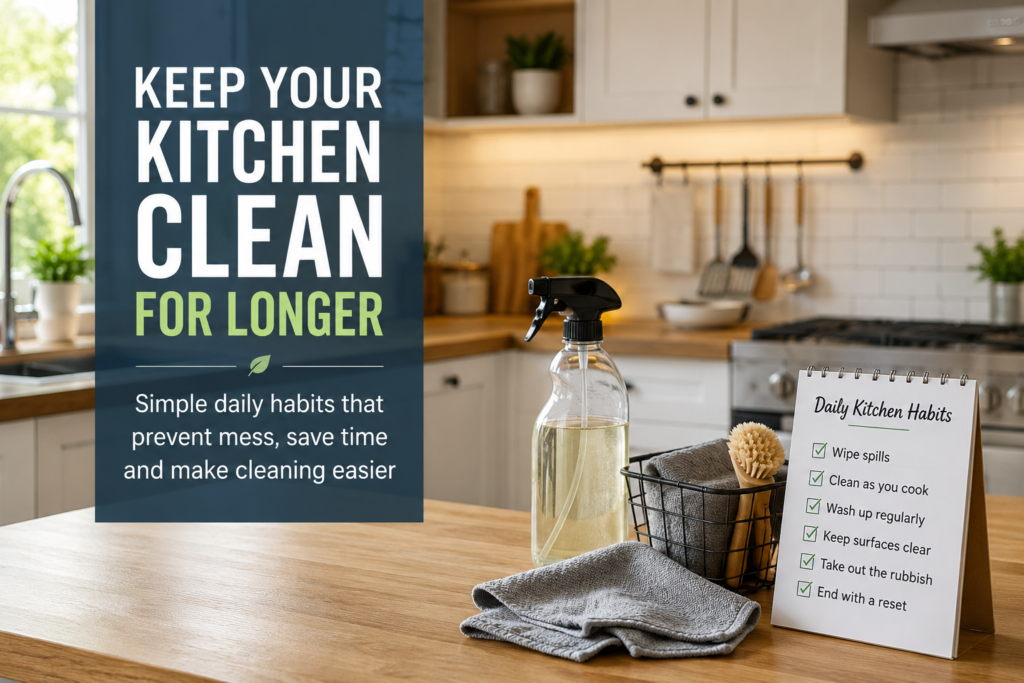
A few simple habits can help you keep your kitchen clean for longer, reducing grease, crumbs, stains and the amount of time you spend on bigger cleans.
Kitchens become dirty quickly because cooking, food preparation, washing up and everyday movement all happen in the same space. Even a kitchen that has just been cleaned can soon develop sticky worktops, splashes around the hob and crumbs on the floor.
The solution is not to deep-clean constantly. A better approach is to prevent mess from building up, deal with small problems while they are easy to remove and follow a simple maintenance routine.
This guide explains practical kitchen maintenance tips that can make everyday cleaning easier while keeping the room fresh and comfortable between more thorough cleans.
The Best Way to Keep a Kitchen Cleaner Between Cleans
The easiest way to keep a kitchen cleaner longer is to deal with mess close to when it happens rather than allowing several days of dirt to accumulate.
You do not need to clean the entire kitchen every time you prepare food. Concentrate on the areas that become dirty most quickly: worktops, the hob, sink, dining or preparation areas and the floor around them.
A useful routine is:
- wipe spills and splashes promptly;
- clean preparation surfaces after use;
- wash or load dishes rather than allowing them to accumulate;
- remove crumbs and food debris;
- keep the sink reasonably clear;
- put ingredients and equipment away after use;
- deal with rubbish before bins become overfilled.
These small actions prevent everyday mess from turning into dried-on residue, grease build-up or a much larger cleaning job.
For the full cleaning process rather than everyday maintenance, follow our step-by-step guide to cleaning a kitchen properly.
Practical Habits That Keep Your Kitchen Clean for Longer
Keeping a kitchen tidy is much easier when cleaning becomes part of how you use the room rather than a separate job left until everything looks dirty.
1. Start cooking with clear worktops
Before preparing food, put away anything that does not need to be on the worktop.
A crowded surface gives crumbs, grease and spills more places to collect. It also means that when you eventually clean the worktop, you first have to move numerous bottles, appliances and containers.
Keeping frequently used items accessible is sensible, but try not to use every available surface for storage. Clearer worktops are quicker to wipe and make everyday kitchen maintenance much easier.
2. Clean as you cook
Cooking often creates small periods when you are waiting for something to simmer, bake or boil. Use a little of this time to put ingredients away, place utensils in the dishwasher or washing-up area and wipe minor spills.
You do not need to clean obsessively while preparing a meal. The aim is simply to prevent every pan, packet and utensil from remaining out until the end.
By the time the meal is ready, there should be considerably less mess waiting for you.
3. Wipe splashes before they dry
Sauces, cooking liquids, grease and food splashes are usually easier to remove when they are fresh.
Pay particular attention to the hob, splashback and nearby worktops after cooking. Use a cleaning method suitable for the particular surface, especially on natural stone, wood, stainless steel or specialist finishes.
If the hob or surrounding area is hot, allow it to cool safely before cleaning and follow the manufacturer’s care instructions.
For heavily accumulated grime, a more thorough kitchen deep clean may be more appropriate than repeatedly wiping the surface.
4. Keep the sink from becoming a holding area
A sink full of plates and pans makes the whole kitchen feel harder to manage.
Wash dishes after meals where practical, or load them into the dishwasher rather than leaving them around the sink. Once the washing-up is finished, remove food debris and give the sink a quick rinse or wipe.
Remember that sinks vary in material. Stainless steel, ceramic and composite sinks may require different care, so use suitable products rather than assuming one cleaner is appropriate for every surface.
5. Stop crumbs spreading around the room
Crumbs rarely remain where they first fall. They can be carried underfoot from the preparation area to other parts of the kitchen and adjoining rooms.
After preparing bread, toast or other crumb-producing foods, wipe the worktop and quickly sweep or vacuum the affected floor area.
This takes very little time but helps prevent dirt spreading and makes the next full floor clean easier.
6. Give frequently touched areas regular attention
Some of the dirtiest-looking parts of a kitchen are not necessarily the largest surfaces.
Cupboard handles, drawer pulls, appliance handles, taps and switches are touched repeatedly throughout the day. Marks gradually accumulate and can make an otherwise tidy kitchen look neglected.
Include these areas in your regular maintenance rather than waiting until the next deep clean. For electrical switches and appliances, avoid excessive moisture and follow appropriate care guidance.
7. Deal with the hob after cooking
The hob is one of the easiest places for grease and food residue to build up.
Once it has cooled sufficiently, remove loose debris and wipe away suitable splashes before they harden. Always use products and tools appropriate for the hob material.
Do not scrape stubborn deposits aggressively, particularly on glass or specialist surfaces. If your cooker needs more attention, our guide to cleaning an oven properly covers another important part of kitchen maintenance.
8. Empty bins before they become a problem
Do not wait until rubbish is overflowing.
Remove waste regularly, particularly when it contains food that may produce unpleasant smells. If something leaks inside the bin, clean the affected area promptly rather than simply replacing the liner.
Occasionally wipe the bin itself as part of your kitchen routine. Keeping the surrounding floor clean also prevents dropped food and debris from accumulating unnoticed behind or beside it.
9. Finish the day with a short kitchen reset
A five- or ten-minute reset can prevent yesterday’s mess becoming tomorrow’s cleaning job.
Put away food and equipment, clear dishes, wipe obvious marks from worktops, remove crumbs and straighten anything that has been left out.
The aim is not to achieve a perfect kitchen every evening. It is simply to return the busiest areas to a manageable condition.
If you are unsure which jobs need doing daily, weekly or less frequently, our practical kitchen cleaning schedule can help you divide the work sensibly.
Explore KeepShine’s free downloadable cleaning resources for practical ways to make household cleaning and organisation easier.
Pro Tip

Keep one small, easily accessible cleaning kit specifically for everyday kitchen maintenance, containing only products that are suitable for your surfaces. Removing the need to search for supplies makes it much easier to deal with a splash or greasy mark immediately rather than leaving several small jobs to accumulate.
Preventing Grease and Clutter from Building Up
Cleaning regularly helps, but prevention can reduce the amount of cleaning required in the first place.
Control cooking grease early
When frying or cooking foods that create grease, use appropriate lids or splash guards where suitable and follow safe cooking practices. Ventilation can also help manage cooking vapour; use your extractor according to its manufacturer’s instructions where available.
Pay attention to the area immediately surrounding the hob. Grease can settle on splashbacks, nearby cupboards and worktops without being particularly noticeable at first.
Regular light cleaning is generally easier than tackling a thick layer later.
Give everything a practical home
Clutter often develops because frequently used items do not have convenient storage.
Keep everyday utensils, ingredients and equipment somewhere logical and easy to return them to after use. Items used only occasionally do not necessarily need permanent space on the worktop.
Also check cupboards and drawers periodically. Removing expired food, unnecessary packaging and unused items creates space for the things you actually use.
Use different levels of cleaning
Not every kitchen job needs doing every day.
Daily maintenance should concentrate on fresh mess and high-use areas. Weekly cleaning can cover jobs such as more detailed floor cleaning, cupboard fronts and less frequently touched surfaces. Periodically, you can tackle areas that need deeper attention.
That distinction prevents everyday cleaning from becoming overwhelming while still stopping dirt from being ignored indefinitely.
If your kitchen has already reached the stage where ordinary maintenance is no longer enough, use a deeper clean to bring it back under control, then begin the lighter routine afterwards.
Mistakes to Avoid
- Leaving spills until the next scheduled clean. Fresh spills are generally easier to deal with than dried residue. Clean them promptly where safe rather than allowing them to become a stubborn job later.
- Using one cleaning product on every kitchen surface. Worktops, natural stone, wood, stainless steel, glass and appliance finishes can have different care requirements. Check product labels and manufacturer guidance before using an unfamiliar cleaner.
- Cleaning hot appliances or surfaces too soon. Trying to wipe a hot hob or oven can create a safety risk and may be unsuitable for the surface. Allow appliances to cool as directed before cleaning them.
- Using too much cleaning product. More product does not automatically mean better results. Excess cleaner may leave residue and create additional wiping. Follow the product instructions rather than applying unnecessary amounts.
- Ignoring hidden areas because the visible kitchen looks clean. Crumbs and grease can accumulate beside appliances, around bins and in corners. Include these areas periodically so they do not become larger jobs. Our guide to common kitchen cleaning mistakes explains other habits worth avoiding.
If keeping on top of your kitchen has become difficult, KeepShine can provide professional cleaning help when you would rather leave the bigger cleaning jobs to someone else.
More Questions About Keeping Your Kitchen Clean
Small changes can make a noticeable difference to kitchen maintenance, so here are answers to a few other questions you may have.
How often should I wipe kitchen worktops?
Worktops used for preparing food should generally be cleaned after use and whenever spills or visible dirt appear. The appropriate cleaning method depends on the worktop material. Avoid assuming that strong disinfectants or abrasive cleaners are suitable for every surface, and follow the manufacturer’s care recommendations where necessary.
How can I prevent my kitchen floor getting dirty so quickly?
Deal with crumbs near preparation areas before they are walked around the room, wipe spills promptly and consider keeping outdoor footwear away from the kitchen where practical. Regular light sweeping or vacuuming of suitable flooring can prevent loose debris accumulating between fuller floor cleans.
Why does my kitchen still look untidy after I clean it?
The problem may be clutter rather than dirt. Numerous appliances, food containers, paperwork and miscellaneous objects on worktops can make a freshly cleaned kitchen appear busy. Try giving frequently used items designated storage and keeping only genuinely useful everyday items on display.
Should I deep-clean my kitchen every week?
Usually, a full deep clean should not be necessary every week if everyday and routine cleaning is being maintained. The appropriate frequency depends on household size, cooking habits and how heavily the kitchen is used. A practical maintenance schedule allows you to spread less frequent tasks over time instead of tackling everything together.
How do I keep an office kitchen clean for longer?
Shared kitchens require slightly different habits because several people use the same facilities. Clear expectations around dishes, food storage, spills and bins can make a considerable difference. KeepShine has a separate guide explaining how to keep an office kitchen clean for longer.
For the full workplace cleaning process, you can also follow our step-by-step office kitchen cleaning guide.
Subscribe to KeepShine for more practical cleaning guides, maintenance tips and useful resources to make everyday cleaning easier.
Final Thoughts: Small Habits Make Kitchen Cleaning Easier
Keeping a kitchen clean for longer does not require constantly cleaning the whole room. The biggest difference usually comes from preventing small messes from accumulating.
Clear surfaces when you finish using them, deal with fresh spills, keep dishes under control and remove crumbs before they spread. Combine these everyday habits with regular cleaning and occasional deeper attention to less obvious areas.
Most importantly, make the routine realistic for your household. A few minutes of consistent maintenance is often much easier to manage than waiting until several days of cooking, dishes, grease and clutter have turned into one large cleaning job.