
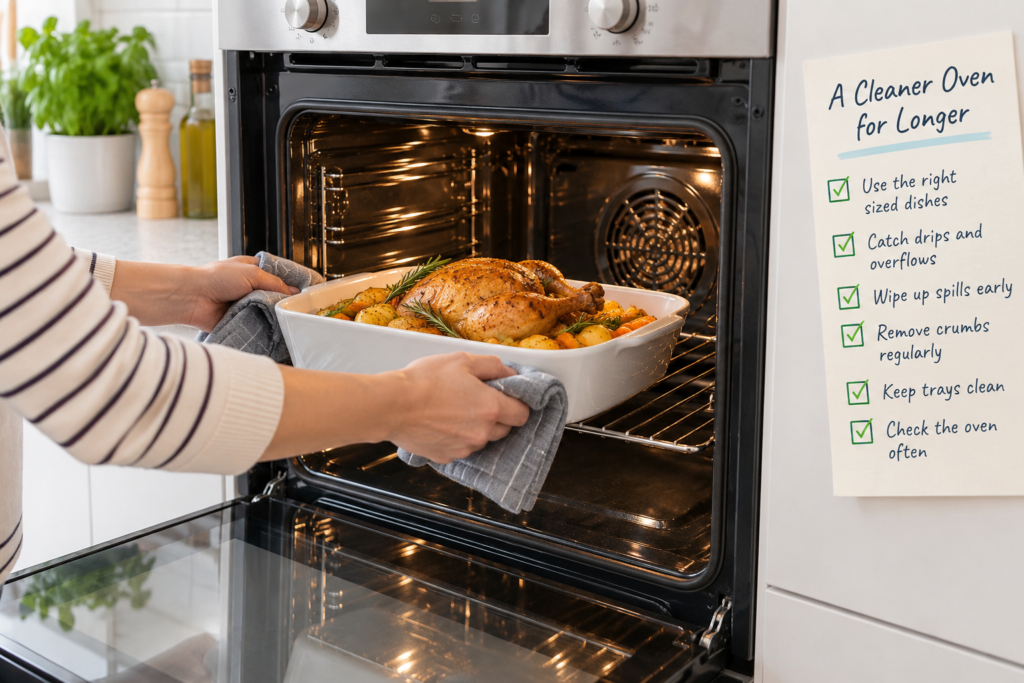
Keeping an oven clean is much easier than dealing with thick layers of burnt-on grease later. A few simple oven maintenance habits can prevent dirt from building up and make routine cleaning far quicker.
Most oven mess comes from small spills, food splashes, crumbs and grease that are repeatedly heated during cooking. Once these residues bake onto the surfaces, they become harder to remove.
The good news is that you do not need to deep clean your oven after every use. Regular attention to fresh spills and a few preventative habits can help keep it cleaner for much longer.
The Best Way to Keep Your Oven Cleaner for Longer
The simplest approach is to deal with mess while it is still small. Once the oven has cooled completely, remove crumbs and wipe up fresh splashes before they have the chance to become baked-on residue.
Try to combine this with a few everyday habits:
- Use appropriately sized baking dishes so food is less likely to overflow.
- Place dishes carefully in the oven rather than overfilling shelves.
- Check bubbling or high-fat foods during cooking where practical.
- Wipe accessible spills once the oven is completely cool.
- Remove loose crumbs regularly.
- Clean trays and oven-safe cookware separately rather than allowing grease to accumulate on them.
- Check the oven periodically for developing grease or burnt deposits.
If your oven already has significant build-up, preventative maintenance will not replace a proper clean. Start with cleaning your oven properly, then use the habits below to help maintain the result.
Practical Habits That Help Keep an Oven Clean
Keeping an oven cleaner is mainly about stopping everyday cooking residue from becoming stubborn grime. These habits require relatively little effort when incorporated into your normal kitchen routine.
1. Deal With Spills Promptly
A small splash of sauce or grease may not look important, but repeated heating can bake it firmly onto the oven surface.
After cooking, switch the oven off and allow it to cool completely. Once it is safe to touch, check for visible spills and wipe them according to the manufacturer’s cleaning guidance.
Do not attempt to wipe the inside while the oven is hot. Apart from the risk of burns, applying unsuitable products or cold liquids to hot surfaces could cause damage.
2. Catch Potential Overflows Before They Happen
Prevention is particularly useful when cooking casseroles, pies, roasts and other dishes that may bubble, drip or release fat.
Choose a dish with enough room for the food to expand or bubble without spilling over its sides. Where appropriate, an oven-safe tray positioned according to your oven manufacturer’s instructions can help catch drips from suitable dishes.
Avoid covering the oven floor with foil unless the manufacturer specifically states that this is safe. Foil can interfere with airflow or heating and may damage some ovens.
3. Remove Crumbs and Loose Food Regularly
Breadcrumbs, pastry flakes, cheese and other small pieces of food can fall onto shelves or the bottom of the oven.
Once the appliance is completely cool, remove loose debris rather than leaving it for the next cooking session. Repeatedly heating food particles can create burnt smells, smoke and more stubborn residue.
If you are already cleaning your kitchen properly, make this quick oven check part of the routine.
4. Keep Oven Trays and Cookware Clean
Sometimes the source of an apparently dirty oven is actually a heavily soiled baking tray.
Grease and burnt food left on trays can smoke or create unpleasant smells when reheated. Wash cookware according to its care instructions and avoid returning heavily greasy trays to the oven simply because they are stored there.
Keeping the equipment inside the oven clean helps prevent old cooking residue from being reheated unnecessarily.
5. Wipe Accessible Grease Before It Builds Up
You do not need to perform a full oven clean every time you notice a few splashes.
When the oven is cold, wiping accessible fresh grease can prevent several small marks from gradually becoming a difficult cleaning job. Use only cleaning methods and products suitable for your particular oven and its surfaces.
Pay particular attention to areas where splashes commonly occur, while avoiding heating elements, seals or other components that the manufacturer advises you not to clean with ordinary products.
6. Keep the Hob Clean Too
Grease around the cooking area can easily spread through normal kitchen use. Keeping surrounding surfaces clean makes the whole cooking area easier to maintain.
If the top of your cooker needs attention as well, our guide to cleaning a hob properly explains how to approach that job safely.
Always use cleaning methods appropriate for your particular hob material.
7. Check the Oven Instead of Waiting Until It Looks Very Dirty
It is easy to forget about the inside of an oven because the door stays closed for most of the day.
Every so often, inspect the oven when it is cold. Look at the shelves, interior surfaces, door glass and accessible areas around the door.
A quick inspection lets you spot developing grease before it becomes a much bigger task.
For a more structured routine, see our practical oven cleaning schedule.
8. Give Developing Build-Up Proper Attention
Maintenance works best when the oven is already reasonably clean. If grease and burnt food are accumulating despite regular wiping, it may be time for more thorough cleaning.
Do not simply keep wiping the easiest areas while ignoring heavy deposits elsewhere. An occasional thorough oven deep clean can reset the appliance, after which routine maintenance becomes much easier again.
Explore KeepShine’s free downloadable cleaning resources for practical ways to make regular kitchen and household cleaning easier to organise.
Pro Tip

After cooking particularly messy foods, make a habit of checking the oven as soon as it has cooled completely. A two-minute check for fresh drips, crumbs and splashes can save considerably more cleaning effort later, because you are dealing with individual marks before repeated heating turns them into stubborn deposits.
Why Oven Dirt Becomes Harder to Remove Over Time
The main reason oven maintenance matters is that cooking residue changes when it is repeatedly exposed to high temperatures.
Fresh grease may initially be relatively easy to wipe from a suitable surface. After multiple cooking cycles, however, residue can become increasingly baked on. Food containing fats, sugars and sauces can also leave dark deposits that are much more difficult to tackle later.
This is why waiting for an oven to become visibly filthy often creates unnecessary work.
There is also an important difference between maintenance cleaning and deep cleaning. Maintenance is about dealing with small amounts of everyday dirt before they accumulate. Deep cleaning addresses residue that maintenance can no longer remove effectively.
Your cooking habits will influence how quickly this happens. Someone who frequently roasts fatty foods or cooks bubbling dishes may need to check their oven more often than someone who uses it occasionally.
Rather than following an unnecessarily rigid timetable, pay attention to the condition of your appliance. Visible grease, persistent cooking smells, burnt debris and increasing deposits are signs that more attention may be needed.
The oven door also deserves attention. Splashes on the inner glass can gradually become baked on, making the window harder to see through. Cleaning appropriate areas regularly, using methods approved for your appliance, can help prevent this gradual build-up.
If grime has already become substantial, do not compensate by using increasingly aggressive cleaning methods. Follow appropriate cleaning guidance instead, and avoid the common oven cleaning mistakes that can cause damage or poor results.
Mistakes to Avoid
- Lining the bottom of the oven with foil without checking the instructions. It may seem like an easy way to catch spills, but foil can affect airflow, heat distribution or surfaces in some appliances. Follow the oven manufacturer’s guidance instead.
- Cleaning while the oven is still hot. Trying to tackle a spill immediately can expose you to burns and may be unsuitable for the oven surface. Switch the appliance off and wait until it has cooled safely before cleaning.
- Leaving small spills because they do not look serious. A minor splash can become much more stubborn after being heated repeatedly. Deal with accessible fresh residue when practical.
- Using harsh tools on stubborn marks. Scraping aggressively with unsuitable implements can scratch or damage surfaces. Use cleaning tools and products appropriate for your oven.
- Forgetting the door seals and sensitive components. Not every part of an oven should be scrubbed or treated with ordinary cleaner. Check the manufacturer’s care instructions before cleaning seals, heating components or specialised surfaces.
- Assuming a self-cleaning programme means no maintenance is necessary. Oven designs and cleaning functions vary. Follow the manufacturer’s instructions for your particular appliance rather than assuming one cleaning method applies to every model.
If built-up kitchen grease has become more than you want to tackle yourself, KeepShine can provide professional cleaning help when you need it.
More Questions About Keeping Your Oven Clean
These answers cover a few other practical questions that often come up when trying to prevent oven dirt and grease from building up.
Should I wipe my oven after every use?
Not necessarily. If cooking has produced no spills, grease or loose debris, a full wipe after every use may be unnecessary. Instead, check the oven once it is completely cool and deal with visible fresh mess when needed. Regular small interventions are generally more manageable than waiting for substantial build-up.
How can I stop food spilling onto the bottom of the oven?
Use cookware large enough to contain bubbling liquids and expanding foods without overflowing. Avoid overfilling dishes. Where appropriate for your appliance and recipe, an oven-safe tray may help catch potential drips, but position it safely and follow the oven manufacturer’s guidance.
How often should an oven be deep cleaned?
There is no single interval suitable for every household. Frequency depends on how often you cook, what you cook and how effectively you deal with everyday spills. Inspect the oven regularly and deep clean when grease and baked-on residue begin accumulating beyond what routine wiping can manage.
Can I use oven cleaner every time I notice grease?
Usually there is no reason to reach automatically for a strong oven-cleaning product whenever you see a small mark. Product suitability depends on your appliance and its surfaces. Follow the manufacturer’s instructions and the cleaner’s directions, and use the least intensive appropriate method for the job.
Why does my oven still smell after I have cleaned it?
Check for overlooked food debris, grease on trays or residue in accessible areas. Cleaning-product residue can also cause unwanted odours if a product has not been used according to its instructions. If an unusual smell persists or appears electrical rather than food-related, stop using the appliance and seek appropriate professional advice.
Does keeping the rest of the kitchen clean help?
Yes. Regularly cleaning cooking surfaces, worktops and surrounding areas prevents grease and food residue from accumulating throughout the room. A consistent kitchen routine also makes it easier to notice when individual appliances need attention rather than allowing several cleaning jobs to build up at once.
Subscribe to KeepShine for more practical cleaning guides, maintenance tips and useful resources to help make everyday household cleaning easier.
Final Thoughts: Small Habits Make Oven Maintenance Easier
Keeping an oven cleaner for longer does not require constant scrubbing. The biggest difference comes from preventing avoidable spills, removing crumbs and dealing with fresh residue before repeated cooking turns it into stubborn grime.
Build a quick oven check into your normal kitchen routine and respond to mess according to how heavily you use the appliance. When ordinary maintenance is no longer enough, give the oven a proper clean rather than allowing deposits to continue accumulating.
Combined with sensible whole-home cleaning routines, these small, consistent habits can make larger cleaning jobs far easier to manage.