
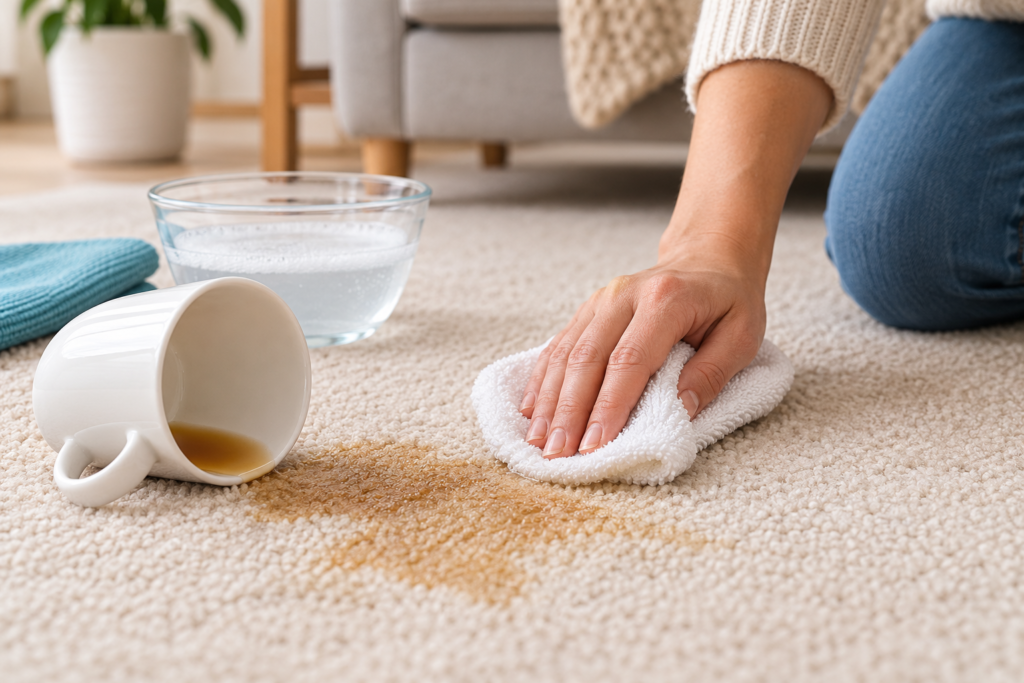
Tea spilled on a mattress can leave a noticeable brown mark and, if too much moisture is used during cleaning, can also leave the mattress damp. The safest way to remove tea stains from a mattress is to work with small amounts of cleaning solution, blot rather than scrub, and dry the area thoroughly.
Fresh tea stains are usually easier to deal with, but older marks can often be improved too. The key is to remove as much tea as possible without soaking the mattress or spreading the stain further.
This guide explains how to tackle both fresh and stubborn tea stains safely, what to avoid, and how to dry the mattress properly afterwards.
What to Do First When Tea Spills on a Mattress
If the tea has just been spilled, act quickly. Use a clean white cloth or plain white kitchen paper to blot up as much liquid as possible. Press firmly into the mattress, lift, move to a clean section of the cloth and repeat.
Avoid rubbing. Rubbing can spread the tea into a larger area and work it further into the mattress fibres.
Before applying any cleaning product, check the mattress manufacturer’s care instructions where available. Mattresses contain different fabrics, foams and internal materials, so a method that is suitable for one mattress may not be appropriate for another.
If you regularly clean your mattress as part of your bedroom routine, our guide to cleaning a mattress properly covers general mattress care beyond individual stains.
How to Remove Tea Stains From a Mattress Step by Step
You do not need to flood a mattress with cleaner to tackle a tea stain. In fact, using less moisture is generally better because mattresses can take a long time to dry internally.
Gather a few simple supplies before starting:
- Clean white cloths
- Plain white kitchen paper if needed
- Cool or lukewarm water
- Mild washing-up liquid
- A small bowl
- A dry towel
- A fan or good ventilation to help with drying
Always test your chosen cleaning solution on a small, inconspicuous area first.
1. Blot Up Fresh Tea
For a fresh spill, immediately press a clean, absorbent cloth onto the wet area.
Work from the outside of the spill towards the centre. This helps prevent the liquid from spreading into a wider patch.
Keep changing to a dry section of cloth until you are picking up very little moisture.
If tea has also reached nearby flooring, the cleaning method will be different. Follow the appropriate guidance for removing tea stains from carpet rather than using mattress-cleaning techniques on carpet fibres.
2. Prepare a Mild Cleaning Solution
Mix a small amount of mild washing-up liquid with cool or lukewarm water. You only need enough detergent to make a weak solution.
Do not pour the mixture directly onto the mattress.
Instead, dip a clean white cloth into the solution and wring it out thoroughly. The cloth should be damp rather than dripping wet.
Using a white cloth also makes it easier to see whether the tea is transferring from the mattress onto the cloth and reduces the risk of colour transferring from the cleaning cloth itself.
3. Blot the Tea Stain Gently
Starting around the outer edge of the stain, gently blot towards the centre.
Lift the cloth between each press rather than rubbing it backwards and forwards.
As tea transfers onto the cloth, move to a clean section. Repeatedly pressing a tea-soaked section of cloth against the mattress can put some of the stain back onto the fabric.
Be patient. Several light treatments are preferable to saturating the mattress in an attempt to remove the mark immediately.
4. Remove Detergent Residue
Once the stain has improved, dampen another clean cloth with plain water and wring it out very well.
Blot the treated area to pick up remaining detergent.
Again, use as little water as possible. The aim is not to rinse the mattress in the way you might rinse washable fabric; it is simply to remove cleaning residue from the surface.
For tea on removable, machine-washable materials such as some bedding, use the appropriate method for removing tea stains from clothes and washable fabric instead.
5. Absorb as Much Moisture as Possible
Place a clean, dry towel over the treated area and press down firmly.
Repeat with a dry section of the towel until it is no longer absorbing much moisture.
Do not immediately remake the bed. Even if the surface feels nearly dry, moisture may remain below it.
6. Let the Mattress Dry Completely
Leave the mattress uncovered in a well-ventilated room.
Open windows when conditions allow, or position a fan so that air circulates across the damp area. Avoid putting bedding or a mattress protector back on until the mattress is completely dry.
Drying is an important part of mattress stain removal. Trapping moisture beneath bedding can encourage unpleasant smells and create conditions in which mould may develop.
If your mattress is due for more extensive cleaning as well as spot treatment, see our guide to deep cleaning a mattress thoroughly.
Explore KeepShine’s free downloadable cleaning resources for practical help with keeping household cleaning more organised and manageable.
Pro Tip

When treating a mattress stain, control the moisture by applying your cleaning solution to the cloth rather than directly to the mattress. It gives you much better control over how wet the surface becomes and makes thorough drying easier afterwards.
Dealing With an Old or Stubborn Tea Stain
A dried tea stain can be more difficult to remove because the liquid has already had time to settle into the mattress fabric.
Start with the same gentle method used for a fresh stain. Lightly dampen the affected area using your wrung-out cleaning cloth, then blot repeatedly. Giving the mild solution a little time to work can help loosen the dried residue, but do not leave the mattress saturated.
You may need to repeat the treatment several times, allowing the area to become substantially dry between attempts rather than continuously adding more liquid.
If you are dealing specifically with a stain that has been there for some time, our guide to removing old tea stains safely provides further guidance for established marks.
Be Careful With Stronger Stain Treatments
It can be tempting to reach immediately for bleach, strong stain removers or homemade mixtures when a brown mark remains. Mattresses, however, can contain materials that react differently to cleaning products.
Do not mix cleaning chemicals, and never assume that a product is suitable simply because it works on another household surface.
If you use a commercial upholstery or mattress-safe stain remover, follow its label instructions and check that it is suitable for the mattress material. Test it discreetly before treating the visible stain.
Some discolouration may also remain after the tea itself has been substantially removed. Repeatedly soaking or aggressively scrubbing the mattress in pursuit of a perfectly invisible mark can cause more harm than the remaining cosmetic stain.
For ongoing care after dealing with the spill, keeping your mattress cleaner for longer can reduce the amount of intensive cleaning it needs.
Mistakes to Avoid
- Soaking the mattress: Pouring water or cleaning solution directly onto the stain can push moisture deeper into the mattress, making it much harder to dry. Apply liquid through a well-wrung cloth instead.
- Scrubbing the tea stain: Vigorous rubbing can spread the stain and may disturb the surface fibres. Blot repeatedly, working from the outside towards the centre.
- Using very hot water: Heat is unnecessary for this method and may not be suitable for every mattress material. Stick to cool or lukewarm water unless the manufacturer’s instructions specify otherwise.
- Using strong chemicals without checking suitability: Bleach and aggressive stain removers can discolour or damage some mattress fabrics and materials. Check care instructions and product labels first, and never mix cleaning chemicals.
- Covering the mattress while it is still damp: Putting sheets and bedding back too soon traps moisture. Allow plenty of ventilation and make sure the treated area is completely dry before making the bed.
For broader mattress maintenance, following a sensible mattress cleaning schedule can help prevent dirt and small spills from becoming larger cleaning jobs.
If a mattress stain forms part of a bigger bedroom cleaning job, KeepShine can provide professional home cleaning help when you would rather leave the cleaning to someone else.
Common Questions About Tea Stains on Mattresses
Tea stains can behave differently depending on what was spilled and how quickly it was treated, so here are answers to a few other useful questions.
Can a dried tea stain be removed from a mattress?
Often, a dried tea mark can be reduced considerably, although the result depends on the mattress material, the type of tea and how long the stain has been present.
Start gently rather than immediately using stronger chemicals. Several controlled blotting treatments are safer than soaking the mattress in one attempt.
Does tea with milk need different treatment?
Tea containing milk leaves more than the coloured tea residue because it also contains dairy components.
Blot up as much of the spill as possible promptly and clean the affected area carefully with a mild solution suitable for the mattress. Removing the spill and drying the mattress thoroughly are particularly important because lingering organic residue can contribute to unpleasant smells.
Can I sleep on the mattress after cleaning a tea stain?
Only once the treated area is completely dry.
A mattress may feel dry at the surface while retaining some moisture underneath, particularly if too much cleaning solution was used. Allow good airflow and give it sufficient drying time before replacing your mattress protector, sheets and other bedding.
Should I use bicarbonate of soda on a tea stain?
Bicarbonate of soda is sometimes used on mattresses to help with odours, but it should not be treated as a guaranteed tea-stain remover.
The first priority for a spill is absorbing the tea and carefully cleaning the affected area. If using any additional treatment, check that it is appropriate for your particular mattress and follow its care guidance.
What if the mattress still smells after the stain has gone?
First make sure the mattress is completely dry. A lingering smell can sometimes indicate that moisture or residue remains within the material.
Increase ventilation and avoid covering the area while it is damp. If a persistent smell remains despite thorough drying, further appropriate cleaning or professional advice may be worthwhile.
How can I protect my mattress from future drink spills?
A suitable washable mattress protector creates an additional barrier between spills and the mattress itself. Clean spills promptly and wash the protector according to its care label.
Regular general mattress care also makes accidental stains easier to spot and deal with before they become established.
Subscribe to KeepShine for more practical cleaning guides, stain-removal advice and useful resources for looking after your home.
Final Thoughts: A Tea Spill Does Not Have to Ruin Your Mattress
The most important things when tackling a mattress tea stain are speed, patience and moisture control. Blot fresh tea immediately, use a small amount of mild cleaning solution, work gently and give the mattress enough time to dry completely.
For older marks, repeat gentle treatment rather than compensating with excessive water or aggressive scrubbing. Some stains will take more than one attempt, particularly once they have dried.
Once the mattress is clean and dry, using a washable protector and dealing with future spills promptly can make mattress care considerably easier.