
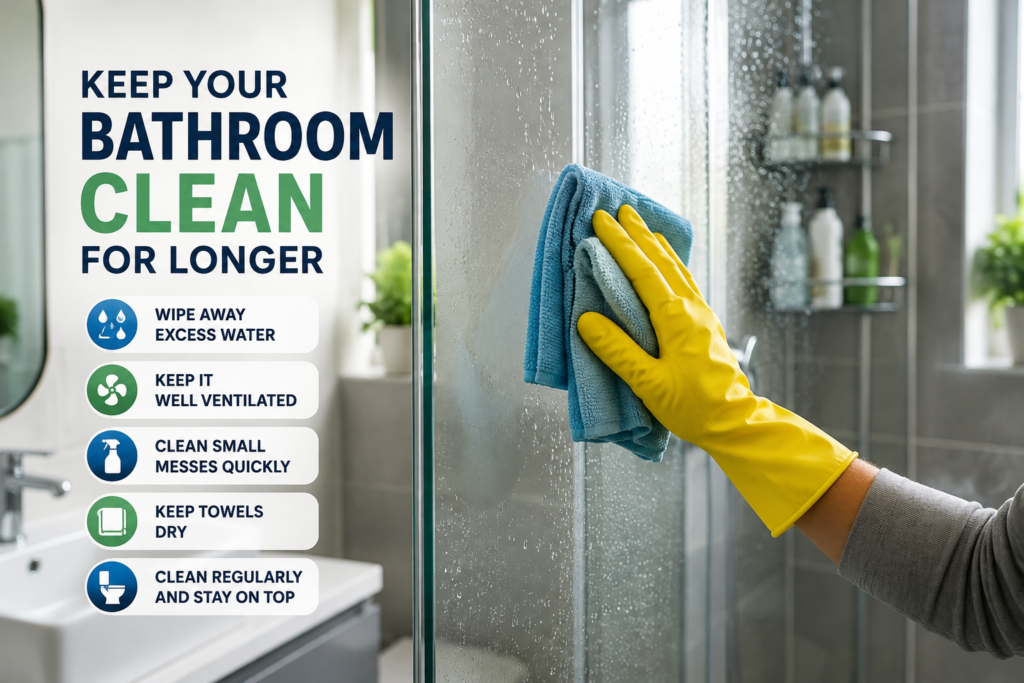
A bathroom can stay clean for longer with a few simple daily habits that prevent moisture, soap residue, limescale and general dirt from building up. The key is to deal with small messes before they become bigger cleaning jobs.
Bathrooms naturally collect moisture, hair, toothpaste splashes, soap residue and everyday grime. Even after a thorough clean, these can quickly make surfaces look dull again if they are left to accumulate.
The good news is that keeping a bathroom cleaner does not mean cleaning it from top to bottom every day. A few minutes of regular maintenance, combined with sensible ventilation and a consistent cleaning routine, can make a noticeable difference.
The Best Way to Keep Your Bathroom Clean
The easiest way to keep a bathroom clean is to prevent moisture and everyday residue from sitting on surfaces for too long. Wiping obvious splashes, allowing wet areas to dry and putting toiletries away can stop much of the mess that makes a bathroom look dirty.
Try to focus on small jobs as they appear rather than waiting until your next full clean. After showering, remove excess water from the shower screen or tiles. Rinse obvious soap residue from the bath. Wipe toothpaste from the basin before it dries.
These small actions do not replace proper cleaning. Instead, they help maintain the results between cleans. If you are unsure what should be included in a complete clean, our guide to cleaning a bathroom properly step by step explains the process in more detail.
Simple Habits That Keep a Bathroom Cleaner for Longer
You do not need a complicated bathroom maintenance routine. Concentrate on the areas where moisture, dirt and residue tend to accumulate fastest.
1. Remove Excess Water After Showers and Baths
Water left sitting on shower screens, tiles, taps and surrounding surfaces can leave water marks and encourage limescale to develop, particularly in hard-water areas.
After showering, use a squeegee on suitable shower screens and tiles to remove excess water. It usually takes less than a minute but can significantly reduce the amount of dried water residue you have to tackle later.
Check the manufacturer’s care instructions before using a squeegee or cleaning product on specialist, coated or delicate surfaces.
If the bath has been used, rinse away visible soap or bath-product residue rather than allowing it to dry around the sides.
2. Keep the Bathroom Properly Ventilated
Moisture is one of the biggest challenges in bathroom maintenance. Steam can settle on walls, ceilings, mirrors, windows and fittings, keeping the room damp long after somebody has showered.
Use your extractor fan where appropriate and according to its instructions. If suitable and safe, opening a window can also help moisture escape.
Leave the shower enclosure or curtain positioned so that it can dry rather than trapping moisture in folds or enclosed spaces.
Good ventilation does not eliminate the need for cleaning, but it helps surfaces dry faster and makes the bathroom less hospitable to mould and mildew.
3. Wipe Small Messes Before They Dry
Toothpaste on the basin, water around taps and cosmetic residue are generally easier to remove when fresh.
Keep a suitable cloth somewhere convenient and quickly wipe obvious splashes when you notice them. You do not need to clean the whole bathroom every time somebody brushes their teeth.
Pay particular attention to:
- the basin and surrounding area;
- taps and handles;
- the vanity or worktop;
- obvious mirror splashes;
- bath edges; and
- areas where toiletries regularly drip or leak.
A quick wipe now can prevent dried residue becoming a scrubbing job later.
4. Keep Toiletries Organised
A crowded basin, bath ledge or shower shelf makes cleaning harder. Bottles can leave rings underneath them, while water and residue become trapped around their bases.
Keep only regularly used products in easy reach and store occasional items elsewhere where practical. Periodically lift bottles and containers, wipe underneath them and check for leaking products.
Avoid storing items directly on surfaces that stay wet for long periods. A bathroom that is easier to wipe around is generally easier to maintain.
5. Give the Toilet Regular Attention
The toilet is one area where waiting for visible dirt is not a good maintenance strategy. Regular cleaning helps prevent stains and residue from becoming established.
Wipe the seat, lid, flush control and exterior as part of your normal bathroom routine, using appropriate cleaning products and separate cleaning cloths or disposable materials where necessary.
For a more thorough method, follow our step-by-step guide to cleaning a toilet properly.
Always follow the instructions on toilet-cleaning products, and never mix cleaning chemicals.
6. Deal With Hair Before It Spreads
Loose hair quickly makes an otherwise clean bathroom look untidy. It can collect around the basin, bath, shower and floor before being carried into other rooms.
Pick up visible hair when you notice it rather than allowing it to accumulate. Before mopping the bathroom floor, vacuum or sweep it where appropriate so that wet hair does not become harder to collect.
Check shower and bath drains regularly for accessible hair, following any manufacturer’s instructions for removable drain components.
7. Keep Towels and Bath Mats Dry
Damp textiles can keep moisture in the bathroom and may develop unpleasant odours if they do not dry properly.
Hang towels so that air can circulate around them rather than leaving them in piles on the floor. Allow bath mats to dry between uses and wash them according to their care labels.
If something remains persistently damp, consider whether the room needs better ventilation or whether too many wet items are being left in a small space.
8. Do Small Maintenance Cleans Between Full Cleans
A maintenance clean does not need to cover every surface. Concentrate on whichever areas become dirty fastest in your household.
You might wipe the basin and taps one day, clean the toilet another day and deal with the shower screen when water marks start appearing.
Your full cleaning frequency will depend on how many people use the bathroom and how quickly it becomes dirty. Our practical bathroom cleaning schedule can help you decide what needs attention daily, weekly and less frequently.
Explore KeepShine’s free downloadable cleaning resources for practical ways to make everyday cleaning and household organisation easier.
Pro Tip
Keep a small, bathroom-only cleaning kit somewhere safe and convenient, away from children and pets. Having suitable cloths and everyday cleaning products close by makes it much easier to deal with a toothpaste mark, splash or water residue immediately instead of postponing a two-minute job until it becomes part of a much bigger clean.
Preventing the Problems That Make Bathrooms Look Dirty
Keeping a bathroom cleaner longer becomes easier when you understand what is causing the mess. Some problems are simply everyday dirt, while others develop gradually because of moisture, hard water or product residue.
Watch for Limescale Before It Becomes Heavy
If you live in a hard-water area, taps, shower screens and other frequently wet surfaces may develop chalky mineral deposits.
Removing water after use and cleaning these areas regularly can reduce how much residue is allowed to build up. Avoid reaching immediately for abrasive tools, particularly on taps, coated fittings, glass or delicate surfaces. Check the manufacturer’s guidance before using acidic or specialist limescale products.
Do Not Ignore Early Signs of Mould
Persistent condensation, damp sealant or poorly ventilated corners can create conditions in which mould develops.
Rather than repeatedly wiping visible mould without considering why it returns, look at moisture control. Ventilation, drying wet surfaces and dealing with leaks or persistent dampness are important parts of prevention.
If your bathroom already has substantial grime, mould staining or accumulated residue, everyday maintenance may not be enough. A thorough bathroom deep clean can give you a better starting point before you begin a maintenance routine.
Adjust the Routine to Your Household
There is no single maintenance schedule that suits every bathroom. A family bathroom used several times each morning will usually need more frequent attention than a lightly used guest bathroom.
Instead of waiting for a particular day, notice which areas consistently become dirty first. Those are the areas worth adding to your short maintenance routine.
Mistakes to Avoid
- Leaving wet surfaces to dry naturally every time. Repeated water residue can leave marks and contribute to limescale. Removing excess water from suitable shower screens and tiles after use reduces the amount left behind.
- Using too much cleaning product. More product does not necessarily mean better cleaning. Excess cleaner can leave residue and may require additional rinsing. Follow the product instructions and use only the recommended amount.
- Mixing different cleaning chemicals. Combining cleaning products can create dangerous fumes or reactions. Never mix products unless the manufacturer explicitly says it is safe to do so, and keep chemicals in their original containers.
- Using one cloth everywhere. A cloth used around the toilet should not then be used on the basin, taps or other surfaces. Separate your cleaning materials appropriately to reduce the risk of spreading contamination.
- Ignoring small problems until cleaning day. Toothpaste, soap residue, hair and standing water are often easier to deal with immediately. Allowing everything to accumulate makes the next clean longer and more difficult.
- Using harsh or abrasive products without checking the surface. Bathroom fittings vary considerably. Abrasive pads or unsuitable chemicals may scratch, dull or damage some finishes. This is one of several bathroom cleaning mistakes worth avoiding, particularly when dealing with specialist surfaces.
If keeping on top of bathroom cleaning is difficult alongside everything else, KeepShine can provide professional cleaning help as part of a service suited to your home.
More About Keeping Your Bathroom Clean
Bathroom maintenance often raises questions about how frequently particular jobs should be done and how to manage common problem areas. Here are some useful points to consider.
Should I wipe down my shower after every use?
You do not need to perform a complete clean after every shower. Removing excess water from suitable shower screens and tiles, however, can help prevent visible water marks and reduce mineral deposits. It is particularly useful in bathrooms where hard-water marks develop quickly.
How can I stop my bathroom smelling unpleasant?
Start by keeping the room ventilated, allowing towels and bath mats to dry and cleaning the toilet and other frequently used areas regularly. Empty the bathroom bin before it becomes overfilled and investigate persistent odours rather than simply covering them with fragrance. Drain or plumbing problems may require appropriate professional attention.
How often should I deep clean the bathroom?
It depends on usage, household size and how well the bathroom is maintained between cleans. A regularly maintained bathroom may need intensive cleaning less frequently than one where residue is allowed to accumulate. Deep cleaning should address areas that ordinary routine cleaning does not fully cover rather than simply repeating the same tasks.
Why does my bathroom look dirty again so quickly?
Look at what is actually making it appear dirty. Water marks, loose hair, toothpaste, clutter and damp towels can make a recently cleaned bathroom look untidy surprisingly quickly. Identifying the fastest-returning problems allows you to concentrate your maintenance on those areas instead of repeatedly cleaning the entire room.
Is daily bathroom cleaning necessary?
Usually, a full daily clean is unnecessary. Small daily actions can be useful in a busy bathroom, while more substantial tasks can be completed at suitable intervals. The aim is consistency rather than constant cleaning. A few minutes spent dealing with fresh mess can save considerably more effort later.
Does keeping the bathroom tidy reduce cleaning time?
Yes, particularly when surfaces are crowded with toiletries and other items. Clearer surfaces are quicker to wipe and make dirt easier to spot. The same principle applies elsewhere in the home; a consistent approach to cleaning and maintaining busy rooms such as the kitchen can make routine household cleaning more manageable.
Subscribe to KeepShine for more practical cleaning guides, maintenance tips and useful resources to help make everyday home cleaning easier.
Final Thoughts: Make Bathroom Maintenance Part of Your Routine
Keeping a bathroom clean for longer is mainly about preventing small amounts of moisture and residue from becoming bigger problems. Remove obvious splashes, let wet areas dry properly, keep toiletries organised and deal with frequently used surfaces before grime becomes established.
These habits should complement rather than replace regular cleaning. When the bathroom does need a full clean, following a consistent routine makes it easier to cover everything properly without overlooking areas.
Start with the part of your bathroom that becomes messy fastest and introduce one simple maintenance habit there. Once that becomes routine, keeping the rest of the room looking clean and fresh becomes much more manageable.